
ECHOGEAR ShockBlocker 8 Outlet
4.8Editor score
3,420-joule surge protection
Eight protected outlets
Low-profile wall-mountable design
Surge Protector for Car Audio guide compares protection types, capacity, installation, compatibility, and features for protecting sensitive vehicle electronics.
Protecting a car audio system is not simply a matter of choosing a device with the word surge protector on its box. Useful options range from automotive surge suppressors and sealed DC-DC regulators to filtered AC power strips, each designed for a different electrical environment and level of exposure.
The products in this guide were compared using the supplied specifications, including protection technology, electrical limits, outlet count, filtering, mounting options, cord design, and suitability for vehicle electronics. The list covers purpose-built 12-volt devices as well as professional and home-theater AC alternatives that may be useful in mobile installations or workshop environments.
Each review explains where a product fits, highlights the details that matter for sensitive equipment, and calls out important limitations. Ratings and specifications can change over time, while marketplace listings and prices shift frequently, so readers should confirm the current product details and compatibility before making a purchase.
4.8Editor score

4.8Editor score

4.5Editor score
This side-by-side comparison distinguishes automotive DC protection from AC power strips, professional audio conditioners, voltage regulators, and panel-mounted surge arrestors, making the electrical requirements of the intended installation the first consideration.


The Belkin Surge Protector Power Strip is a general-purpose AC power strip with extensive connection capacity and a 4.8 rating. Its twelve-outlet layout includes eight rotating and four standard outlets, making it a strong candidate for audio systems, computers, displays, and accessories that share a grounded workshop or home-theater circuit.
We may earn a commission when you buy through this link, at no additional cost to you.
The strip provides 4,320 joules of overcurrent and overload protection, while its three-line AC protection is designed to handle surges between hot, neutral, and ground. It also includes protection for a telephone line and coaxial connection, an unusual combination that can benefit a mixed entertainment setup with older cable boxes, satellite equipment, or networked devices.
Its principal limitation for a conventional car installation is electrical type. This product expects a 120-volt AC source and uses a grounded three-prong plug, so it should not be connected directly to a vehicle's 12-volt battery. It is better suited to a stationary audio room, mobile installer bench, RV interior installation using an approved inverter, or any location where grounded AC is available.
For a power-intensive AC audio environment, the rotating outlets and eight-foot cord offer practical flexibility. Buyers should still verify that the total connected load remains within electrical limits, avoid extension chains, and ensure the amplifier circuit is properly grounded. The combination of outlet count, filtering breadth, certification, and warranty makes this a strong all-around AC option.
Twelve outlets reduce the need for multiple strips when an amplifier, processor, display, television, media player, and networking equipment share one location. Rotating outlets also create room for bulky charger bricks without forcing neighboring plugs to sit at awkward angles.
The stated three-line protection covers surges between hot, neutral, and ground, while the dedicated telephone and coaxial protection expands the strip's usefulness for a broader home-theater arrangement.
We may earn a commission when you buy through this link, at no additional cost to you.
The JUNNUJ EMI/RFI Filtering Surge Protector is built for audio, video, and home-theater equipment that may be sensitive to electrical noise. It combines 4,800 joules of surge protection with three isolated EMI/RFI filter banks, each serving two outlets, and earns a 4.5 rating.
We may earn a commission when you buy through this link, at no additional cost to you.
Noise isolation is the distinguishing feature. The product is described as blocking up to 95% of EMI/RFI line noise and preventing interference between equipment connected to separate banks. That arrangement can be valuable in a complex installation where multiple signal and power cables run near one another, although the strip still requires a grounded 120-volt AC source.
The metal shell, self-tripping resettable 15A circuit breaker, and visible protection, line, and fault indicators create a reassuring combination of physical and diagnostic safeguards. The six-foot cord and 45-degree flat plug can reduce strain behind furniture, while side mounting holes allow the strip to be secured to a wall, desk, or equipment surface.
This is a particularly compelling choice for a stationary amplifier or home-theater system where electrical noise control is the priority. It is not designed to plug into a vehicle battery, and its six-outlet count is lower than the Belkin's. For installers who can provide grounded AC and want isolated filtering, however, it combines robust protection with useful installation flexibility.
Three filter banks let an installer place compatible equipment on separate circuits within the strip. Keeping those banks apart is intended to reduce interaction among connected audio, video, and computer components.
Separate LEDs indicate that protection is present, that the line is operating normally, or that a fault needs attention. This makes it easier to identify a developing problem without repeatedly removing equipment.
We may earn a commission when you buy through this link, at no additional cost to you.
The Dent Fix DF-601 is one of the few products in this guide explicitly intended for vehicle electrical work. Its 4.8 rating and purpose-built design make it a practical choice for protecting sensitive vehicle electronics during activities such as MIG or spot welding and jump-starting.
We may earn a commission when you buy through this link, at no additional cost to you.
Its standout function is absorbing electrical surges that can reach sensitive electronic components during welding. The supplied information says the battery does not need to be disconnected for protection, which simplifies a procedure that would otherwise involve repeatedly isolating the vehicle's electronics before body repair work.
A connection LED gives the user immediate confirmation that the unit is working and connected correctly. That simplicity is helpful in a workshop where the device needs to be connected, checked, and trusted quickly. A lifetime warranty further strengthens the ownership proposition.
The DF-601 is not presented as a general power strip or a voltage stabilizer, and the supplied specifications do not list its maximum current, input range, or joule rating. Those omissions make careful installation important. It is best for vehicle technicians seeking surge protection during repair operations, particularly around electronics-intensive work, rather than as a permanent hub for every accessory in a car.
The surge-suppression function is specifically described as protecting sensitive electronic components during MIG and spot welding. This focused use case distinguishes the DF-601 from ordinary AC power strips.
The integrated LED provides visual confirmation that the protector is working and correctly connected, reducing uncertainty before a potentially hazardous repair operation begins.
We may earn a commission when you buy through this link, at no additional cost to you.
The ECHOGEAR ShockBlocker 8 combines a low-profile form with 3,420 joules of surge protection and a 4.8 rating. It is designed for home, office, gaming, and television environments where numerous AC-powered devices need one organized connection point.
We may earn a commission when you buy through this link, at no additional cost to you.
The slim housing can be concealed behind or beneath furniture, which makes it useful in an audio room where visual clutter matters. Eight outlets are supplied, and three are given extra spacing for large power adapters. Safety covers help prevent foreign objects from entering unused sockets, while the strip can also be mounted to a wall.
Its filtering and fire-resistant MOV construction are intended to improve power delivery and absorb excess voltage. The product is UL certified and backed by a five-year warranty, along with a stated connected-equipment warranty, making its support structure more clearly defined than that of many generic strips.
This is not a 12-volt automotive suppressor, so it cannot be installed directly between a vehicle battery and its audio equipment. Its strongest application is a stationary home-theater or mobile-installation workshop powered by grounded AC. For those environments, the discreet profile, strong outlet count, and stated surge capacity make it an effective and economical organization point.
Three outlets provide additional clearance for oversized power bricks. That spacing can prevent a single demanding adapter from preventing several other devices from receiving power.
The low-profile enclosure can sit behind furniture or be mounted in a fixed location, helping an installer keep a multi-device audio setup organized and visually unobtrusive.
We may earn a commission when you buy through this link, at no additional cost to you.
The 12V Spannungsregler DC DC Wandler is a sealed step-down converter designed to turn a broad DC input range into stable 12-volt power. It accepts 10 to 36 volts, delivers up to 12 amps and 144 watts, and carries a 4.4 rating.
We may earn a commission when you buy through this link, at no additional cost to you.
Unlike an AC surge strip, this device addresses fluctuations in a vehicle's electrical system. Its stated purpose includes helping manage voltage fluctuations and surge conditions for GPS navigation, car audio, LCD displays, intercoms, and monitoring equipment, making it directly relevant to a modern vehicle installation.
The IP67 sealed housing, conductive silica-gel filling, and compact dimensions make it suitable for exposed or demanding installations. It can also be used in trucks, buses, boats, motors, photovoltaic systems, and taxi displays. Mounting holes provide a more permanent solution than simply resting a loose converter inside a cabin.
The main tradeoff is that it requires correct wiring and careful load calculation. The output current ceiling is meaningful, but total connected current must remain below the stated maximum, and installers should account for startup demands from amplifiers and other high-load devices. For a fixed, professionally planned car-audio installation, it offers regulated power in a durable package.
The 10-to-36-volt input range allows the converter to accept several common vehicle and charging sources while maintaining a regulated 12-volt output for the connected audio equipment.
The IP67 housing and sealed construction support installation in environments exposed to rain, vibration, or other demanding conditions, although routing and final mounting still require care.
We may earn a commission when you buy through this link, at no additional cost to you.
The Furman SS-6B-PRO is a professional-grade AC power block intended for stage, studio, and audio-visual environments. It carries a 4.7 rating and differentiates itself through Extreme Voltage Shutdown, which disconnects power during dangerous over- or under-voltage conditions and restores it automatically after the line becomes stable.
We may earn a commission when you buy through this link, at no additional cost to you.
Six protected outlets are backed by standard surge suppression and EMI/RFI filtration. This combination addresses two different concerns: transient overvoltage and lower-level electrical interference. For a fixed amplifier or home-theater system, the result is a more controlled power environment than a basic extension strip is likely to provide.
Its heavy-duty steel body and 15-foot cord support use in rooms and installations where durability, reach, and secure placement matter. The product is explicitly oriented toward professional AV work rather than battery-powered mobile electronics, so it requires a grounded 120-volt source.
For installers who need automatic shutdown in response to unstable AC voltage, the SS-6B-PRO stands out. It is not the right choice for direct 12-volt car wiring, and its six-outlet capacity may be modest for a large system. Within its intended professional AC role, however, it offers robust construction and useful monitoring-oriented protection.
Extreme Voltage Shutdown interrupts power when the incoming line becomes dangerously high or low, then restores it automatically once conditions stabilize. That behavior can protect connected equipment from sustained abnormal voltage.
A steel enclosure, six outlets, filtered power, and a 15-foot cord align naturally with racks, stages, studios, and permanent home-theater installations where rugged placement is more important than compact size.
We may earn a commission when you buy through this link, at no additional cost to you.
The Monster Pro MI Professional Surge Protector Power Strip is aimed at computers, amplifiers, pedal boards, and professional audio equipment. Its seven grounded outlets include a wider space for large adapters, while the 4.4 rating reflects a generally favorable user reception.
We may earn a commission when you buy through this link, at no additional cost to you.
The industrial-style metal enclosure is designed for demanding setups and provides a more substantial housing than a lightweight plastic strip. LED indicators offer a quick visual indication of the strip's operating condition, and keyhole mounting slots support fixed placement on a wall, desk, or equipment surface.
A flat right-angle plug helps it sit behind furniture or close to a wall, where a protruding straight plug could create strain. The four-foot cord is shorter than the 15-foot cords offered by some competing models, making it more convenient for installations located near a wall outlet.
The strip is specified for 125-volt systems, so it should not be connected to a 12-volt vehicle circuit. It can, however, protect a low-power audio system operating from grounded AC or an appropriately engineered mobile power system. Its strongest niche is a compact professional audio bench, pedal-board arrangement, or small studio where one bulky adapter needs extra clearance.
The dedicated wide-spaced outlet makes the strip more accommodating for amplifier or effects-pedal power supplies with large transformer housings, reducing the chance that neighboring plugs will be obstructed.
Keyhole slots and LED indicators support a tidy installation. Wall or under-desk mounting can keep power connections stable and reduce cable movement during transport or use.
We may earn a commission when you buy through this link, at no additional cost to you.
The Car Voltage Stabilizer DC9-36V to DC 12V 12A 144W Regulator Surge Protector is explicitly designed for 12-volt electronics in vehicles, boats, solar systems, RVs, golf carts, and other mobile installations. It offers regulated 12-volt output across a 9-to-36-volt input range.
We may earn a commission when you buy through this link, at no additional cost to you.
The product is particularly relevant to car audio because it combines voltage regulation with surge-related protection. Its stated protections include overtemperature response, output over-voltage, over-current, and short-circuit handling. It is also promoted as a way to prevent device reboots when engine cranking or automatic stop-start systems cause brief input voltage changes.
An IP67 waterproof enclosure, heat-conductive silica-gel fill, and clear color-coded 13-to-14-centimeter wires support practical vehicle installation. The included output protection and stated efficiency of up to 96% make it a more comprehensive power-conditioning option than a simple fuse holder.
There are two important qualifications. The supplied data contains no customer rating, so buyers cannot assess social proof from this guide. It also explicitly lacks input-side reverse-polarity and short-circuit protection, meaning correct wiring is essential. Subject to careful installation and load limits, it is one of the most directly relevant products for a modern 12-volt car-audio system.
By regulating output at 12 volts and helping manage fluctuations, the converter is designed to keep sensitive electronics operating above their minimum input threshold, including during engine cranking.
The IP67 enclosure and sealed construction suit harsh environments. Even with that protection, connectors should be appropriately terminated and routed away from standing water and moving components.
We may earn a commission when you buy through this link, at no additional cost to you.
The Monster Pro MI Professional Surge Protector Power Strip is a high-capacity AC option for computers, amplifiers, home theaters, and professional audio equipment. It has a 4.7 rating, eight grounded outlets, two USB-A ports, and a durable metal enclosure.
We may earn a commission when you buy through this link, at no additional cost to you.
Dual-mode protection is designed to manage both surges and overloads, while fire-resistant MOV technology provides the stated surge-handling mechanism. One outlet offers extra spacing for large plugs, allowing the remaining outlets to remain usable when a substantial power adapter is connected.
The 15-foot cord provides ample reach for a rack, wall-mounted installation, or home-theater arrangement. Wall-mount slots and a right-angle plug make placement behind furniture or near a wall more practical. Two USB-A ports are convenient for charging accessories, although users should not assume those ports receive the same component-level surge protection as the AC outlets.
This strip is designed for a grounded 120-volt supply, not a 12-volt vehicle battery. It is relevant to a stationary audio installation, an RV system powered through a correctly engineered inverter, or a professional workshop. For a larger AC system that needs more outlets than the Monster Pro MI seven-outlet version, this model is the more flexible choice.
Eight AC outlets and two USB-A ports allow several audio components and charging accessories to share one strip, reducing clutter in a permanent installation.
The long cord, right-angle plug, and wall-mount slots give an installer several placement options. That flexibility is useful behind a rack or beneath a long entertainment console.
We may earn a commission when you buy through this link, at no additional cost to you.
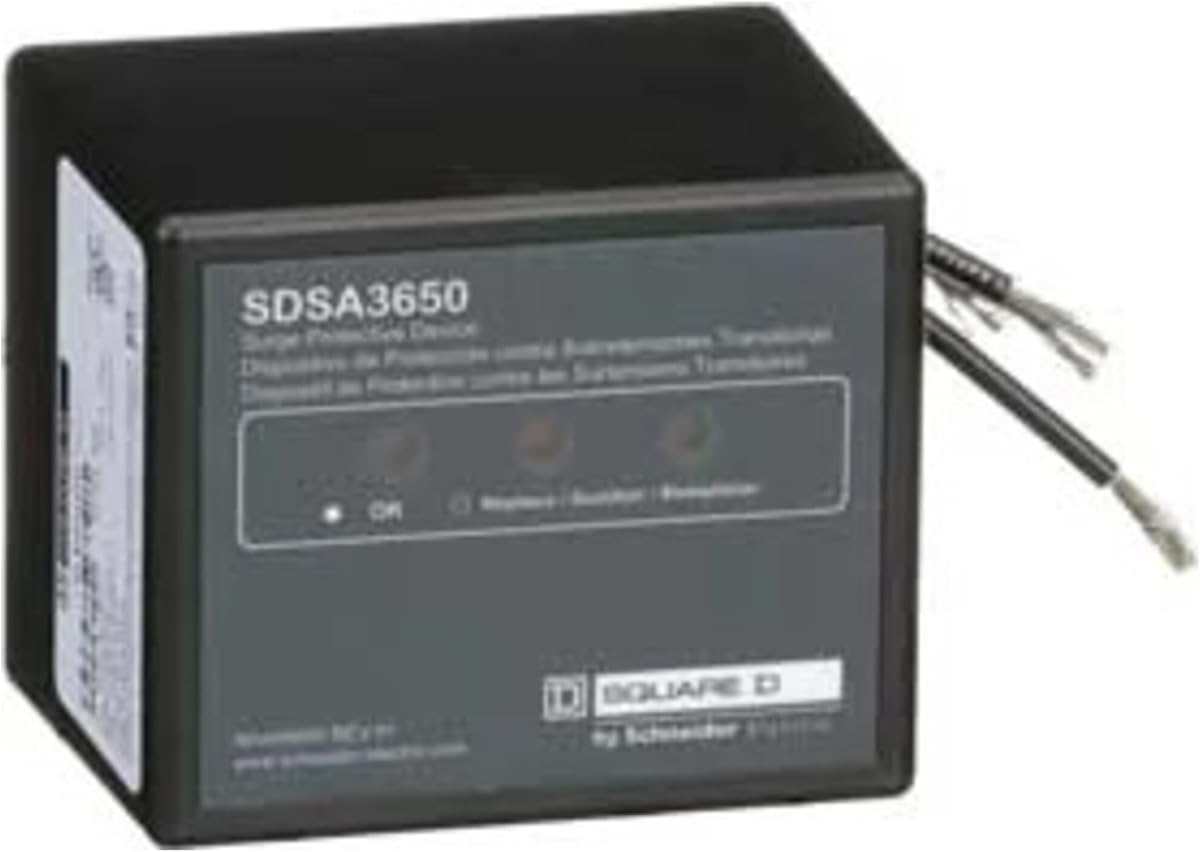
The Schneider Electric SDSA3650 is a secondary surge arrestor intended for a three-phase, four-wire load-center system. It is rated at up to 40 kiloamperes and 600 volts maximum, and the supplied information identifies it specifically as the SDSA3650 model.
We may earn a commission when you buy through this link, at no additional cost to you.
Unlike the outlet strips and converters in this guide, it is not a consumer power bar and does not provide a convenient connection point for an amplifier. Its job is to protect a building's electrical infrastructure by diverting surge energy through a purpose-designed protection system.
For a conventional passenger-car audio installation, this product is almost certainly too specialized. It may become relevant to a mobile sound system operating from a commercial three-phase power source, a professional installation vehicle with substantial mobile equipment, or a sound system deployed in a commercial venue where qualified electrical infrastructure is available.
The specification also clearly limits the audience. Installation should be handled by a qualified electrician familiar with load centers, three-phase distribution, and the manufacturer's wiring instructions. Its 4.6 rating and recognized manufacturer make it a credible commercial protection component, but it should not be treated as a plug-in surge protector for sensitive 12-volt electronics.
A secondary surge arrestor is installed within an electrical system to limit surge voltage reaching downstream equipment. That role is more comprehensive than the outlet-level protection offered by consumer power strips.
The three-phase, four-wire configuration and 600-volt maximum make this a specialized component. Incorrect installation or incompatibility with the site's grounding and distribution system could be hazardous.
We may earn a commission when you buy through this link, at no additional cost to you.
The correct protector depends on whether the audio system runs from a vehicle's 12-volt electrical system, a regulated DC supply, a grounded AC circuit, or a specialized commercial distribution system. Voltage, current, protection method, environmental exposure, and installation requirements should be evaluated before choosing a model.
Begin by identifying the actual supply connected to the amplifier, processor, head unit, signal processors, and displays. A standard vehicle installation uses 12-volt DC, with a modern alternator frequently charging near 13.8 to 14.4 volts. An AC power strip must never be connected directly to a battery or vehicle accessory circuit because its plugs, grounding arrangement, and internal components are designed for a different supply.
For direct vehicle power, look for a purpose-built automotive suppressor or a DC-DC converter with an input range that covers the complete operating environment. For a stationary system, choose a grounded, 120-volt surge protector. Commercial three-phase equipment calls for a qualified installer and an appropriately rated secondary arrestor.
Surge protectors are commonly described by their joule rating, which indicates how much transient energy they are designed to absorb. A larger capacity does not mean a device can absorb unlimited surges, nor does it directly determine the number of connected devices. It is a measure of robustness, and the complete protection system also depends on wiring, grounding, response time, and the magnitude of the disturbance.
For AC audio installations, compare the stated joule figures and the number of protected lines. For 12-volt vehicle equipment, a product that combines surge handling with voltage regulation may be more useful than a basic AC strip. The Dent Fix DF-601 focuses on workshop surge events, while both DC-DC regulators in this guide emphasize stable output and multiple electrical protections.
The output current rating must comfortably cover the combined load of the amplifier and every other connected device. A converter rated for 12 amps and 144 watts can deliver the stated maximum under suitable conditions, but connecting equipment near that ceiling leaves no allowance for startup surges, heat, poor connections, or future expansion.
Calculate the expected draw and add sensible headroom. Also examine the protection circuitry, fuse or breaker arrangement, and whether overload protection resets automatically. For an AC strip, the 15-amp designation is a maximum circuit rating rather than a guarantee that every attached amplifier can safely share the same strip. Use proper circuit distribution and consult a qualified installer for high-power systems.
Audio equipment can be affected by radio-frequency interference, electromagnetic interference, and other line noise, especially when power and signal cables run together. A protector with EMI/RFI filtering may reduce this interference in addition to handling larger transients. The JUNNUJ model goes further by offering three isolated filter banks so equipment on separate banks does not interact through the filter arrangement.
Filtering does not replace correct grounding, shielded cables, separate signal routes, or properly designed power wiring. It is one part of a clean installation. For a vehicle, route power and signal cables separately, use quality grounds, avoid random connector changes, and confirm that the converter's output is stable enough for the audio system's control electronics.
Vehicle electronics are exposed to vibration, temperature changes, moisture, dust, cramped mounting spaces, and occasional contact with conductive debris. A sealed converter with an IP67 housing is better suited to an exposed installation than a vented or open-frame device. AC power strips, by contrast, are designed for dry indoor locations unless their listing specifically states otherwise.
Secure the unit where it cannot move during driving, protect connections from sharp edges, and avoid locations near water, exhaust heat, or moving engine components. A rugged enclosure is useful, but correct mounting and strain relief are equally important. A loose high-current connection can create noise, voltage drop, and arcing even when the surge protector itself is well made.
Connection needs differ between a permanent car installation and a stationary AV room. A DC converter with short, color-coded wires can be integrated into a custom harness, while an AC strip benefits from a flat or right-angle plug, a long cord, and wall-mounting holes. Outlet spacing matters when large amplifier power supplies or charger bricks are present.
For a vehicle, permanent wiring should use appropriately sized conductors, secure crimp or solder connections, and correctly fused branches. For an AC system, avoid daisy-chaining power strips and keep high-power amplifier circuits on appropriate dedicated service. The right connection design reduces strain, accidental unplugging, and unnecessary adapters.
Safety certification provides evidence that a product has been evaluated against applicable standards, while indicator lights help show whether protection is active or a fault is present. The Belkin strip is described as UL certified, the JUNNUJ model as ETL Listed, and the Monster Pro MI seven-outlet model as ETL listed. These claims should be checked against the current manufacturer documentation and applicable regional requirements.
Status LEDs are especially helpful in hard-to-reach locations. A fault indicator can warn that a protector is no longer operating as intended, while a line-ok indicator provides a simple check that the incoming supply is within its expected state. A visible LED is not a substitute for following the manual, honoring warranty conditions, and replacing a unit after a severe surge.
A surge protector, voltage regulator, power conditioner, and secondary surge arrestor perform different functions. A surge protector is intended to limit transient voltage. A DC-DC regulator maintains a stable output across a changing input. A conditioned AC strip may combine surge suppression, overload handling, filtering, and voltage monitoring. A building-level arrestor protects distribution infrastructure.
For a typical high-power car-audio system, the most useful approach may combine a purpose-built vehicle surge suppressor with a well-regulated DC supply and sound installation practices. For a stationary audio room, a filtered AC strip with an EVS function may be the more relevant choice. Define the problem first rather than assuming one type of protector handles every electrical concern.
Before installation, disconnect the relevant power source, identify the audio system's normal operating voltage, and calculate the total current draw. For a vehicle, use appropriately rated wire, correct fuses, sound grounding, and protection against reversed polarity where it is not built in. For an AC product, confirm that the plug, wall outlet, strip rating, and connected loads are compatible.
Position the protector where it will remain dry, secure, and accessible for inspection. Trim and terminate wires carefully, observe polarity where applicable, and keep the regulator or strip outside heat, moving parts, and standing water. Do not exceed current limits, bundle a high-power amplifier into a daisy-chained strip, or route unprotected cable through a vulnerable area unless the wiring itself has appropriate protection.
Inspect the installation periodically. Check that connectors remain tight, cables show no damaged insulation, ventilation openings are not blocked, and status indicators remain normal. A protector that has diverted a major surge may require replacement even if the unit still appears to function. Follow the manufacturer's instructions, record the model and installation date, and use qualified assistance for high-current or commercial electrical work.
Only when the system is powered from a correctly engineered AC source, such as an approved inverter in an RV or stationary installation. A standard household power strip must not be connected directly to a vehicle's 12-volt battery because its internal components, plugs, and grounding are designed for 120-volt AC. Use an automotive-rated DC suppressor or DC-DC regulator for direct vehicle power.
Protection can be useful because vehicle electrical systems experience voltage variation, cranking dips, load fluctuations, and workshop events that may generate transients. The amplifier's own circuitry provides baseline protection, but a properly selected surge suppressor or regulated DC supply can add system-level resilience. Correct wiring, grounding, fusing, and thermal management remain the foundation of a reliable installation.
A surge protector is primarily intended to limit sudden transient overvoltage, while a voltage regulator maintains a controlled output as the input changes. Some DC converters combine both functions with over-current, over-temperature, and short-circuit protection. An AC power strip may also include filtering and overload protection, so the label alone does not reveal every capability.
A higher rating generally indicates greater energy-handling capacity, but compatibility and installation quality matter more than the number alone. The protector must suit the system voltage, support the connected load, provide appropriate grounding, and be installed correctly. A large AC surge strip still cannot be used as a direct 12-volt automotive protector.
It can be useful, particularly when the system exhibits hum, buzz, radio interference, or unstable behavior that persists after correct wiring and grounding. In a vehicle, however, much of the noise enters through power connections, ground points, or signal cables, so those issues should be addressed first. Filtering works best as one part of a clean and correctly routed installation.
Only if the manufacturer's operating-temperature and environmental limits permit it. A sealed IP67 housing offers useful weather resistance, but it does not make the device immune to extreme heat, vibration, or nearby exhaust components. Many audio electronics are better installed in the passenger compartment, trunk, or another protected area where heat and moisture are less severe.
A protection-present indicator generally shows that the internal protection component is in its normal operating state, while a line-ok indicator shows that incoming power is not reporting a fault. A fault light commonly means the unit should be checked and may need repair or replacement. The manual for the specific model should always define the exact indicator behavior.
There is no universal replacement interval because performance depends on surge events, operating conditions, and the product design. Replace or service a unit after a significant surge, visible damage, a fault indication, or any manufacturer-specified event. Periodically check indicators and connections, and follow the stated warranty and replacement guidance.
The Dent Fix DF-601 stands out for vehicle-specific workshop protection, while the ECHOGEAR ShockBlocker 8 offers an economical, low-profile solution for grounded AC audio systems. The JUNNUJ EMI/RFI Filtering Surge Protector is the most feature-focused premium option in the group because of its isolated filter banks, metal enclosure, diagnostics, and stated 4,800-joule protection.
Readers should prioritize electrical compatibility before every other feature. A direct 12-volt installation needs an automotive-rated DC suppressor or regulator, a stationary system needs a grounded AC strip, and a commercial three-phase deployment requires a specialist secondary arrestor. Current capacity, grounding, filtering, environmental sealing, and correct installation then determine which of those products is appropriate.
Marketplace listings, ratings, specifications, and prices can change, so verify the current product page and manufacturer documentation before ordering. Confirm input voltage, maximum output current, connector requirements, protection functions, and installation conditions to ensure that the selected device is safe and compatible with the intended car-audio system.
