
Philips B7305
3.8Editor score
300W rated output
Wireless bass subwoofer
Dolby Digital Plus
HDMI ARC control
A 300W sound bar can transform an ordinary television into a more involving home entertainment system, but wattage alone does not determine sound quality. The best results come from combining useful power with clear dialogue, convincing bass, a room-appropriate soundstage, and features that make everyday operation straightforward.
This guide compares ten sound bars associated with the 300W category, including powered 2.1-channel systems, all-in-one designs, and higher-output immersive models. We considered channel configuration, surround processing, wireless bass options, connectivity, voice clarity, room calibration, gaming support, design, and practical expansion possibilities.
Each pick highlights a different type of value: affordable traditional sound bars, compact systems that prioritize dialogue, and premium all-in-one products built for expansive home cinema. Ratings and availability can change, so compare the current listing, room size, television connections, and feature needs before purchasing.
3.8Editor score

4.5Editor score

4.2Editor score
As an Amazon Associate we earn from qualifying purchases.
The table below compares all ten models by output, channel design, surround processing, connectivity, and their most practical distinguishing features.




The Philips B7305 carries a 3.8 rating and is the most direct answer for shoppers who specifically want a 300W sound bar with a conventional home-theater configuration. Its 2.1-channel arrangement combines a soundbar section with two midrange drivers, two tweeters, and a compact wireless subwoofer. That arrangement places dedicated emphasis on bass while keeping the main speaker relatively easy to position.
We may earn a commission when you buy through this link, at no additional cost to you.
Its strongest features are practical rather than exotic. The included wireless subwoofer handles low-frequency effects independently, while the stated 300W output gives movies and music enough scale for a conventional living room. Dolby Digital Plus support expands the presentation of compatible content, and the slanted, low-profile enclosure should look less intrusive in front of a television. Included wall brackets also provide flexibility if the soundbar needs to sit below the screen.
The trade-offs are equally clear. This is not a height-channel or object-based system, so it cannot reproduce the overhead positioning associated with a dedicated Dolby Atmos installation. Its feature list is also focused compared with newer models that add gaming modes, room correction, sophisticated streaming ecosystems, or voice-assistant integration. For viewers who value clear speech and a separately controlled subwoofer more than a wide soundstage, those omissions are reasonable.
The B7305 is best for budget-conscious buyers upgrading from television speakers, especially in a medium-sized room where a wireless subwoofer would help action films and music sound more substantial. It is also a good match for users who want HDMI ARC and familiar television-remote volume control without a complicated setup. For those priorities, this model provides a straightforward, credible 300W package.
The compact wireless subwoofer provides bass independently of the main enclosure. It can be hidden near an entertainment cabinet while preserving low-frequency impact that television speakers often lack.
HDMI ARC allows the television remote to control soundbar volume. This reduces the number of remotes required for everyday viewing and makes the system approachable for first-time sound bar owners.
We may earn a commission when you buy through this link, at no additional cost to you.
The Philips B6309 earns a 4.0 rating and improves on the basic 2.1-channel concept with virtual surround effects, flexible EQ, and a broader connection selection. Its maximum power is listed at 320W, making it a close match for shoppers seeking substantial output while retaining a straightforward soundbar-and-subwoofer layout. The included compact wireless subwoofer is designed to enrich effects and music without requiring a large floor-standing speaker.
We may earn a commission when you buy through this link, at no additional cost to you.
DTS Virtual:X is the most interesting processing feature because it aims to create a virtual three-dimensional presentation without requiring separate rear speakers. Dolby Digital Plus support, Dialogue Enhancement, and four EQ modes offer additional ways to shape the sound for films, shows, music, and news. HDMI eARC provides a modern one-cable television connection, while Bluetooth, USB, optical input, and audio-in expand the system's usefulness beyond television audio.
The main limitation is that virtual processing cannot reproduce the physical output of a true multi-driver surround system. The B6309 still lists only 2.1 channels, and there are no dedicated height channels. Philips EasyLINK also provides deeper control when used with a compatible Philips Ambilight television, which can make the experience more cohesive for buyers already invested in that ecosystem. The maximum-power figure should also be understood as a headline rating rather than a guarantee of identical output across every source or mode.
This model is a strong fit for a mainstream living room where viewers want virtual height effects, dedicated bass, dialogue support, and several source options without moving into a premium all-in-one system. Choose it over the B7305 when Atmos-compatible content, DTS Virtual:X, and broader connectivity matter. It may not satisfy someone seeking true rear channels, but it delivers an unusually balanced feature set for its class.
DTS Virtual:X processes compatible programming to suggest width and height around the listener. The result cannot equal dedicated surround speakers, but it can make supported scenes feel more dimensional in a suitably arranged room.
Four EQ modes and Dialogue Enhancement help users move between cinematic effects, music, and speech-focused viewing. These controls are particularly useful when family members have different preferences for clarity and bass.
We may earn a commission when you buy through this link, at no additional cost to you.
The JBL Bar 300MK2 holds a 4.5 rating and stands out as the most complete overall recommendation. It combines a five-channel all-in-one enclosure with 450W of maximum output, Dolby Atmos, MultiBeam 3.0, PureVoice 2.0, and automatic sound calibration. Unlike conventional 2.1 systems, it uses built-in bass ports rather than requiring a separate subwoofer, which simplifies placement while preserving substantial low-frequency output.
We may earn a commission when you buy through this link, at no additional cost to you.
Its soundstage technology is designed to spread sound widely through the room, while PureVoice 2.0 automatically adjusts dialogue based on scene content and overall volume. That combination addresses two common sound bar problems: a narrow presentation and speech that disappears beneath music or effects. The easy sound calibration scans the room and tunes the system for reflections, while the JBL ONE App provides equalizer controls, setup assistance, music services, and software updates.
Connectivity is comprehensive. AirPlay, Google Cast, Spotify Connect, Tidal Connect, and Roon Ready support different streaming setups, while HDMI eARC enables uncompressed Dolby Atmos from compatible sources and supports 4K video passthrough. Voice-assistant speakers can be linked for hands-free control. These are meaningful benefits, but they also make the system more feature-dependent than a simple sound bar; buyers comfortable with apps and current smart-home services will get more from it.
The JBL is ideal for viewers who want a wide, cinematic presentation without assembling a sound bar, subwoofer, and rear speakers. It also suits music listeners who value multi-platform streaming and room-aware tuning. Those wanting a traditional subwoofer and physical rear-channel controls may prefer a different architecture, but for broad functionality, strong dialogue features, and reduced setup complexity, the Bar 300MK2 is the most versatile choice here.
Five channels and MultiBeam 3.0 are designed to move sound beyond the narrow footprint of the enclosure. Built-in bass ports preserve low-end impact without requiring a separate subwoofer to find room for.
PureVoice 2.0 evaluates ambient scene sound and playback volume, then raises or optimizes dialogue. This makes it especially useful for films, broadcasts, and shows with quiet or fast-spoken lines.
We may earn a commission when you buy through this link, at no additional cost to you.
The Klipsch Flexus CORE 300 carries a 4.2 rating and is the premium selection for buyers who want a large-format home-theater sound bar with automatic acoustic correction. Its 5.1.2-channel architecture includes dedicated elevation speakers for Dolby Atmos plus side-firing drivers. At 54 inches wide, it is designed to visually pair with larger televisions and deliver a soundstage beyond the capabilities of a compact entry-level unit.
We may earn a commission when you buy through this link, at no additional cost to you.
Its defining feature is Dirac Live room correction. Rather than assuming every listening environment is identical, the system can scan the room and correct acoustic anomalies to create a more consistent sound field. That is especially valuable in apartments, finished basements, and rooms with reflective furniture or unusual dimensions. Klipsch Connect Plus provides setup, custom audio settings, device management, and firmware updates through a mobile app.
The collaboration with Onkyo brings amplifier and manufacturing expertise to a system built around Klipsch acoustic design. Custom-tuned bass is another priority, while the elevation and side-firing drivers help position effects above and around the listener. The trade-off is physical size and complexity. A 54-inch enclosure may dominate smaller media furniture or look undersized beneath an extra-large screen. Automatic correction also requires users to complete a proper scan rather than simply switch the unit on and begin watching.
This sound bar is best for a dedicated entertainment space, a large television, and listeners who care about accurate room-dependent imaging as much as raw output. It is less compelling for a small room where placement is constrained or for someone who only wants simple television audio. For a premium system with genuine height channels and corrective calibration, however, it is a compelling and distinctive choice.
Dirac Live measures how the room affects playback and applies corrections to reduce problematic reflections. The result is intended to sound more consistent than an uncorrected sound bar in the same space.
Two dedicated elevation speakers support Dolby Atmos height effects, while side-firing drivers broaden the presentation. This provides a more physical approach to immersive audio than purely virtual processing.
We may earn a commission when you buy through this link, at no additional cost to you.
The JBL BAR-300-MK2 bundle has a 5.0 rating and packages the all-in-one sound bar with two years of Amber protection, including one additional year beyond the stated manufacturer warranty. The core hardware provides 450W maximum output, five channels, Dolby Atmos, MultiBeam 3.0, PureVoice 2.0, SmartDetails processing, and easy room calibration. It is closely related to the standard JBL Bar 300MK2 but may differ in bundled coverage and seller-specific support.
We may earn a commission when you buy through this link, at no additional cost to you.
The main attraction is the combination of performance and protection. Built-in bass ports produce the low-end impact normally requiring a separate subwoofer, while MultiBeam 3.0 is intended to fill the room with a wider cinematic image. PureVoice 2.0 focuses on clear speech, and the calibration process tunes playback to the room. These features make the bundle appealing for mixed-use households where dialogue clarity matters during both movies and everyday television.
The protection plan is the defining distinction, not a change to the fundamental sound design. Buyers should carefully review the plan's eligibility, terms, and coverage because it is specifically offered through the bundle seller and is intended for residential use. The 5.0 rating is favorable, although individual reviews can reflect varied expectations, room setups, and customer experiences. Availability can also differ from the standard JBL listing.
Choose this bundle if extended protection is important and its terms suit your circumstances. It is particularly useful for someone who wants an all-in-one 300W-category system without arranging a separate subwoofer. If the protection adds little value, the standard Bar 300MK2 may offer a more straightforward purchasing decision and a broader set of listed connectivity features.
The bundle adds a second year of Amber protection to the included manufacturer warranty. Reviewing the plan before ordering is essential because coverage conditions determine whether it offers meaningful protection for your use.
Built-in bass ports and five-channel processing provide a complete presentation in one enclosure. This reduces visual clutter and makes the system easier to position than a bar and subwoofer combination.
We may earn a commission when you buy through this link, at no additional cost to you.
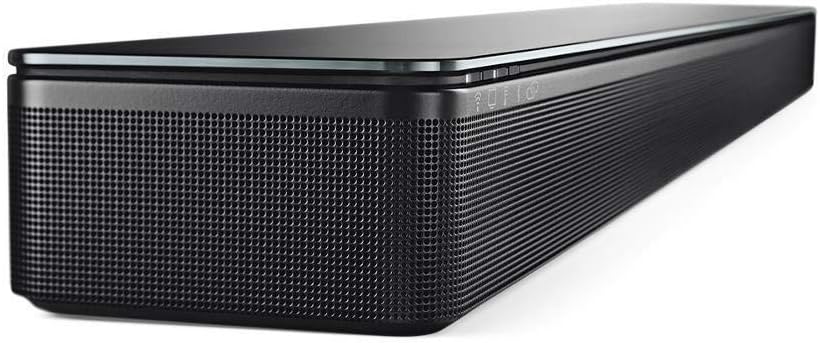
The Bose SoundTouch 300 has a 4.4 rating and offers a familiar route into a flexible Bose home-audio system. It supports Dolby Digital and DTS, includes 4K HDMI pass-through, connects over Bluetooth with NFC pairing and Wi-Fi, and works with Alexa when a separate Alexa device is available. Its most appealing long-term feature is the ability to add an Acoustimass 300 wireless bass module and Virtually Invisible 300 wireless surround speakers later.
We may earn a commission when you buy through this link, at no additional cost to you.
That expansion path allows the base product to function as a straightforward television speaker while preserving an option for a more cinematic configuration. Adapted audio room calibration adjusts the sound to the environment, and the glass-and-metal grille gives the enclosure a distinctive appearance. Music playback is supported through services including Amazon Music, Spotify, and Pandora, along with personal stored music and wireless streaming.
The limitations come from what is not included. The wireless bass module and surround speakers are optional additions, so the complete system shown in the product concept requires further purchases. Alexa also depends on another device. Compared with newer all-in-one models, the SoundTouch 300 relies on a more traditional expansion strategy and does not advertise Dolby Atmos, automatic height effects, or gaming-specific modes in the supplied information.
This sound bar suits buyers who recognize the Bose ecosystem and want flexibility rather than a fixed all-in-one configuration. It is also appropriate for someone who starts with television and music but may add bass and surrounds after moving or upgrading a room. Shoppers wanting immediate surround sound and included wireless bass should instead compare the Samsung models, which arrive with a subwoofer.
Optional Acoustimass and Virtually Invisible wireless accessories let the system grow beyond a basic sound bar. This staggered approach can be practical when room layout or budget does not permit a complete surround installation immediately.
Wi-Fi, Bluetooth, NFC, and support for major streaming services make the sound bar useful beyond television audio. The included 4K pass-through also helps preserve modern source compatibility.
We may earn a commission when you buy through this link, at no additional cost to you.
The Samsung HW-Q6CC has a 3.6 rating and delivers a familiar 3.1-channel Samsung configuration with 340W output, a wireless subwoofer, Dolby Atmos, and DTS surround. The included subwoofer gives the system dedicated bass, while HDMI eARC creates a direct digital connection to a compatible television. It also supports Bluetooth multi-connection, making it convenient to switch between television content and audio from another device.
We may earn a commission when you buy through this link, at no additional cost to you.
Gaming is a meaningful focus. Game Mode is designed to synchronize sound effects with on-screen action, and Tap Sound allows compatible mobile devices to transfer audio to the sound bar with less friction. Adaptive Sound Lite is intended to improve dialogue intelligibility, while CEC can extend some television-control functions. The included remote, HDMI cable, and wall-mounting kit cover several basic setup needs, which helps offset the number of features available during configuration.
Its 3.6 rating is the lowest among the ten products, so buyers should not expect the strongest consensus satisfaction. The system is conventional rather than architecturally advanced: it does not list dedicated height drivers or broad multi-platform streaming functions, and Bluetooth multi-connection can introduce small workflow compromises compared with newer ecosystems. The 340W figure is close to the 300W category while offering a slightly different balance of power and channel count.
The HW-Q6CC is a good match for gamers and Samsung television owners who want Atmos, a physical subwoofer, and wall-mounting hardware in one package. It is less compelling for listeners seeking automatic room correction, advanced voice processing, or an all-in-one surround design. Its practical feature mix and straightforward connections make it a sensible general-purpose option.
Game Mode is intended to align sound effects more closely with fast visual action. This makes the system relevant to console and PC gaming as well as conventional home cinema.
A wireless subwoofer, remote, HDMI cable, and wall-mounting kit are included. That practical package can reduce the number of additional items required for a basic installation.
We may earn a commission when you buy through this link, at no additional cost to you.
The Samsung HW-M550 carries a 4.1 rating and represents a proven 3.1-channel design with 340W output. It delivers dynamic home-audio performance with emphasis on action, movies, shows, and sports. Unlike many newer all-in-one models, its architecture is built around a distinct channel for low-frequency effects, giving filmmakers a better tool for reproducing bass cues separately from the main presentation.
We may earn a commission when you buy through this link, at no additional cost to you.
Connectivity is simple but useful. Bluetooth enables one-touch control from compatible devices, while the HDMI connection carries digital video and audio through a single cable. The system can also pair with the SWA-8500S wireless speaker kit, sold separately, to create a more immersive presentation. That expansion option gives the model some long-term flexibility even though it originated as a 2017 design.
Age is the primary concern. It lacks many features now common in newer sound bars, including the latest room-correction systems, Dolby Atmos support, voice-assistant ecosystems, sophisticated gaming modes, and current app-based equalization. Its 4.1 rating suggests solid customer satisfaction, but it should be judged as a mature platform rather than compared feature for feature with recent releases. The included listing also emphasizes basic television and Bluetooth use.
The HW-M550 is most appealing to budget-focused buyers who want a traditional 3.1-channel design, reliable HDMI connectivity, and optional rear-speaker expansion. It may also suit owners who want the familiar Samsung soundbar format without paying for an all-in-one Atmos model. If modern surround formats and automatic optimization are priorities, a newer Samsung or JBL option offers a more forward-looking feature set.
The 3.1-channel layout separates bass effects from the main audio channels. This is useful when a film mix gives low-frequency cues their own role and allows the subwoofer to operate independently.
Compatibility with the optional SWA-8500S kit allows listeners to add wireless rear speakers later. It is a flexible option for rooms where a fuller surround layout is the eventual goal.
We may earn a commission when you buy through this link, at no additional cost to you.
The Bose TV Speaker has a 4.3 rating and focuses on a simple goal: making television speech easier to hear without requiring a large or complicated system. Two angled full-range drivers produce a wider, more natural presentation than the typical compact television speaker, while the design specifically prioritizes clearer vocals and pronunciation. The enclosure is just over two inches tall, making it easy to position in front of a television or mount nearby.
We may earn a commission when you buy through this link, at no additional cost to you.
Connectivity covers the essentials. HDMI and optical inputs provide wired television connections, while AUX adds another wired source. Bluetooth supports music and podcast streaming from a phone or other device, and the first powered-on wired device automatically connects. The included remote provides a dedicated dialogue mode and bass boost, giving listeners quick control over the two characteristics most likely to improve usability.
The sound bar does not include a subwoofer, so its bass is limited by a compact all-in-one enclosure. It is also compatible with the Bose Bass Module 500 or 700, requiring the correct connection cable or a standard 3.5mm audio cable sold separately. There is no listed Dolby Atmos, height-channel, gaming, or automatic room-correction system. Its strength is focused usefulness rather than home-cinema feature density.
Choose the Bose TV Speaker for a smaller room, a modest television, or listeners who primarily want intelligible speech and better overall television audio. It is also attractive when low visual impact matters more than cinematic effects. Users wanting forceful action-movie bass or a wide surround presentation should look to a 2.1-channel system or an all-in-one Dolby Atmos model instead.
An angled driver layout and dedicated dialogue mode are designed to improve vocal clarity and pronunciation. These features can be especially valuable for news, documentaries, and films with quiet conversations.
The low-profile enclosure suits compact media furniture, while HDMI, optical, AUX, and Bluetooth cover television and personal-audio sources. Optional Bose bass modules provide an upgrade path for deeper low end.
We may earn a commission when you buy through this link, at no additional cost to you.
The Yamaha SR-B30A has a 4.4 rating and delivers a balanced all-in-one approach with Dolby Atmos, Yamaha True Sound, and two built-in subwoofers. It is designed to provide satisfying bass without requiring a separate low-frequency enclosure, while Clear Voice technology lifts dialogue that may otherwise be obscured by music or effects. The result is a practical one-piece solution for television, streaming, and everyday listening.
We may earn a commission when you buy through this link, at no additional cost to you.
HDMI eARC and ARC provide a direct television connection and support uncompressed, high-bitrate audio playback. Bluetooth multipoint allows two devices to remain connected, making it easier to move between personal music and television audio. Four preset modes—Movie, Stereo, Standard, and Game—offer quick ways to match processing to different content, reducing the need for extensive manual adjustment.
The all-in-one approach has inherent limits. Two internal subwoofers cannot match the placement flexibility and low-frequency reach of a larger external subwoofer, and there are no physical rear speakers. Yamaha True Sound can create a broad spatial impression, but virtual or object-based processing should not be treated as equivalent to a full 5.1.2 or 7.1.4 speaker layout in a large room. The supplied information also does not list advanced room calibration.
The SR-B30A is a strong recommendation for buyers who want meaningful bass, Dolby Atmos, and dialogue clarity from a single relatively tidy unit. It works particularly well in medium rooms where adding several separate components would be inconvenient. Choose it when simplicity and balanced sound matter more than having independent controls for bass and rear channels, and when its preset sound modes fit your viewing habits.
Two built-in subwoofers provide the low-end foundation normally associated with a separate enclosure. This keeps the setup visually simpler while retaining bass impact for films, music, and streaming.
Clear Voice enhances dialogue against background music and effects. It is particularly helpful for viewers who struggle with quiet speech or frequently watch news, subtitled dramas, and documentaries.
We may earn a commission when you buy through this link, at no additional cost to you.
The most useful sound bar is not necessarily the one with the largest headline wattage. Channel design, driver layout, bass implementation, processing, room calibration, connectivity, and ease of use should be matched to the room and the way you watch and listen.
A 300W rating describes a product's advertised power capability, not the exact volume every speaker can produce in every room. Maximum-output figures can also exceed a model's stated continuous power, and perceived loudness depends on sensitivity, amplifier design, speaker size, source level, and room acoustics. Compare products using the same type of rating, and pay more attention to whether the system includes a separate subwoofer or multiple built-in drivers.
Choose by room, not by the largest number. A compact system with a subwoofer can sound more substantial than a higher-powered narrow enclosure, while an all-in-one model may fill a larger space more evenly. Check whether the manufacturer labels output as wattage, maximum power, or another measure, and do not assume two differently labeled products produce identical results.
A 2.1-channel system consists of left, right, and bass channels and is best for straightforward television and music upgrades. A 3.1-channel model adds a dedicated low-frequency channel to a conventional front soundstage. A 5.0 all-in-one design uses multiple drivers to create a wider presentation without separate rear speakers, while a 5.1.2 architecture adds height channels for Dolby Atmos.
Physical channels and virtual processing serve different purposes. Virtual height or surround modes can improve dimensionality with fewer components, but dedicated drivers generally provide more control over where effects are presented. For a compact living room, virtual processing may be entirely sufficient; for a dedicated theater, dedicated height and rear channels are worth considering.
A wireless subwoofer can deliver bass with greater apparent impact because the low-frequency drivers are not constrained by the soundbar enclosure. It also offers placement flexibility, although low frequencies are room-sensitive and a corner position can add substantial boost. Built-in subwoofers simplify wiring and reduce visual clutter, making them attractive for apartments and moderate-size rooms.
Decide based on placement and priorities. Buy a traditional 2.1 or 3.1 package if strong action effects and adjustable bass are central to the experience. Choose an all-in-one model if a clean setup matters more than maximum low-frequency output. If you want flexibility, note whether optional bass modules and the required connection cables are available.
Dialogue enhancement can make a major difference in films, news, and shows with dense sound mixes. Look for dedicated dialogue modes, automatic voice optimization, adjustable bass and treble, or presets designed for different content. The goal is not simply to make voices louder, but to improve their distinction from effects, music, and room reflections without creating an unnaturally harsh result.
For frequent viewers, dialogue controls deserve as much attention as cinematic processing. Automatic systems are convenient for mixed households, while manual presets can offer more deliberate control. Listen for balanced tone and natural voices, and ensure the soundbar can be adjusted without repeatedly navigating deep app menus.
Dolby Atmos and DTS Virtual:X indicate that a model can process compatible immersive content, but the presence of a badge alone does not reveal the quality of the result. Check the physical driver layout, output designation, height capability, and whether the sound bar includes a separate subwoofer or rear channels. A 5.0 all-in-one can create a convincing wide image, while a 5.1.2 design offers explicit elevation drivers.
Also confirm which source formats and applications support the feature you want. Music services, Blu-ray players, game consoles, and television apps can present different combinations of lossless audio, Dolby Digital Plus, and object-based sound. HDMI eARC is important when you want an uncompressed or high-bitrate return path from a compatible television.
HDMI ARC provides a simple television connection and commonly enables television-remote volume control. HDMI eARC adds support for higher-bandwidth, uncompressed audio. Optical and auxiliary inputs offer useful alternatives, while Bluetooth expands music listening. For modern homes, assess streaming platforms, AirPlay, Chromecast, Spotify Connect, voice assistants, and the manufacturer's app separately rather than assuming all support is equivalent.
A sound bar that is difficult to operate can be a poor long-term purchase even when its specifications look strong. Look for sensible source switching, quick presets, included remotes, and reliable app setup. Gaming users should also check for a low-latency game mode and compatible HDMI passthrough.
A compact room may make a smaller sound bar with virtual surround processing easier to place and just as immersive. Larger or irregular rooms benefit from wide soundstage technologies, multiple drivers, dedicated height channels, and automatic room correction. Furniture, curtains, walls, and room shape all affect reflections and perceived bass, so the product specification alone cannot predict final performance.
Use calibration when it is available, but still position the soundbar carefully. Place it near the screen, keep the listening area centered, and experiment with subwoofer placement if one is included. Wall mounting can save space but may reduce low-frequency clarity, while a low-profile cabinet position may improve stability and bass response.
The best sound bar should fit physically beneath the television or on the available furniture. Check width, height, depth, and whether wall brackets are included. Compact designs are easier to accommodate, while wide premium models can visually match large screens but require careful measurement. Also consider whether future expansion with rear speakers, a subwoofer, or additional rooms is desirable.
Expansion is not automatically better, but it can extend the useful life of a system. All-in-one models offer simpler installation, traditional 2.1 packages make bass adjustment more direct, and modular Bose or Samsung platforms support later additions. Choose the architecture that matches how likely you are to change your room or listening needs.
Begin by measuring the television stand or wall area, then position the soundbar directly below or as close as practical to the display. Connect the television through HDMI ARC or HDMI eARC when supported, and use the included optical connection only if the television lacks a compatible HDMI audio output. Power the system on, select the correct input, and lower the television volume before increasing soundbar volume to reduce echo and simplify control.
For a wireless subwoofer, complete pairing during initial setup and allow the subwoofer to establish its connection before moving it. Begin with bass near a moderate level, then adjust after watching several types of content. Run room calibration if the model supports it, and avoid making large bass changes immediately after calibration. For Bluetooth music, keep the source volume controlled and reconnect the television input afterward if the sound bar changes sources automatically.
Keep the main grille and any exposed drivers free from dust, and clean the enclosure with a soft, dry microfiber cloth. Do not push objects into driver openings, expose the electronics to excessive heat, or place the sound bar where cables can be pulled. Review firmware and app updates periodically, follow the included wall-mounting instructions, and unplug the system before moving it.
For a typical medium-sized living room, a well-designed 300W system can provide ample volume for television, films, and music. Perceived loudness also depends on the enclosure, subwoofer placement, room acoustics, and source quality. A model with a dedicated subwoofer may feel more powerful than a compact all-in-one with a similar headline rating.
A subwoofer is useful when deep effects, music, or action sequences are important to your experience. It can also reduce strain on the main speakers because low-frequency material is handled separately. If room space is limited or you watch mostly news and dialogue, an all-in-one system with built-in subwoofers may be more convenient.
HDMI ARC is designed to send television audio back to a sound bar and commonly supports compressed audio formats. HDMI eARC adds bandwidth for compatible high-resolution and uncompressed formats, including some Dolby Atmos signals. Both usually allow control of soundbar volume with the television remote when the television and soundbar are properly configured.
Not automatically. A 5.1.2 system has dedicated height channels for Dolby Atmos and may provide more convincing overhead effects, but its physical size and room requirements are greater. In a compact room, a well-placed 5.0 model with wide dispersion or virtual processing may be more practical and satisfying.
A tabletop position generally offers simpler installation and stable bass alignment, while wall mounting can save space and keep the viewing area uncluttered. Whichever option you choose, follow the included instructions and leave enough clearance for buttons, connections, ventilation, and remote signal.
It can, particularly in rooms with strong reflections, furniture, glass, or irregular geometry. Automatic correction analyzes how the room affects playback and adjusts the sound for more consistent results. It does not replace good placement, but it can make a well-positioned system easier to tune and improve consistency across seating positions.
Start with the soundbar's dialogue mode or automatic voice optimization, then lower competing bass and effects levels if necessary. Preset EQ modes for news or standard content can also help. Avoid raising every frequency indiscriminately, because excessive treble or upper-midrange boost can make voices harsh rather than clear.
Most models support Bluetooth, and several provide Wi-Fi, AirPlay, Google Cast, Spotify Connect, or other platform integration. Check the exact connection and streaming features of the chosen model. For the best balance of convenience and audio quality, use a lossless source when both the service and soundbar support it.
The Philips B7305 is the most direct budget-oriented choice at exactly 300W, offering a wireless subwoofer, Dolby Digital Plus, and simple HDMI ARC operation. The Philips B6309 adds virtual surround processing and more connection options, while the JBL Bar 300MK2 stands out as the most complete all-in-one system with wide dispersion, automatic dialogue optimization, calibration, and broad streaming support.
For premium home cinema, the Klipsch Flexus CORE 300 is the standout because its dedicated elevation drivers, 5.1.2 layout, and Dirac Live room correction prioritize an immersive and room-aware presentation. Buyers wanting something simpler should look to the Bose TV Speaker for compact dialogue-focused design, the Yamaha SR-B30A for integrated bass and Atmos, or the Bose SoundTouch 300 for a flexible modular ecosystem.
Whichever product you choose, verify the current listing, television compatibility, room dimensions, input availability, and included accessories before purchasing. Ratings, feature bundles, and prices change over time, so use this guide to identify the right architecture and then confirm that the current version still meets your needs.
