
Leupold BX-1 McKenzie HD 10x42mm
4.7Editor score
Fully multi-coated lenses
BAK 4 roof prisms
Lightweight open-bridge design
Our Leupold Binoculars guide compares ten models for magnification, clarity, range finding, durability, comfort, and value to help you choose confidently today.
Leupold binoculars span compact recreational models, lightweight general-purpose glass, premium HD systems, and rangefinding options built for demanding outdoor use. The right model depends on where you will use it, how much detail you need, how long you will carry it, and whether measured distance information would improve your shooting or viewing decisions.
This guide compares ten models using the stated magnification, objective size, optical features, prism design, coatings, focusing system, environmental protection, and special functions. It includes nine Leupold offerings for a focused brand roundup, plus the closely related Vortex Crossfire HD as a practical alternative for readers comparing mainstream roof-prism binoculars.
The selections reveal distinct priorities: the BX-1 McKenzie HD stands out for lightweight value, the BX-3 Alpine HD balances modern features, the BX-4 Pro Guide HD targets premium all-around performance, and the range-equipped models add specialized functionality. Product availability and prices change, so confirm the current listing and specifications before purchasing.
4.7Editor score

5.0Editor score

5.0Editor score
The comparison covers magnification, objective diameter, optical technology, construction, environmental protection, and specialized features, making it easy to distinguish everyday binoculars from compact, premium, and rangefinding models.



The Leupold BX-3 Alpine HD 10x42mm is our overall pick because it combines a useful 10x magnification, a 42mm objective, modern Elite Optical System performance, and a chassis designed to balance strength and reduced weight. Its 5.0 rating also makes it one of the strongest-rated products in this comparison, although ratings should be considered alongside the features that matter to your particular use.
We may earn a commission when you buy through this link, at no additional cost to you.
Its standout strengths begin with optical clarity and light transmission. Leupold says the Elite Optical System expands the field of view, enhances transmission, and delivers sharp detail across the image. The interchangeable Form-Fit eyecups are particularly relevant for long observation sessions because they can help reduce glare and eye strain while adapting to different users. Meanwhile, the magnesium chassis supports a lighter, stronger construction for demanding terrain.
The 10×42 format is versatile rather than specialized. It offers enough magnification to scan distant subjects and observe wildlife without moving into the more demanding 12x class, while the 42mm objective remains a conventional all-around size. One tradeoff is that this model does not include the electronic range finding, ballistic calculations, or red display found in the dedicated BX-4 Range and BX4-Range models. Buyers who only need visual distance estimation can overlook that omission.
The BX-3 Alpine HD is a strong recommendation for hunters, birders, hikers, and everyday outdoor users who want modern Leupold optics without a rangefinder. It is particularly suitable for people who value a balanced 10×42 setup, replaceable ergonomic eyecups, and a lightweight chassis. Choose it as the most complete general-purpose option in this roundup, while choosing a range model when measured distance data is central to the task.
Interchangeable Form-Fit eyecups help manage glare and reduce eye strain during long glassing sessions. Their adaptable design also makes it easier to accommodate different faces and viewing preferences.
The magnesium chassis is engineered for a lighter, stronger build in demanding terrain. Combined with the familiar 10×42 configuration, it makes the BX-3 Alpine HD practical for mobile outdoor use.
We may earn a commission when you buy through this link, at no additional cost to you.
The Leupold BX-4 Pro Guide HD 10x50mm Gen 2 is a premium binocular for users who want a traditional 10x setup, a larger objective, and Leupold's Elite Optical System without the complexity of an electronic rangefinder. Its 4.9 rating reflects strong customer satisfaction and places it among the most accomplished products in the roundup.
We may earn a commission when you buy through this link, at no additional cost to you.
The 50mm objective is the defining physical specification. It gives this model a substantial light-gathering format intended for detailed observation, while 10x magnification keeps viewing relatively comfortable for extended periods. Leupold highlights unparalleled light transmission, glare reduction, and resolution, positioning the system for clear viewing in varied conditions. The Guard-ion lens coating adds another practical advantage by shedding water, dirt, and fingerprints.
Handling is addressed through an open-bridge, dual-hinge design described as extremely lightweight and ergonomic. This open structure is easy to grip and leaves room for gloved hands, while the dual-hinge arrangement helps position the barrels to suit the user. The binocular is also 100% waterproof and fogproof. The main compromises are its larger 50mm objective format and the absence of electronic distance measurement or ballistic data.
This model makes the most sense for serious birdwatchers, hunters, backcountry observers, and shooters who prefer natural visual ranging over a digital display. It is a strong premium alternative to the BX-3 Alpine HD when the extra objective size and Elite Optical System are priorities. Rather than paying for rangefinding features you may not use, choose the BX-4 Pro Guide for a refined, traditional binocular experience.
The 10x50mm pairing provides a familiar magnification level with a generous 50mm objective. It is a logical choice when light gathering and premium resolution matter more than minimal size.
The Guard-ion coating helps repel water, dirt, and fingerprints. That matters during rain, dusty trails, cold-weather handling, and extended field use where frequent lens cleaning is inconvenient.
We may earn a commission when you buy through this link, at no additional cost to you.
The Leupold BX-4 Range HD TBR/W 10x42mm is the most purpose-built shooting-oriented model among the conventional 10×42 options. It combines visual observation with True Ballistic Range/Wind technology, an illuminated red OLED display, and Leupold's Elite Optical System. Its 4.7 rating places it firmly within this roundup's highly rated group.
We may earn a commission when you buy through this link, at no additional cost to you.
The defining feature is its ability to provide ballistically calculated ranges for uphill and downhill shooting. TBR/W accounts for the environmental and aiming variables represented in the system, giving shooters information beyond a simple straight-line distance estimate. Bright and clear readings from the red OLED display make the rangefinder more useful in changing light, while the Elite Optical System supports light transmission, glare reduction, and resolution.
The 10×42 format remains versatile for wildlife and general observation, so the product is not limited to looking through a shooting bench. It does, however, add electronic and ballistic functions that many casual viewers will never need. Users must also understand the intended calculations and display rather than expecting every number to represent an immediate holdover solution in every situation. The model's guaranteed lifetime performance provides added confidence in a specialized instrument.
Buy the BX-4 Range HD TBR/W if precise electronic distance and ballistically informed shooting data are central to your needs. It is well suited to hunters and shooters who want one binocular for scanning, observation, and range information. For pure wildlife viewing or general portability, a conventional non-rangefinding model offers a simpler and potentially more compact experience.
True Ballistic Range/Wind technology provides ballistically calculated ranges for uphill or downhill shooting. That makes the display more relevant when vertical distance and environmental variables complicate a basic range estimate.
The red OLED display is designed to deliver bright, clear range readings. It provides quick access to distance information while preserving a conventional 10×42 viewing format.
We may earn a commission when you buy through this link, at no additional cost to you.
The Leupold BX-1 McKenzie HD 10x42mm is our best budget-oriented recommendation because it preserves the features many users care about most: a versatile magnification, a conventional objective size, full multi-coating, BAK 4 prisms, and an open-bridge roof-prism body. Its 4.7 rating shows that it remains a well-regarded option despite occupying a more accessible tier.
We may earn a commission when you buy through this link, at no additional cost to you.
The fully multi-coated lens system is designed to maximize brightness while improving clarity, contrast, and color fidelity. BAK 4 prisms create a round exit pupil with virtually no edge distortion, which is especially useful when inspecting subjects near the edge of the field. The open-bridge, roof-prism design is described as extremely lightweight and ergonomic, making the binocular straightforward to carry and hold for casual birding, hiking, hunting, and outdoor observation.
Environmental protection is another strength: the binocular is 100% waterproof and fogproof. As with every model in this roundup, that specification is most meaningful when paired with reasonable care, including keeping optical surfaces clean and avoiding damage to the housing. The BX-1 McKenzie does not offer the advanced Elite Optical System found in newer BX-3 and BX-4 models, nor does it include electronic range finding.
Choose the BX-1 McKenzie HD if you want a familiar 10×42 Leupold binocular without paying for premium-tier optics or specialized electronics. It is a particularly good match for buyers who prioritize multi-coating, edge clarity, low-distortion viewing, and a light open-bridge design. Those seeking the newest optical platform may prefer the BX-3 Alpine HD, but the McKenzie remains a capable everyday choice.
BAK 4 prisms are designed to produce a round exit pupil with virtually no edge distortion. This helps keep the image crisp when wildlife or landscape details move away from the center.
The open-bridge, roof-prism format is described as extremely lightweight and ergonomic. It provides a modern shape without the display, controls, and specialized purpose of a rangefinder.
We may earn a commission when you buy through this link, at no additional cost to you.
The Leupold BX-1 Rogue 10x25mm is the compact choice in this roundup, designed for users who value portability and fast access to magnification more than a large objective. It retains 10x power in a small 25mm configuration, and its 4.7 rating indicates that compact size has not come at the expense of overall customer satisfaction.
We may earn a commission when you buy through this link, at no additional cost to you.
The inverted Porro prism design is central to the Rogue's appeal. It makes the binocular incredibly small and lightweight without sacrificing optical performance, according to the product information. The Advanced Optical System supports light transmission, glare reduction, and resolution for recreational sports participants who still want a crisp, usable image while moving through the field.
Handling benefits from the easy-grip rubber armor, which provides a positive grasp in changing conditions. That makes the binocular easier to control with cold or wet hands. The principal trade-off is the 25mm objective. Compared with the 42mm and 50mm options elsewhere in the guide, it gathers less light and is less suited to prolonged viewing in very dim conditions. The compact geometry also naturally limits how much fine detail can be resolved at long range.
The BX-1 Rogue is best for travel, hiking, sporting events, casual wildlife observation, and anyone who wants full 10x magnification in a pocketable form. It is less compelling when the priority is maximum brightness, long-range detail, or a premium optical system. Pick it when portability is the deciding factor and the outdoor conditions are appropriately bright.
The inverted Porro prism design enables an extremely compact binocular without giving up 10x magnification. It is a practical option for travel and activities where carrying capacity matters.
The shrouded rubber armor provides a positive grasp in all conditions. It is especially useful when the binocular must be handled quickly or held securely with gloved hands.
We may earn a commission when you buy through this link, at no additional cost to you.
The Leupold BX-2 Timberline HD 12x50mm combines higher magnification with a generous objective, making it an interesting option for long-range observation where detail matters more than an ultra-compact profile. It holds a 5.0 rating and offers a distinctive balance of 12x magnification, 50mm light gathering, and an open-bridge roof-prism design.
We may earn a commission when you buy through this link, at no additional cost to you.
The Advanced Optical System is described as delivering excellent light transmission, glare reduction, color fidelity, and edge-to-edge clarity across a wide range of lighting conditions. Those characteristics suit users who want to scrutinize distant subjects, scan broad terrain, or make fine distinctions that may be less apparent at 10x. The 50mm objective provides more potential light-gathering capability than the smaller 42mm configurations in the guide.
Guard-ion is a hydrophobic coating designed to shed dirt and water, helping maintain a clear, crisp image with less maintenance. The binocular is also waterproof and fogproof. The open-bridge chassis contributes a lightweight, ergonomic feel. As a trade-off, 12x magnification makes handheld steadiness more important, and the 50mm objective is less compact than smaller-objective models. It may therefore be better suited to stationary viewing or supported use than the most mobile binoculars.
Choose the BX-2 Timberline HD if you want more magnification than the standard 10×42 setup without moving into a 12×50 rangefinder. It is a strong all-around choice for hunters, birders, and landscape observers who value detail, brightness, and edge clarity. Users who need measured distances should consider the BX4-Range HD instead.
The 12x magnification makes distant subjects appear larger and can reveal detail that is less obvious at 10x. A stable support or steady hold is valuable when using the full magnification.
The hydrophobic Guard-ion coating sheds dirt and water, supporting a clear image in poor weather. Reducing contamination makes the binocular easier to use after rain, mud, or dusty travel.
We may earn a commission when you buy through this link, at no additional cost to you.
The Leupold BX-2 Alpine HD 10x42mm is a balanced, conventional binocular with a 4.8 rating and a proven feature set. It is a sensible middle option between the entry-focused BX-1 McKenzie and the more advanced BX-3 Alpine HD, offering strong multi-coated performance, BAK 4 prisms, and an open-bridge roof-prism chassis.
We may earn a commission when you buy through this link, at no additional cost to you.
Its fully multi-coated lens system is designed to maximize brightness while delivering clarity, contrast, and color fidelity. That combination is valuable in outdoor scenes where subtle differences in color, texture, or shape can matter. BAK 4 prisms provide a round exit pupil with virtually no edge distortion, helping the image remain crisp and consistent away from the center. Together, these specifications make the BX-2 Alpine HD a dependable all-rounder for wildlife and landscape observation.
The open-bridge, roof-prism body is described as extremely lightweight and ergonomic, while waterproof and fogproof construction protects it in changing outdoor conditions. The tradeoff is that it belongs to an older generation than the BX-3 and BX-4 models, whose Elite Optical System represents a more advanced tier. It also lacks a range finder, so the visual experience remains simple and direct.
This is a good choice when you want proven 10×42 ergonomics, bright optics, and a manageable conventional design. Choose it over the BX-1 McKenzie when optical refinement matters and over the BX-3 Alpine HD when a lower-tier system is sufficient. It is especially appealing for birdwatching, hiking, hunting, and general nature observation.
Full multi-coating is intended to maximize brightness while improving clarity, contrast, and color fidelity. Those qualities help make distant wildlife and landscape details easier to distinguish.
The open-bridge, roof-prism design is extremely lightweight and ergonomic. Its uncomplicated construction also avoids the controls and electronics found in specialized rangefinding binoculars.
We may earn a commission when you buy through this link, at no additional cost to you.
The Leupold BX4-Range HD Gen 2 TBR/W 12×50 is the premium rangefinding selection in this guide, combining a detailed 12x magnification, a 50mm objective, TBR/W technology, and the Elite Optical System. Its 5.0 rating makes it one of the top-rated products here and a natural choice for shooters who want high-end optics and electronic distance data.
We may earn a commission when you buy through this link, at no additional cost to you.
The 12×50 configuration is designed for users who want more apparent detail and greater light-gathering capability than a standard 10×42 binocular. Leupold describes the Elite Optical System as delivering exceptional light transmission, glare reduction, and resolution, while the Guard-ion coating sheds water, dirt, and fingerprints. The open-bridge, dual-hinge design is intended to remain lightweight and ergonomic despite the model's specialized electronics and substantial objective format.
TBR/W functionality is the key distinction from ordinary premium binoculars. It provides a dedicated path to ballistic range information rather than relying only on visual estimation. That makes the binocular most useful in shooting applications, particularly when distance and ballistic variables matter. It is less essential for a user whose only goals are birdwatching, travel, or casual nature observation, and those people may find the simpler BX-2 Timberline HD more appropriate.
Choose the BX4-Range HD Gen 2 for a combination of high magnification, premium optical performance, and advanced range finding. It is suited to dedicated hunters and shooters who value a specialized instrument and want 12x detail without sacrificing a traditional roof-prism form. The BX-4 Range HD TBR/W 10x42mm is the more compact-oriented alternative for buyers who prioritize a lighter-looking 42mm setup and red OLED readout.
The Elite Optical System supports strong light transmission, glare reduction, and resolution, while TBR/W adds electronic range calculations. This combination serves shooters who want more than a conventional visual optic.
Guard-ion coating helps water, dirt, and fingerprints slide away from the lenses. That supports clear viewing and reduces the disruption caused by rain, dust, and frequent handling.
We may earn a commission when you buy through this link, at no additional cost to you.
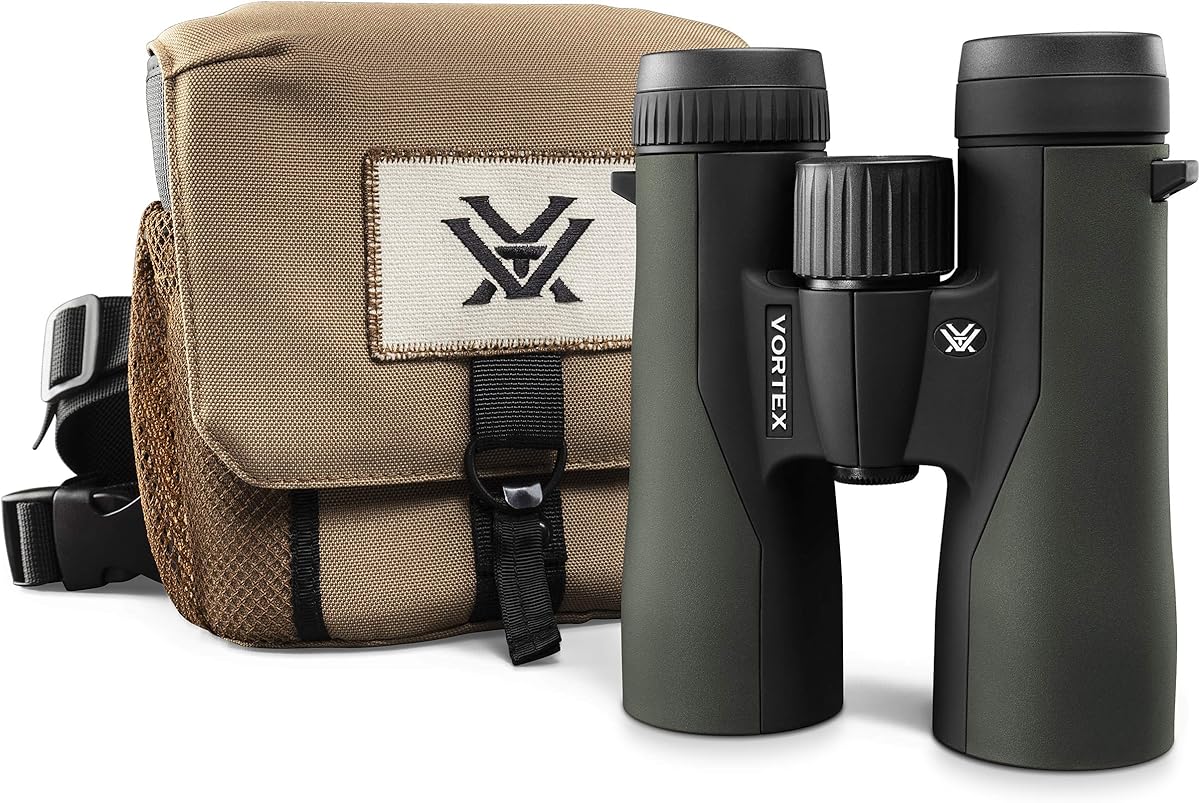
The Vortex Crossfire HD 10×42 is included as a practical non-Leupold alternative. It shares the most common configuration in the roundup—10x magnification with 42mm objective lenses—and its 4.8 rating reflects a strong result. The model is especially interesting for shoppers who want a mainstream roof-prism binocular with extensive mounting and warranty support.
We may earn a commission when you buy through this link, at no additional cost to you.
Its select glass elements are optimized to deliver exceptional resolution, reduce chromatic aberration, and improve color fidelity, edge-to-edge sharpness, and light transmission. Fully multi-coated lenses add multiple anti-reflective coatings to all air-to-glass surfaces. The roof-prism format is valued for durability and compactness, while adjustable eyecups accommodate viewing with or without glasses.
Practical controls include a center focus wheel that adjusts both barrels together and a right-eyepiece diopter for differences between a user's eyes. Rubber armor provides a secure, non-slip grip and external protection. Unlike several premium Leupold choices, the Crossfire HD is tripod adaptable for use on a tripod or car-window mount. Its nitrogen purging and o-ring seals provide water- and fogproof performance.
The Vortex Crossfire HD is a strong alternative for birders, hunters, travelers, and everyday observers who do not require an integrated rangefinder. Its transferable lifetime VIP warranty is another distinguishing feature, although it excludes loss, theft, deliberate damage, and cosmetic damage that does not hinder performance. Choose it when the conventional feature set and flexible mounting options outweigh a preference for Leupold branding.
Select glass elements are optimized for high resolution, reduced chromatic aberration, and strong color fidelity. Full multi-coating supports brightness and edge-to-edge sharpness across the image.
Tripod adaptability makes the binocular useful on a tripod or car-window mount. This expands its appeal for wildlife viewing, travel, and long stationary observation sessions.
We may earn a commission when you buy through this link, at no additional cost to you.
The Leupold BX-5 Santiam HD 10x42mm is the premium conventional binocular in this roundup, emphasizing rugged construction, a smooth focusing system, and a refined 10×42 viewing format. Its 4.3 rating is the lowest among the included products, but the model remains attractive for buyers who prioritize physical protection and fine adjustment control.
We may earn a commission when you buy through this link, at no additional cost to you.
The binocular is 100% waterproof, fogproof, and shockproof, giving it a strong foundation for demanding outdoor use. Guard-ion lens coating sheds water, dirt, and fingerprints to support a clear, crisp image. The open-bridge, dual-hinge design is described as extremely lightweight and ergonomic, balancing a premium construction with a practical shape for carrying and handling.
The most distinctive everyday feature is an extremely smooth focusing system for fine adjustments. That can be valuable when locating a small target or bringing a distant subject into precise focus, particularly for users who dislike abrupt focus changes. The main trade-off is that it lacks the stated Elite Optical System advantages and ballistic range finding offered by newer BX-3, BX-4, and BX4-Range products.
Choose the BX-5 Santiam HD if ruggedness, smooth focusing, and a traditional 10×42 format are your priorities. It can serve serious birdwatchers, hunters, and outdoor observers who want a premium binocular without electronic complexity. Those prioritizing the latest optical platform should compare it with the BX-3 Alpine HD, while shooters seeking measured distance data can move up to a rangefinding model.
Waterproof, fogproof, and shockproof construction provides comprehensive environmental protection. These qualities suit demanding terrain, frequent travel, and use in changing weather.
The extremely smooth focusing system allows delicate changes when refining focus. It is a practical benefit for distant wildlife, small targets, and users who prefer controlled transitions.
We may earn a commission when you buy through this link, at no additional cost to you.
Choosing binoculars means balancing magnification, objective size, optical design, handling, protection, and specialized features. Use the following factors to identify the model that best fits your activities and viewing conditions.
Magnification determines how much larger distant objects appear. A 10x binocular provides a versatile balance between detail and handheld comfort, making it appropriate for birding, hunting, hiking, and general observation. A 12x model can reveal more distant detail but generally makes it more important to keep the binocular steady. Consider how long you will hold the binoculars, whether you can use a tripod or window mount, and whether the additional apparent magnification is meaningful for your normal subjects.
Objective diameter influences the amount of light the binocular can gather. A 42mm objective is a conventional all-around size that balances brightness and portability, while a 50mm objective offers more light-gathering potential and often suits extended viewing or low-light conditions. A 25mm objective produces a much more compact binocular but is less capable in dim light. Match the objective to your usual conditions rather than assuming the largest option is automatically the most useful.
Leupold's Elite and Advanced Optical Systems emphasize light transmission, glare reduction, resolution, clarity, and color fidelity, while the BX-1 models use fully multi-coated lenses in some configurations. Coatings also help resist contamination: Guard-ion is hydrophobic and sheds water and dirt, while the Crossfire HD's anti-reflective coatings support brightness and sharpness. Compare the optical platform rather than assuming a model number alone determines image quality.
Roof-prism binoculars generally favor a compact, modern form, while the BX-1 Rogue uses inverted Porro prisms to achieve an especially small and lightweight body. Open-bridge and dual-hinge designs can provide a secure grip and leave space around the barrels for gloved hands. BAK 4 prisms are specified to create a round exit pupil and virtually no edge distortion. Consider both the physical shape and how the model feels during the activities you will perform most often.
The BX-4 Range HD TBR/W and BX4-Range HD Gen 2 add electronic range finding, with True Ballistic Range/Wind technology supplying ballistic calculations for uphill and downhill shooting. The BX-4 Range also uses a red OLED display for clear readings. These functions are valuable when a shooter wants measured distance and ballistic information, but they add complexity and are unnecessary for ordinary wildlife watching or casual landscape viewing.
Every Leupold model listed here is described as waterproof and fogproof, while the Vortex Crossfire HD uses nitrogen purging and o-ring seals for similar environmental protection. The BX-5 Santiam HD also specifies shockproof construction. These features are reassuring for hunting, birding, and travel, but they do not make binoculars maintenance-free. Keep lenses clean, protect them from abrasion, use a suitable case, and avoid unnecessary impacts.
Field of view determines how much scenery appears at once, which can affect tracking moving subjects and maintaining situational awareness. The BX-3 Alpine HD's Elite Optical System is specifically described as expanding the field of view, while the BX-2 Timberline HD emphasizes edge-to-edge clarity. Neither field of view nor close-focus distance is quantified in the supplied information, so check the manufacturer's current specifications if either factor is critical.
Comfort includes weight balance, bridge clearance, eye relief, focus feel, and the ability to view with or without glasses. The BX-3 Alpine HD's interchangeable Form-Fit eyecups are designed to reduce glare and eye strain during long sessions, while the Crossfire HD has adjustable eyecups and a right-eyepiece diopter. If possible, hold the exact model and adjust the interpupillary distance and diopter before committing.
Before first use, set the interpupillary distance by bringing the barrels together until the image forms one circular field rather than two overlapping ovals. Adjust the right-eyepiece diopter to correct for differences between your eyes. If you wear glasses, position the eyecups against the frames; on the BX-3 Alpine HD, take advantage of the interchangeable Form-Fit eyecups to establish a comfortable, glare-resistant fit.
Start with the center focus wheel and bring a subject into focus at a moderate distance. Use small movements so you can refine the image without overshooting the sharp point. For 12x models, stabilize the binocular against a solid surface, use a tripod-compatible mounting solution where appropriate, or rest the elbows for steadier viewing. For rangefinders, learn the controls and verify the operating guidance for TBR/W information before relying on it in the field.
After use, wipe away moisture and dirt with a clean lens cloth, but avoid dry rubbing that can scratch coatings. Keep eyecups, focusing rings, and binocular bodies protected from excessive heat, impacts, and salt. Store the binocular in its case with lenses and eyecups dry, and do not leave it in a hot vehicle. Guard-ion and other hydrophobic coatings help shed contamination, yet regular cleaning remains necessary for the clearest possible image.
The Leupold BX-3 Alpine HD 10x42mm is the most versatile option in this guide. Its 10x magnification, 42mm objective, Elite Optical System, interchangeable Form-Fit eyecups, and magnesium chassis balance portability, detail, comfort, and rugged construction. It lacks a rangefinder, so shooters who require measured and ballistic range information should consider a BX-4 Range or BX4-Range model instead.
A 10x42mm binocular is generally easier to hold steadily and is more compact, while a 12x50mm binocular offers more apparent magnification and greater light-gathering potential. The better choice depends on your subjects, lighting, and mobility. Choose 10×42 for handheld versatility and 12×50 when distant detail and a premium viewing experience take priority.
Both provide 10x magnification, but their objective lenses differ significantly. The 25mm design is smaller and lighter, making it useful for travel and casual observation, whereas the 42mm design gathers more light and is better suited to broader outdoor viewing. The BX-1 Rogue prioritizes compactness, while the BX-1 McKenzie and BX-2 Alpine offer a more conventional general-purpose form.
A rangefinder can be useful when precise distance and ballistic information would improve your shooting decisions, but it is not essential for every hunter. The BX-4 Range and BX4-Range models provide TBR/W calculations and electronic readouts. If you mainly need identification and observation, a conventional premium model can provide a simpler and more compact experience.
TBR/W stands for True Ballistic Range/Wind. The system supplies ballistically calculated ranges that account for variables such as uphill or downhill shooting and wind. It is intended to help shooters make more informed distance decisions, though users should understand the system's guidance and verify their setup before relying on a displayed result.
The models in this roundup are described as waterproof and fogproof, which makes them suitable for wet outdoor conditions when their seals and construction remain intact. Sealing does not prevent damage from drops, immersion beyond intended use, or abrasive dirt. After rain, dry the binocular gently and clean the lenses with an appropriate cloth to preserve coating clarity.
BAK 4 prisms are used in the BX-1 McKenzie and BX-2 Alpine HD models. According to the supplied information, they deliver a round exit pupil with virtually no edge distortion and a crisp image. That helps maintain more consistent clarity when subjects move away from the center of the viewing field.
Roof-prism models such as the BX-1 McKenzie, BX-2 Alpine, and most premium Leupold selections prioritize a compact, modern shape and durability. The BX-1 Rogue uses inverted Porro prisms to become especially small and lightweight while retaining optical performance. Choose according to compactness, handling preference, and the activities for which you will carry the binocular.
The Leupold BX-3 Alpine HD 10x42mm is the strongest overall recommendation because it combines an Elite Optical System, a modern magnesium chassis, adaptable Form-Fit eyecups, and a versatile magnification and objective pairing. The BX-1 McKenzie HD 10x42mm is the practical budget choice, while the BX4-Range HD Gen 2 TBR/W 12×50 is the premium option for shooters who need advanced range finding.
Prioritize the use case before the model number. A 10×42 binocular is the easiest general-purpose format, 12×50 provides more magnification and light-gathering potential, and 10×25 offers maximum compactness. Consider optical system, prism design, focusing behavior, field comfort, environmental sealing, and specialized rangefinding functions, then compare the final choices for the conditions in which you will actually use them.
Finally, check the current product listing, availability, and price before buying, because both can change. Verify the magnification, objective diameter, model number, included accessories, warranty terms, and current technical specifications on the seller's page. This final check ensures that the chosen binocular matches your needs, environment, and budget at the time of purchase.