OHAYO A7 Open Ear Headphones
5.0Editor score
Glasses-friendly clip-on design
40-hour case-inclusive battery
12mm drivers with ENC
Discover the best Bluetooth headset for glasses wearers, with 10 open-ear, clip-on, and bone-conduction options compared for comfort, sound, battery, and fit.
Wearing glasses and headphones at the same time can feel uncomfortable when earbuds press against temples or bulky headsets interfere with frame arms. Open-ear, clip-on, and bone-conduction designs offer practical alternatives that leave the ear canal clear while giving glasses users access to music, calls, podcasts, and navigation.
This guide compares ten Bluetooth headset options for glasses wearers according to comfort, frame compatibility, audio approach, microphone features, wireless connectivity, battery life, and resistance to sweat or light rain. It includes products designed specifically around glasses as well as versatile open-ear models that can accommodate different frame shapes.
Each review identifies the headset's strongest qualities and honest limitations, while the comparison table offers a quick overview of every model. Reader ratings are included for context, but product fit, design, and intended activities should guide the decision. Prices and availability can change over time.
5.0Editor score

4.9Editor score
4.5Editor score
The table below compares all ten headsets by mounting style, core audio technology, battery claims, and glasses compatibility. Use it to narrow the field before reading the full reviews, especially if your priority is a low-profile clip, a neckband-style open-ear design, or a frame-mounted model.


This open-ear bone-conduction headset combines a flexible neckband, a 25-gram construction, and a 4.6 reader rating. It is designed for listeners who wear glasses and want audio without inserting anything into the ears. The neckband format leaves the ear canal unobstructed and is positioned to avoid the pressure created by conventional in-ear buds.
We may earn a commission when you buy through this link, at no additional cost to you.
Its strongest features are Bluetooth 6.0, dual-device connectivity, a built-in microphone, and three EQ modes for vocals, bass, or balanced output. That combination suits listeners who alternate between music, podcasts, videos, and calls. A 10-hour battery and IP65 rating also make it reasonable for commuting, running, cycling, and hiking, although it is not intended for swimming or underwater use.
The main limitation is that 10 hours of playback is shorter than the case-based endurance offered by several clip-on competitors. As an open-ear device, it may also produce some sound leakage. The flexible neckband needs to rest behind the head, so people who remove their glasses frequently may find it less convenient than a small clip-on or frame-mounted option.
This is a strong general recommendation for glasses wearers who exercise, commute, and switch regularly between a phone and computer. Its light weight, environmental awareness, and adjustable sound modes make it more versatile than a basic sports headset. Those prioritizing maximum battery life may prefer the OHAYO A7 or TOZO OpenEarRing instead.
The soft, flexible neckband is intended to adapt to different head shapes while the open-ear structure avoids pressure inside the ear canal. It is a useful format for people who find sealed earbuds uncomfortable or who need to hear traffic and conversations while listening.
Bluetooth 6.0 and dual-device connectivity make it straightforward to move between two source devices. The three EQ modes also allow listeners to favor vocals during calls or podcasts, add bass while exercising, or select a balanced profile for general listening.
We may earn a commission when you buy through this link, at no additional cost to you.
The OHAYO A7 is explicitly designed for glasses wearers and earns a 5.0 reader rating. Each clip-on earbud weighs just 4.7 grams, reducing the pressure that can occur when ordinary earbuds push against spectacle temples. Its open-ear format also leaves the ear canal unobstructed for commuting, exercise, and general awareness.
We may earn a commission when you buy through this link, at no additional cost to you.
The headset uses 12mm drivers, Bluetooth 5.4, and low-latency wireless connectivity for music, movies, gaming, and calls. ENC microphone technology is included to help voices remain clear, while the supplied charging case supports up to 40 hours of total playback. IPX6 sweat resistance adds confidence for running, walking, and outdoor workouts.
Its most significant trade-off is the open acoustic design, which can let some sound escape into a quiet environment. A clip-on product also depends partly on the shape of the outer ear, and glasses temple arms may affect how securely it sits. Users should check the fit before a long journey or workout rather than assuming every frame combination will feel identical.
For glasses wearers who want a small, unobtrusive headset with generous battery life, the OHAYO A7 is an excellent pick. It stands out as the lightest option in this guide and is especially attractive for users who prioritize comfortable all-day wear over the deeper sound isolation of traditional earbuds.
The clip-on structure is designed to sit around the ear without pressing directly on glasses temples or blocking the ear canal. That makes the A7 a practical choice for full-time glasses wearers who have found ordinary earbuds uncomfortable.
The charging case substantially extends listening time, making the A7 convenient for travel, office use, and daily commuting. It is a stronger endurance proposition than neckband headsets that provide only a single extended playback charge.
We may earn a commission when you buy through this link, at no additional cost to you.
The LICAEVEY model takes the glasses-wearer concept most literally by attaching directly to the temples of eyeglasses or sunglasses. Its 3.5 reader rating is the lowest in the guide, but the specialized mounting system remains distinctive. The device preserves normal eyewear while adding open-ear audio and multifunction controls.
We may earn a commission when you buy through this link, at no additional cost to you.
An elastic, adaptive silicone cover is intended to attach securely to a wide range of temple shapes. Bluetooth 5.3 provides stable wireless connectivity, while voice-assistant activation and multifunction buttons support calls and music. The open-ear layout also helps users remain aware of traffic, conversations, and other surroundings during running, cycling, and driving.
The stated eight-hour battery is modest compared with charging-case models, and frame-mounted operation means the headset leaves the ears entirely free. Compatibility can vary among thick, thin, curved, or unusually shaped frames, so checking the attachment against your own glasses is important. Its lower rating also suggests the overall experience may not be as polished as the leading alternatives.
This product makes the most sense for someone who wants audio to travel with a specific pair of glasses rather than wear a separate headset around the ears. It is especially useful for active users who value environmental awareness and a visually integrated setup, though OHAYO offers a more refined and better-rated glasses-specific design.
Because the unit attaches to the glasses, it offers a different solution from ear hooks and neckbands. That can appeal to users who want their eyewear to function as the primary audio-wearable platform.
Open-ear playback leaves surrounding sounds accessible, which can be useful outdoors. The attachment is designed to remain stable during exercise, although frame shape and movement should be tested before demanding activities.
We may earn a commission when you buy through this link, at no additional cost to you.
TOZO OpenEarRing combines tiny clip-on earbuds with a 4.3 reader rating and an emphasis on glasses compatibility. Each earbud weighs 5.1 grams and uses a skin-friendly silicone structure intended to avoid clashing with frames. Its open acoustic design supports awareness while delivering stereo sound through the TOZO OrigX acoustic technology.
We may earn a commission when you buy through this link, at no additional cost to you.
One of the most notable features is customization through the TOZO app, which provides 32 EQ modes for different genres and preferences. Bluetooth 5.4 supports a stated connection range of 15 meters, and the charging case adds a digital display plus 30 hours of playback to the earbuds' 10-hour rating. Physical buttons handle calls, music, and playback, while IPX5 protection helps resist sweat and rain.
The app dependency adds complexity for users who want simple, immediate controls, although basic functions remain available through the buttons. The open-ear format can produce noticeable leakage, and the listed 15-meter range is less generous than the stated ranges of some competing models. As with other clip-on designs, fit and stability may vary with ear anatomy and glasses arms.
OpenEarRing is well suited to listeners who want to fine-tune their sound and appreciate a compact case. It is a particularly good fit for glasses wearers who alternate among music, movies, calls, and podcasts and want a long total battery duration without a full-size over-ear headset.
The 32 available EQ profiles give listeners considerably more control than a headset offering only a couple of physical sound modes. This is useful for balancing voices in podcasts, instrumental layers, or more prominent bass.
A digital case display provides a quick visual indication of charging status, while the case extends total listening time. Automatic pairing when the earbuds are removed further reduces everyday setup.
We may earn a commission when you buy through this link, at no additional cost to you.
This 4.9-rated O2 open-ear headset is the most balanced overall recommendation in the guide. Its flexible titanium frame weighs 26.4 grams and is specifically described as comfortable alongside glasses. The ear hook remains outside the ear canal, providing a secure alternative for listeners who dislike in-ear pressure.
We may earn a commission when you buy through this link, at no additional cost to you.
The 15mm dynamic drivers are larger than those in many compact sport headsets, and air conduction directs audio toward the ear while limiting disturbance to nearby listeners. Bluetooth 5.3 supports two simultaneous device connections, a stated range of 33 feet, and built-in microphones with button controls. The battery provides 12 hours of continuous playback, while magnetic charging adds one hour of use from a ten-minute charge.
The headset is sweat-resistant but explicitly not intended for swimming, so it should not be submerged. Open-ear models naturally allow some sound leakage, which may matter in quiet rooms. The included 30-day return window and 12-month warranty also provide more reassurance than many competing listings, although fit remains dependent on ear shape and glasses geometry.
This is the most versatile choice for runners, cyclists, commuters, and glasses wearers who split time between exercise and work. It provides the strongest combination of refined specifications, strong reader feedback, battery convenience, and explicit frame-friendly design. It is our top overall pick for those seeking a flexible titanium frame, larger 15mm drivers, and seamless switching between two connected devices.
The ergonomic hook is designed to sit comfortably next to glasses without plugging the ear. This reduces the common conflict between temple arms and sealed earbuds, especially during long workdays or extended runs.
A ten-minute magnetic charging session provides an additional hour of playback, making the headset practical between meetings, commutes, or workouts. The 12-hour primary battery is also competitive among open-ear hook designs.
We may earn a commission when you buy through this link, at no additional cost to you.
This 29-gram trucker-style headset is built around adjustable ear hooks, a rotating boom microphone, and a 3.8 reader rating. Its open-ear architecture is designed to coexist with glasses, hats, and helmets. The three-dimensional hooks are designed to fit different ear shapes while keeping the device stable during work or exercise.
We may earn a commission when you buy through this link, at no additional cost to you.
An AI microphone system is intended to reduce background clutter, and a dedicated button offers instant muting. Bluetooth 5.3 supports two connected devices at once, while a stated signal range of 49 feet provides ample room for calls and media. A multifunction button handles track changes, playback, and call controls, making it suitable for drivers, remote workers, and outdoor users.
Compared with tiny clip-on earbuds, this model is more substantial and therefore less discreet. The supplied information does not provide a precise playback or talk-time figure, which makes runtime comparison difficult. Its 3.8 rating indicates that some buyers may have found the experience less compelling, even though the microphone and mounting features are well suited to professional use.
Choose this headset when voice communication matters more than compactness. It is a strong match for truck drivers, warehouse staff, remote workers, or exercisers who wear helmets and glasses. Listeners focused on music, media richness, and minimal ear weight are better served by the OHAYO A7 or the O2 model.
The microphone rotates through 270 degrees, allowing it to move toward the mouth for calls and away when not needed. That flexibility is useful for users who alternate between working, driving, and exercising.
AI-assisted noise reduction and a dedicated mute control address common problems with hands-free calling outdoors. Dual-device connectivity also makes it easier to move between a work computer and a personal phone.
We may earn a commission when you buy through this link, at no additional cost to you.
This second bone-conduction listing shares the same 4.6 rating and core specification set as the first product, including a 25-gram neckband, Bluetooth 6.0, three EQ modes, and a 10-hour battery. The open-ear architecture is intended to keep traffic, conversations, and environmental sounds perceptible during outdoor activity.
We may earn a commission when you buy through this link, at no additional cost to you.
Its flexible neckband avoids pressure inside the ear canal, and the skin-friendly design is intended to adapt to different head shapes. Dual-device connectivity allows listeners to move between media, calls, and work tasks, while the microphone supports hands-free communication. IP65 protection and sweat resistance suit gym sessions, running, cycling, and hiking.
As with the similar headset in first place, a single 10-hour charge is the principal battery limitation. Bone-conduction and open-ear playback can still allow some audio to escape, particularly in quiet spaces. The neckband must also wrap behind the head, which may conflict with certain hairstyles or a preference for ear-only products.
This listing is most attractive to glasses wearers who prefer a stable neckband over a tiny ear clip. It offers a compelling combination of low weight, awareness, wireless multitasking, and weather resistance. Buyers should compare it carefully with the OHAYO A7 if carrying a charging case and longer total playback are important.
At 25 grams, the neckband places little weight around the head and does not require ear-canal insertion. Its flexible construction is intended to remain comfortable across different head shapes and everyday activities.
The IP65 rating provides resistance to sweat and water exposure during active use. It is a useful feature for running and hiking, though the product is not intended for swimming or underwater operation.
We may earn a commission when you buy through this link, at no additional cost to you.
This open-ear trucker headset combines a 5.0 reader rating with a microphone-centered feature set. It uses a 15mm dynamic driver for audio and dual microphones with AI noise reduction for calls. The boom microphone rotates 210 degrees, giving wearers control over voice pickup in different positions.
We may earn a commission when you buy through this link, at no additional cost to you.
Calls are a central focus. A quick three-press control mutes or unmutes the microphone and provides voice confirmation, while the same control also supports playback and call functions. Bluetooth 5.4 provides a stable connection with a stated range of 33 feet, and the headset offers up to 12 hours of talk time for extended business use.
This model prioritizes communication rather than music controls or extensive EQ customization. Open-ear air conduction can sound more natural and provide better bass than traditional bone conduction, though some leakage remains. Users who need a dedicated music-focused EQ system or a charging case may find other options more aligned with their habits.
It is a strong recommendation for drivers, call-center workers, remote professionals, and anyone who spends long periods talking while wearing glasses. The 5.0 rating is especially notable. The adjustable boom, noise reduction, and quick mute function make it more specialized than a general music headset and better suited to voice-heavy days.
Dual microphones and AI noise reduction are designed to reduce road and background noise. This makes the headset more practical for long drives, meetings, online classes, and other communication-heavy settings.
The 15mm driver and air-conduction design provide clear mids and highs along with more bass than traditional bone-conduction headphones. Audio remains suitable for podcasts, coaching cues, music, and casual conversation.
We may earn a commission when you buy through this link, at no additional cost to you.
The Xmenha open-ear earbuds use ultra-thin memory-titanium hooks and a 3.6 reader rating. Their primary distinction is minimal physical thickness: the hooks are designed to sit almost unnoticed around the ear while remaining compatible with glasses. The open acoustic structure avoids ear-canal insertion and helps users remain aware of their surroundings.
We may earn a commission when you buy through this link, at no additional cost to you.
A charging case extends four hours of earbud playback to 12 hours overall and can be charged in about an hour. The air-conduction design produces a wide, natural presentation that works particularly well for podcasts, vocals, and light music. Pairing is compatible with iOS and Android, although manual pairing is noted as necessary for iPhone 17 series devices.
This is one of the least substantial options for extended uninterrupted use because the earbuds themselves provide only four hours of playback. The listing also openly notes minor sound leakage, mild bass, and the need for a lower volume in quiet indoor spaces. The 3.6 rating reflects the compromises of prioritizing a very thin, light hook.
Choose these earbuds when a barely noticeable profile and broad, natural sound are more important than long battery life. They may suit casual commuting, walks, and light exercise. For demanding users, the OHAYO A7, O2, or TOZO OpenEarRing offer stronger endurance and more refined glasses-focused positioning.
The memory-titanium hooks are designed to flex and sit lightly around the ear. Their low profile reduces the chance of a conspicuous headset interfering with glasses or daily clothing.
The open soundstage favors vocals, podcasts, and light music. Bass is intentionally mild, and listeners in quiet indoor environments may need to keep the volume moderate to limit leakage.
We may earn a commission when you buy through this link, at no additional cost to you.
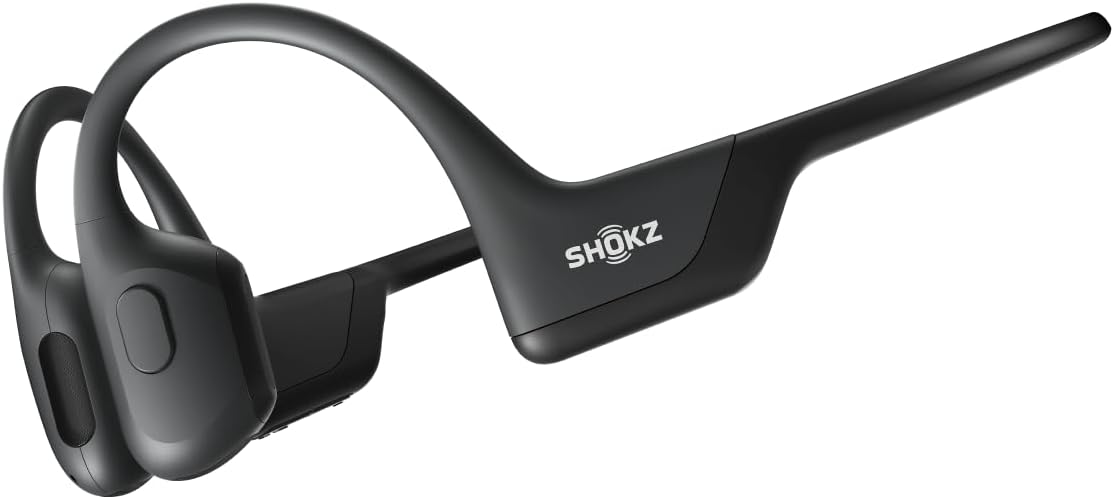
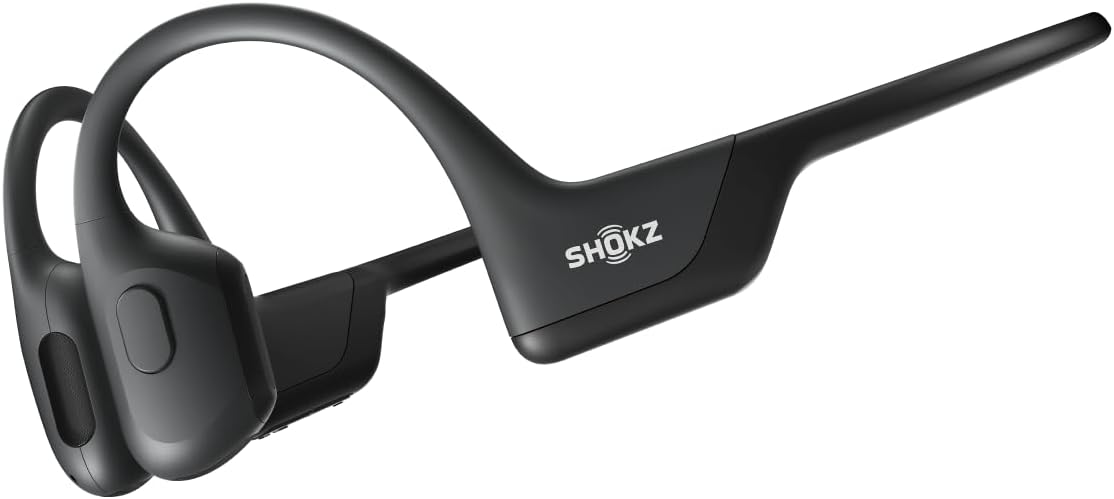
SHOKZ OpenRun Pro is the premium selection in this guide, with a 4.5 reader rating and a well-established open-ear bone-conduction design. Rather than sitting in the ear, it delivers audio through the cheekbone, preserving awareness and avoiding pressure on the ear canal. A wraparound titanium frame is intended to remain stable during demanding workouts.
We may earn a commission when you buy through this link, at no additional cost to you.
Ninth-generation bone-conduction technology and TurboPitch audio are presented as its major sound improvements, with clear output, stronger volume, and richer bass than earlier open-ear designs. The built-in microphone supports conversations, while the battery provides 10 continuous hours for music, calls, and podcasts. A five-minute quick charge adds up to 1.5 hours, and magnetic induction supports convenient charging.
As a premium product, it costs more than most alternatives in the group, so buyers are paying for a mature design and specialized audio platform. Bone-conduction still differs from sealed in-ear or over-ear headphones, and open-ear leakage remains possible. Glasses compatibility is generally favorable because the frame sits around the head rather than between the temple and earbud.
OpenRun Pro is best for active glasses wearers who want dependable stability, environmental awareness, and refined open-ear audio. It also suits listeners who dislike earbuds but still want a wireless sports headset. Those prioritizing the smallest possible profile or longest total battery may find the OHAYO A7 or O2 more practical.
TurboPitch technology is designed to deliver stronger volume and richer bass while preserving the open-ear experience. This makes the headset suitable for music users who want more presence than basic bone-conduction models typically provide.
The lightweight wraparound titanium frame is intended to remain secure during running and training. Its sweat-resistant construction and bundled headband support use during active sessions, while the open design preserves environmental awareness.
We may earn a commission when you buy through this link, at no additional cost to you.
The best headset for glasses wearers is one that avoids the ear canal, accommodates temple arms, remains stable, and matches the intended environment. Sound quality, microphone usefulness, battery life, and resistance to sweat should be considered after fit.
Clip-on earbuds are the most compact option and can sit around the outer ear without occupying the ear canal. Hook-style headsets wrap around the ear for greater stability, neckband models rest behind the head, and frame-mounted products attach directly to glasses. The right choice depends on whether the headset must work independently of the frames or remain integrated with one specific pair of glasses.
Look for explicit references to glasses compatibility, but also consider frame shape, temple thickness, and the headset's contact points. A design marketed for glasses wearers may still conflict with thick acetate frames, narrow metal arms, or glasses that sit high on the nose. Products using soft silicone and flexible structures are generally better at accommodating varied temple angles.
Bone-conduction headsets transmit sound through the cheekbone and offer strong environmental awareness with minimal ear contact. Air-conduction open-ear models direct sound toward the ear using a small driver, often producing stronger bass and more conventional tone. Frame-mounted units use open-ear speakers that sit close to the temples. None should be judged as equivalent to a fully sealed earbud in isolation or bass depth.
Single-charge endurance matters most for long workouts and uninterrupted phone use, while case-based systems are more convenient for commuting and office routines. A ten- or twelve-hour headset can cover a full working day if recharged regularly, whereas four-hour earbuds depend heavily on their case. Quick charging is also useful when a short break is the only opportunity to add listening time.
Noise reduction, dual microphones, a rotating boom, and a dedicated mute control become important if the headset will support driving, meetings, or outdoor work. A built-in microphone is enough for occasional calls, but users who spend hours speaking may benefit from adjustable voice pickup. The weight and visibility of a boom microphone should be weighed against call clarity.
Running, cycling, and hiking expose a headset to perspiration and occasional rain. IPX5 and IPX6 ratings indicate resistance to sweat and light water exposure, while IP65 adds a higher level of dust protection. These ratings do not make a headset suitable for swimming, and submerged use should be avoided unless the manufacturer explicitly states otherwise.
Small clips are less noticeable but may offer fewer controls, while hook and neckband designs can support larger microphones, batteries, and structural elements. App-based EQ, touch controls, rotating booms, and digital case displays are useful, but each adds complexity. The most suitable model is the one whose features solve a real need without compromising comfort or awareness.
Bluetooth 5.3 and 5.4 models are designed for efficient, stable connections, but compatibility remains important. Look for dual-device or multipoint support if you regularly switch between a phone and computer. Confirm that the headset supports your preferred mobile platform and review the stated wireless range, keeping in mind that walls, bodies, and interference can reduce real-world performance.
Begin by fully charging the headset and its case if one is included. Put on your glasses first, then position the open-ear components so they rest around or just outside the ear without pressing against the temple arms. For a frame-mounted model, attach the silicone-covered unit securely to each temple and confirm that it does not pull the glasses out of alignment.
Pair the headset through the Bluetooth settings of your phone, tablet, or computer. If the product supports automatic pairing, removing the earbuds from their case may complete the connection. For multipoint models, establish the second device connection before starting a call or playback, then use the provided controls to switch sources. Adjust the microphone position and test call quality in a quiet room before relying on it outdoors.
For care, remove sweat and dirt with a soft, lightly dampened cloth and dry the headset before storage. Do not immerse open-ear or bone-conduction models unless the manufacturer explicitly permits it, and avoid charging a wet device. Keep the charging contacts clean, use the specified charging equipment, and periodically inspect the clips, hooks, silicone covers, and frame attachments for looseness or wear.
Yes, but the design matters greatly. Open-ear, clip-on, hook-style, and frame-mounted headsets can avoid the pressure created by sealed earbuds. Look for flexible silicone, a lightweight construction, and explicit glasses compatibility. Fit still varies with frame thickness and temple shape, so testing the headset with your own glasses is important before extended wear.
Open-ear headsets can improve awareness because they do not block the ear canal, making them appealing for outdoor exercise. They do not eliminate the need to remain alert to traffic or other hazards. Volume should be kept at a level where surrounding warning sounds remain audible, and a sweat-resistant model is preferable for regular workouts.
Bone-conduction models send vibrations through the cheekbone, leaving the ears open and often emphasizing environmental awareness. Air-conduction open-ear models use a small driver positioned near the ear to direct sound inward. Air conduction can provide more bass and a more familiar tonal balance, while bone conduction may feel different to users accustomed to conventional earbuds.
No design works equally well with every pair of glasses. Thick, wide, sharply curved, or high-mounted temples may affect the position of a clip or hook. Users should check the headset around both sides of the frame, move their head, and test it while walking before committing to long sessions.
Most models include a built-in microphone and call controls, but clarity varies. Headphones with dual microphones, AI noise reduction, or a rotating boom are generally better for traffic, meetings, and outdoor work. Test the microphone in a realistic setting, and use a mute button when privacy matters.
Case-based clip-on models generally offer the greatest total listening time because the case recharges the earbuds between uses. The OHAYO A7 and TOZO OpenEarRing list up to 40 hours with their cases, while individual open-ear neckband and hook models typically provide 10 to 12 hours per charge. Actual results depend on volume, features, and connection stability.
Some open-ear hooks are designed to work alongside helmets, but fit varies by helmet and ear-hook geometry. The headset should not interfere with the helmet's padding, retention system, or strap. For work and driving headsets that explicitly mention helmet compatibility, checking those instructions before use is essential.
First, remove the headset from the Bluetooth device list and confirm that it is charged. Follow the product-specific reset instructions, which may involve touch controls, the charging case, or holding a power or multifunction button. If pairing remains unsuccessful, restart the source device and try the process again. Manufacturer support is the next step if the reset does not resolve the issue.
The OHAYO A7 stands out as the best budget-oriented choice because it is explicitly designed for glasses, weighs only 4.7 grams per clip, and offers up to 40 hours of playback with its case. The O2 open-ear headset earns the Editor's Choice distinction for its flexible titanium frame, 15mm drivers, dual-device connectivity, and excellent reader rating. SHOKZ OpenRun Pro is the premium selection, offering a mature bone-conduction platform, stable wraparound frame, and refined sports-oriented audio.
Your priorities should determine the remainder of the shortlist. Frame-mounted models provide direct integration, tiny clips maximize discretion, rotating-boom headsets serve demanding call use, and neckband designs offer low weight without ear-canal contact. Fit should always come first, followed by battery needs and whether the microphone needs to handle more than occasional conversations.
Finally, check the current listing, specifications, availability, and price before purchasing. Ratings and product details can evolve, and frame compatibility is personal enough that no design can be considered ideal for every pair of glasses. Reviewing the return terms and testing the headset with your usual frames can prevent an otherwise good choice from becoming a daily discomfort.