
Chemical Guys VRP Vinyl, Rubber & Plastic Dressing
4.6Editor score
Dry-to-touch satin finish
Interior and exterior versatility
Protects against sun exposure
Our RV Decal Restorer guide compares ten products for fiberglass, gel coat, vinyl, plastic, and trim, helping you choose the right restoration option today.
An RV decal restorer should do more than make faded graphics look briefly shiny. It should improve the appearance of vinyl, plastic, rubber, fiberglass, and gel coat while providing a finish that can withstand UV exposure, rain, road grime, and frequent cleaning.
This guide compares ten restoration products by examining their intended surfaces, application method, finish, protection, and ease of use. The list includes a complete fiberglass restoration system, dedicated marine compounds, wash-and-seal treatments, ceramic trim coatings, and versatile plastic dressings for RV detailing.
Each pick reveals what it is best suited to, along with its practical limitations and the surfaces to check before application. Product ratings and availability can change, and current prices vary, so compare the latest listing details before making a purchase.
4.6Editor score

4.6Editor score

4.4Editor score
The table below compares each option by its principal surface type, restoration strength, application style, and defining benefit, making it easier to separate a plastic trim dressing from a compound or full fiberglass restoration kit.




The CAR GUYS Plastic Restorer is an 8-ounce kit made to renew plastic, rubber, and vinyl on vehicles and other equipment. It carries a 4.4 customer rating and stands out for a straightforward promise: restore the surface, seal it, and help it remain presentable for several months. Its foam applicator makes it approachable for owners who want a controlled application rather than a complicated detailing procedure.
We may earn a commission when you buy through this link, at no additional cost to you.
One of the most useful features is the absence of a permanently wet, greasy gel finish. The product is described as drying to the touch, which is especially helpful around RV trim because oily residues can transfer onto clothing, towels, or nearby painted surfaces. Its water-repellent behavior is also relevant for campers that are frequently exposed to rain, road spray, and outdoor storage.
The tradeoff is that this is primarily a restorer and protectant rather than a corrective compound. The supplied information does not claim that it removes scratches, heavy oxidation, or deeply embedded surface defects. It is therefore better suited to faded or weathered plastic, rubber, and vinyl than to damaged fiberglass or gel coat, where a dedicated polishing product would be more appropriate.
Choose this option when an RV has a broad mix of exterior trim pieces that need one consistent treatment. It is also a sensible choice for interior plastics, where a dry-touch result and reduced dust attraction are more useful than a heavy gloss finish. Verify compatibility on a small area, particularly for textured or unusually delicate surfaces.
A dry-to-the-touch finish suits an RV that is used frequently because it avoids the persistent tackiness associated with many gel dressings. The included foam applicator also helps distribute the treatment evenly across trim pieces before excess is worked in and removed.
The water-repellent seal provides a practical advantage for campers exposed to wet weather. While periodic cleaning remains necessary, the finish is designed to reduce the chance that the first rainfall will leave prominent streaks across newly treated trim.
We may earn a commission when you buy through this link, at no additional cost to you.
Meguiar's M67 Marine/RV One-Step Compound is a 32-ounce product designed specifically for fiberglass and gel coat surfaces found on RVs and boats. Its 4.6 rating reflects a well-rounded option that combines cleaning and gloss enhancement in one process. The formula targets moderate oxidation, scratches, stains, and tough water spots, giving it more restorative power than a simple dressing.
We may earn a commission when you buy through this link, at no additional cost to you.
Its flexible application is a major advantage. The compound can be used by hand, with a rotary buffer, or with a dual-action polisher, allowing RV owners to choose a method that matches their experience and the condition of the panel. Because it also cleans the surface while polishing, it can streamline a restoration session compared with using separate products for each step.
The main limitation is surface compatibility. Gel coat and fiberglass compounds are not substitutes for a plastic, vinyl, or rubber trim dressing, so this product should not be treated as a universal RV appearance product. Hand application may also demand more time and effort on a large motorhome, while power-tool use should follow the manufacturer's instructions to avoid overworking the finish.
This is the most balanced recommendation for an owner who wants to correct moderate weathering on fiberglass or gel coat rather than simply mask it. It suits campers, Class C motorhomes, and towable RVs with noticeable oxidation or water spotting. Keep a separate trim dressing on hand for plastic and vinyl components.
Combining cleaning and polishing reduces the number of separate steps needed for moderately weathered gel coat. The result is intended to be both smoother and brighter, with a finish that emphasizes restored color and luster.
Hand application gives cautious owners a controlled starting point, while dual-action and rotary options can make larger panels more efficient. The appropriate tool should be chosen according to the severity of the surface and the user's polishing experience.
We may earn a commission when you buy through this link, at no additional cost to you.
The Poli Glow Deluxe Boat & RV Restoration Kit is a comprehensive six-in-one system for restoring fiberglass and gel coat. It has a 4.4 rating and positions itself as an alternative to a conventional multi-product workflow: oxidation removal, surface preparation, gloss restoration, and protection are organized into one kit with applicators and instructions.
We may earn a commission when you buy through this link, at no additional cost to you.
The kit's major advantage is completeness. It includes Poli Glow, Poli Ox, Poli Prep, applicators, and step-by-step guidance, reducing the need to identify compatible products individually. The new Liquid Poli Ox is also promoted as a cleaner, more convenient oxidation-removal option, while the system is designed to work without special tools or previous experience.
A system this comprehensive may be excessive for a small job or a single faded panel. Owners should also remember that it is engineered for fiberglass and gel coat, not vinyl decals, textured plastic, rubber seals, or painted graphics. The exceptionally long service claims still depend on proper care and monthly maintenance, so achieving the advertised longevity requires more than a single application.
This is the strongest premium choice for an RV owner prepared to restore a large, neglected fiberglass exterior. It is particularly useful when the finish has heavy oxidation that calls for preparation before sealing. For a newer camper with only light fading, a focused restorer or wash-and-seal product may be more economical and easier to use.
Bundling oxidation remover, preparation products, restorer, applicators, and instructions creates a more coherent process than purchasing each item separately. That structure is helpful for first-time owners who are unsure which order to use.
The acrylic polymer finish is designed to seal fiberglass while resisting UV exposure, salt, and environmental wear. Its durability depends on routine maintenance, but it offers more than a temporary shine for properly prepared surfaces.
We may earn a commission when you buy through this link, at no additional cost to you.
Poli Glow Fiberglass Restorer is a 32-ounce polish made for boats, RVs, and other fiberglass craft. It has a 4.5 rating and uses a proprietary acrylic polymer formula with UV inhibitors to restore high gloss and create a protective barrier. It is a compelling choice for surfaces that have become dull but do not require intensive correction.
We may earn a commission when you buy through this link, at no additional cost to you.
The formula is described as absorbing into fiberglass rather than forming a conventional surface wax. This approach is intended to provide longer-lasting protection from sun, water, and environmental exposure. It can also be used on jet skis and sailboats, giving owners of several watercraft a single product for multiple fiberglass applications.
Its limitation becomes clear on badly oxidized surfaces. The product information specifically points toward the Deluxe Kit when heavier oxidation is present, indicating that this standalone bottle is better for routine restoration and protection. Because the listed coverage is 28 feet or 350 square feet, larger RVs may require more than one bottle, and the surface should be prepared appropriately.
Choose this product for a fiberglass exterior that needs a noticeable gloss boost, UV protection, and water repellency without a multi-step system. It is less appropriate for plastic trim, vinyl graphics, or gel coat with scratches that need aggressive polishing. Follow the included instructions and test the product on a less visible section first.
The acrylic polymer treatment is designed to penetrate the fiberglass and create a lasting barrier against water and sunlight. This focus on protection makes it useful for seasonal upkeep, not just an immediate appearance change.
Because the formula applies beyond full-size RVs to jet skis, sailboats, and vintage fiberglass, it can simplify ownership of several watercraft. The same core treatment can be used across compatible surfaces without special equipment.
We may earn a commission when you buy through this link, at no additional cost to you.
303 RV Wash & Seal is a one-gallon wash treatment designed for RVs, campers, pop-ups, and motorhomes. Its 4.6 rating reflects a practical approach to routine care: a high-foaming, pH-neutral wash cleans the surface while leaving a streak-free gloss and a layer of protection. It is less a corrective restorer and more a maintenance product that keeps deterioration from becoming obvious.
We may earn a commission when you buy through this link, at no additional cost to you.
The pH-neutral, non-abrasive formula is particularly relevant to RV owners who want to clean without stripping waxes or coatings. Its foaming action helps lift road dirt and grime, while the included UV protection addresses the fading and cracking concerns associated with prolonged sun exposure. The suggested dilution is one ounce per five gallons of water.
This product cannot remove oxidation, scratches, stains, or embedded defects, so it will not recreate the appearance of a badly weathered gel coat. It also requires normal washing steps: gently work the product with a wash mitt, rinse thoroughly, and dry immediately with a clean towel. Leaving moisture on the surface can undermine the streak-free result.
Choose 303 RV Wash & Seal for routine cleaning and protection, especially if the RV is already in reasonably good condition. It pairs well with a separate trim protectant for plastic and vinyl and with a dedicated compound when gel coat is heavily oxidized. It is a maintenance-focused choice rather than a complete restoration solution.
The non-abrasive, pH-neutral formula is designed to clean without removing existing waxes or coatings. That makes it useful for owners who already maintain their RV and want to preserve an established layer of protection.
Combining a high-foaming wash with gloss and protection reduces the need for separate products during ordinary washing. It is especially practical before storage periods, after road travel, or as part of a regular campground arrival routine.
We may earn a commission when you buy through this link, at no additional cost to you.
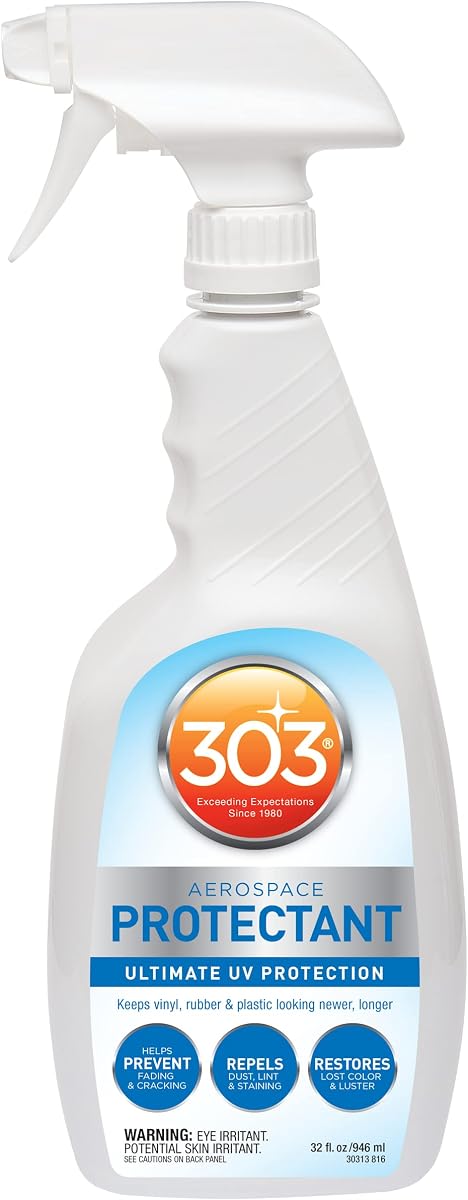
303 Aerospace Protectant is a 32-ounce protectant for vinyl, plastic, rubber, PVC, gel coat, and fiberglass, with the 4.7 rating in this group. Its defining characteristic is a non-greasy, dry matte finish rather than the high-gloss look produced by many trim dressings. For RV owners who want protection without a wet or overly shiny appearance, that distinction matters.
We may earn a commission when you buy through this link, at no additional cost to you.
The water-based, rinse-free formula is easy to apply and leaves no oily residue. It is described as protecting against UV-related fading, discoloration, and cracking while also repelling dust and stains. That makes it useful for exterior trim, window seals, molded plastic, and selected interior surfaces that need a more natural appearance.
The product should not be used on unfinished leather, fabric, canvas, or floorings. Those exclusions mean it is not a universal RV treatment, even though it supports an unusually broad list of rigid surfaces. A matte finish may also disappoint anyone seeking the deep black or high-gloss look associated with traditional automotive dressings.
This is the top pick for owners who prioritize UV protection, a natural finish, and freedom from oily residue. It is especially suitable for white or neutral-colored RV trim where dark glossy coatings would look inappropriate. Use it as a protectant after cleaning and avoid using it on the excluded materials.
A dry matte appearance is less conspicuous on pale trim than a deep gloss coating. It also suits RV owners who want environmental protection without drawing attention to the treated plastic or rubber.
The trigger-spray format works across vinyl, plastic, rubber, PVC, gel coat, and fiberglass, reducing the need for multiple protectants. The rinse-free application also makes spot maintenance more convenient.
We may earn a commission when you buy through this link, at no additional cost to you.
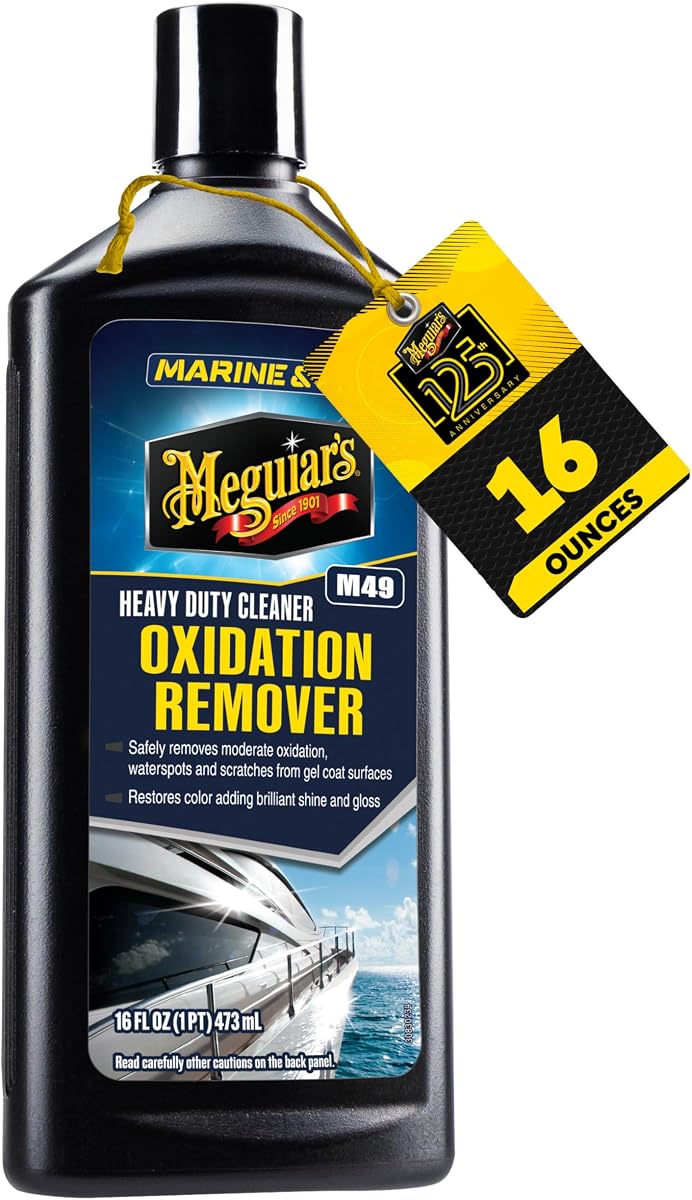
Meguiar's M49 Heavy Duty Oxidation Remover is a 16-ounce compound formulated for boat and RV gel coat and fiberglass. It earns a 4.4 rating and targets surface degradation that is more substantial than light fading. Scratches, water spots, stains, discoloration, and oxidation are among the issues it is designed to address.
We may earn a commission when you buy through this link, at no additional cost to you.
Its diminishing abrasive formula is the defining technical feature. Rather than remaining at one fixed level of cutting, the abrasives break down and disappear as work progresses, helping preserve the finish. Feeder oils are also included to help restore the vibrance and showroom-like shine associated with newer fiberglass.
Because it is a heavier correction product, it demands more care than a wash, protectant, or mild polish. Hand application offers control, but dual-action and high-speed rotary methods can improve efficiency on larger panels. Operators should work methodically and avoid assuming that additional product or aggressive machine passes will improve the finish.
Choose M49 when the RV's gel coat has significant oxidation or other defects and the goal is correction rather than temporary gloss. It is less suitable for small cosmetic refreshes, and it should not be used as a trim restorer on vinyl, rubber, or plastic. Testing and careful application are important for maintaining a high-gloss result.
The abrasives are designed to break down after doing their primary cutting work. This creates a more gradual finish than a constant-aggression product and supports a smoother, glossier final appearance when used correctly.
M49 is better suited to pronounced oxidation, stains, and scratches than lighter one-step compounds. It gives owners of older boats and RVs a way to address accumulated environmental wear before applying a separate protective finish.
We may earn a commission when you buy through this link, at no additional cost to you.
Chemical Guys VRP Vinyl, Rubber & Plastic Dressing is a professional-grade trim product with a 4.6 rating. The 16-ounce bottle is one of the more affordable options in this guide, and its versatility is its main attraction. It can be used on tires, bumpers, dashboards, door panels, weatherstripping, engine bay plastics, and other vinyl, rubber, or plastic components.
We may earn a commission when you buy through this link, at no additional cost to you.
VRP produces a rich, deep appearance without the greasy feel associated with some dressings. The finish is dry to the touch, satin rather than wet-looking, and designed not to attract dust and dirt. Its protection is aimed at fading, cracking, and discoloration caused by sun exposure, making it a practical choice for exterior RV trim as well as interior panels.
This is a dressing, not an abrasive restoration compound, so it will not remove scratches or correct deep oxidation. Application requires an applicator or microfiber towel followed by removal of excess product. Uneven distribution can create patches, and owners should be attentive to compatibility before treating an entire panel.
This is the best budget pick for routine RV trim care because it combines a favorable rating, broad material compatibility, and a clean finish in a straightforward package. It is ideal for an owner who wants dark, refreshed plastic and rubber without investing in a ceramic coating or complete fiberglass restoration system.
The dry-to-touch result gives trim a refreshed appearance while avoiding the sticky feel that can interfere with clothing, luggage, and storage areas. It also helps treated surfaces resist collecting dust and road grime.
VRP works across tires, dashboards, panels, seals, bumpers, and engine bay plastics. That flexibility lets RV owners use a consistent product for the exterior and select interior pieces without maintaining several different trim formulas.
We may earn a commission when you buy through this link, at no additional cost to you.
CERAKOTE Ceramic Trim Coat is a wipe-on ceramic coating for restoring unpainted exterior plastic trim. It has a 4.5 rating and differentiates itself from ordinary dressings through a stated durability of more than 200 wash cycles. The kit contains individually sealed, pre-saturated wipes and gloves, allowing focused application without mixing a liquid product.
We may earn a commission when you buy through this link, at no additional cost to you.
Its ceramic chemistry is designed to cure into the pores of black plastic, creating a bonded barrier rather than a coating that simply washes away. The product is intended to rebuild deep black on sun-faded and oxidized trim while adding UV resistance. It dries without attracting dust or leaving oily residue that could sling onto adjacent paint.
The scope is narrower than the names of several competing products suggest. It is primarily for unpainted black plastic such as bumpers, mirror caps, fender flares, and cowls, not a general treatment for vinyl decals, rubber seals, gel coat, or painted graphics. The surface must be prepared correctly, and the coating needs time to cure before the vehicle is exposed to water or heavy use.
Choose CERAKOTE when your priority is durable black exterior trim and you do not want a traditional dressing that repeatedly rinses away. It is particularly compelling for owners of trucks and RVs with extensive molded black plastic. Verify the surface type, follow the curing instructions, and avoid using the wipes on incompatible materials.
A finish rated to withstand more than 200 wash cycles is designed for vehicles that are cleaned frequently. That durability makes the product more relevant than a quick dressing for owners who want a consistent appearance over time.
The pre-saturated applicator wipes simplify coverage and help avoid mixing or over-dilution. The included gloves support a cleaner, more controlled application, while individual seals keep unused wipes protected.
We may earn a commission when you buy through this link, at no additional cost to you.
Chemical Guys VRP Vinyl, Rubber & Plastic Dressing & WonderWave Kit bundles the 16-ounce VRP protectant with two WonderWave applicators. It carries a 4.6 rating and is designed for owners who want both the product and the tools required for even coverage. The kit is marketed for cars, trucks, motorcycles, RVs, and other vehicles with vinyl, rubber, or plastic trim.
We may earn a commission when you buy through this link, at no additional cost to you.
The included applicators are the main distinction from the standard VRP bottle. They can help distribute the dressing more consistently, reduce product waste, and make it easier to reach detailed areas around trim edges and panels. VRP itself leaves a non-greasy, dry-to-the-touch satin finish that resists dust and dirt.
Although the description says the formula penetrates deeply to revitalize faded material and help prevent cracking, fading, and discoloration, it remains a dressing rather than a scratch-removing or oxidation-correcting compound. It also shares the application requirement of wiping away excess for an even result. The two applicators add convenience, but they do not change the underlying surface restrictions.
This bundle is best for RV owners who want a complete, ready-to-use trim kit or who find the WonderWave tools useful for both interior and exterior panels. It is a good choice for routine maintenance across a mixed vehicle collection, but owners with heavily oxidized fiberglass should select a dedicated marine compound or restoration system instead.
The WonderWave applicators are intended to place product precisely and reduce streaks across uneven trim shapes. Including them removes the need to source separate pads before beginning the task.
The formula's compatibility with cars, trucks, motorcycles, and RVs makes it useful for owners who maintain several types of vehicles. A single dressing can give compatible trim a consistent, protected satin appearance.
We may earn a commission when you buy through this link, at no additional cost to you.
The most useful product depends on the material and condition of the RV surface. Consider whether the main goal is routine trim protection, gloss restoration, oxidation correction, washing, or a complete fiberglass refinishing process before comparing formulas.
Always match the product to the surface, and verify it on a small area first.
Match correction strength to the defect, and do not expect a dressing to remove scratches.
Decide between gloss, satin, and matte before choosing a product.
Select an application method that suits the RV's size and your experience.
Prioritize UV, water, and wash durability for outdoor campers.
Choose a complete kit for major restoration and a focused product for targeted care.
Budget time for regular cleaning, inspection, and reapplication.
Begin by identifying every surface to be treated and reading the manufacturer's complete directions. Clean and dry the area first, then work on a small hidden section to check color, sheen, and material compatibility. Decals should not be assumed to react like unpainted plastic, so avoid making a full-panel application until the test area has been inspected.
Use clean microfiber towels or the recommended applicator, apply a modest amount of product, and spread it evenly. For compounds, work in controlled sections and select the hand, dual-action, or rotary method only when the instructions and your experience support it. Remove excess product before it dries, then allow coatings to cure fully before exposing the RV to water or heavy use.
Maintain the result by washing gently, drying promptly, and inspecting for UV fading, dust adhesion, streaks, or returning oxidation. Keep a separate trim protectant for plastic and rubber, a wash-and-seal product for routine cleaning, and a dedicated fiberglass compound for correction. Reapply protection according to its instructions and the RV's exposure to sun, salt, and road grime.
No, because RV exteriors commonly combine fiberglass, gel coat, painted panels, vinyl graphics, plastic, rubber, and metal. A fiberglass compound is designed to polish gel coat, while a plastic dressing is intended to renew molded trim and rubber. Choosing by surface type prevents unnecessary work and reduces the risk of an incompatible treatment.
A restorer or compound is intended to improve the surface by cleaning, polishing, or removing defects. A dressing mainly refreshes color, adds a uniform appearance, and provides protection without substantial correction. An RV with heavy oxidation needs a more restorative product, while lightly faded trim may be adequately improved with a dressing.
Generally, no. Abrasive marine compounds are intended for fiberglass and gel coat, not flexible vinyl graphics or printed decal film. They can abrade, thin, distort, or discolor graphics. Use a product explicitly approved for vinyl and always test it in a small, inconspicuous area.
Clean the surface with a suitable wash, rinse away residue, and dry it thoroughly before applying the treatment. Dirt and grit can cause streaking or scratch the panel during application. For heavy oxidation on fiberglass, additional preparation may be needed before applying a final protective restorer.
It depends on the appearance you want. A dry, non-greasy satin finish is more practical for frequently used interiors and luggage areas, while a glossy finish can make exterior plastic look deeper and richer. Products such as 303 Aerospace Protectant deliberately favor a natural matte result over high gloss.
No. A ceramic trim coating may be formulated specifically for unpainted black plastic and should not automatically be applied to painted surfaces, vinyl, rubber, gel coat, or every textured material. Check the compatibility instructions, test a small section, and allow the required curing time before exposing the surface to weather or washing.
The interval depends on the product, finish, storage conditions, and maintenance routine. Fiberglass exposed to constant sun, salt, and weather may need protection more frequently than a sheltered RV. Follow the product's care directions, inspect the finish regularly, and reapply when fading, dust attraction, or water repellency declines.
Only when the product is specifically formulated as a one-step compound and the oxidation is moderate. Severe degradation usually benefits from separate cleaning, correction, and protection steps. Aggressive one-pass work can spread residue or overwork the gel coat, so test a small section and proceed gradually.
The strongest all-around choice is Meguiar's M67 Marine/RV One-Step Compound for owners who need moderate fiberglass correction in a flexible hand-or-machine formula. Chemical Guys VRP is the best budget option for broad plastic, rubber, and vinyl care, while the Poli Glow Deluxe Kit stands out as the most complete premium restoration system.
Prioritize surface compatibility, the severity of the defects, and the finish you want before comparing products. A trim dressing cannot replace a fiberglass compound, a wash cannot remove oxidation, and a ceramic coating may be too narrow for the surfaces that need attention. A two-product approach often works best: one corrective product for gel coat and one protectant for plastic, rubber, and vinyl.
Ratings, product availability, and prices can change, so review the current listing before buying. Compare the package contents, instructions, surface warnings, and coverage with the size of your RV. A careful test and a realistic maintenance plan will produce a better result than applying a stronger product to every surface indiscriminately.