
CORSAIR CX650M (2025)
4.7Editor score
650W gaming-class capacity
Native 12V-2×6 cable
Semi-modular cable design
Our PSU for Rtx 5070 and 5070 Ti guide compares wattage, efficiency, connectors, modularity, fan noise, transient handling, and physical fit for gaming PCs.
A power supply for an RTX 5070 or RTX 5070 Ti must deliver enough continuous power, handle sudden graphics-card demand spikes, and connect cleanly to a modern PCIe 5.1 system. Capacity alone is not enough: efficiency, transient protection, connector design, acoustic performance, and room for future upgrades all influence the right choice.
This guide evaluates seven ATX 3.1 and PCIe 5.1-ready power supplies alongside three RTX 5070-series graphics cards, separating the latter from the PSUs and explaining their role in a complete build. The comparison considers stated wattage, native 12V-2×6 support, efficiency certifications, modularity, fan design, capacitor quality, and relevant form-factor considerations.
Each numbered review identifies the strongest use case for the product, from a balanced everyday system to a high-output enthusiast PC. The final three entries are graphics cards rather than power supplies, but they help explain the connector and capacity requirements that should guide your PSU decision. Product details and retail availability can change over time.
4.7Editor score

4.8Editor score

4.7Editor score
The table below compares the complete product set, clearly distinguishing the seven power supplies from the three RTX 5070-series graphics cards and summarizing the capacity, efficiency, connectivity, and construction details most relevant to a modern gaming build.



The Seasonic Focus GX-750 is the strongest all-around recommendation in this guide, earning a 4.8 customer rating and offering a 750W unit designed around current ATX 3.1 expectations. Its most important detail is native 12V-2×6 connectivity, which removes the need for a GPU power adapter when used with a compatible RTX 5070 or RTX 5070 Ti card.
We may earn a commission when you buy through this link, at no additional cost to you.
Efficiency is another major strength. Seasonic lists both 80 PLUS Gold and Cybenetics Platinum certification, indicating that the Focus GX-750 is designed to minimize conversion losses and improve behavior at lighter loads. Its OptiSink design and hybrid fan control help balance cooling with quiet operation, while the 135mm fluid dynamic bearing fan is suitable for sustained gaming workloads.
The limitation is straightforward: 750W is a midrange capacity rather than an enthusiast headroom allowance. It is most appropriate when the RTX 5070 Ti is paired with a reasonably efficient processor and the rest of the system is not unusually power-hungry. Users planning a heavily upgraded CPU, extensive expansion, or future graphics hardware may prefer an 850W or 1000W model.
Despite that constraint, the Focus GX-750 is a refined and practical choice for many RTX 5070-series systems. It combines relevant modern standards, strong efficiency, straightforward installation, and a native graphics connector without introducing complicated features. That balance makes it the editor's choice and an easy recommendation for builders assembling a high-performance gaming PC around an NVIDIA RTX 5070 or RTX 5070 Ti.
Dual efficiency certifications are particularly useful in a gaming PC because neither the CPU nor the GPU spends every moment at maximum load. Good low-load efficiency can reduce waste while the system is idle, and the OptiSink thermal design helps maintain cooler, quieter operation when sustained gaming becomes the priority.
The native 12V-2×6 output simplifies cable management around one of the largest connectors on a modern graphics card. It also gives installers a direct PSU-to-GPU path instead of relying on a multi-adapter arrangement that can be harder to route inside a compact case.
We may earn a commission when you buy through this link, at no additional cost to you.
The Seasonic CORE GX-750 provides the same broad technical foundation as the Focus GX-750 but occupies a more value-oriented position. It carries a 4.6 rating, offers 750 watts, and supports ATX 3.1 and PCIe 5.1 readiness with a native 12V-2×6 connector.
We may earn a commission when you buy through this link, at no additional cost to you.
Its efficiency credentials are notable, with both 80 PLUS Gold and Cybenetics Platinum listed. The OptiSink design reflects Seasonic's emphasis on thermal performance, while the included 12V-2×6-to-dual-8-pin cable gives builders a compatibility path for equipment that still relies on conventional PCIe connectors.
Its main drawback is that it offers the same 750W capacity as the higher-ranked Focus model. That makes processor choice and upgrade plans important. A power-efficient CPU and a standard gaming setup are the best match; a heavily overclocked desktop processor or extensive high-end peripherals would benefit from a larger capacity unit.
The CORE GX-750 is a solid choice for a straightforward RTX 5070 gaming PC or a carefully configured RTX 5070 Ti system. It provides the important modern connector, strong efficiency, and a straightforward capacity target without being the most flexible option for heavily upgraded enthusiast builds.
A 750W supply is most convincing when the graphics card is not paired with a processor that routinely draws unusually high power. Before buying, check the CPU and GPU power figures together and leave enough margin for normal peaks rather than comparing the GPU's power limit alone.
The included 12V-2×6-to-dual-8-pin cable makes the unit more adaptable when building a mixed system or servicing older graphics hardware. It is worth checking whether the graphics card manufacturer specifies that adapter as acceptable before installation.
We may earn a commission when you buy through this link, at no additional cost to you.
The CORSAIR RM850x is the premium pick for builders who want more capacity and cleaner installation than a conventional 750W option. Its 850 watts, ATX 3.1 compliance, native 12V-2×6 connector, and fully modular construction make it a particularly well-rounded match for an RTX 5070 Ti.
We may earn a commission when you buy through this link, at no additional cost to you.
Cybenetics Gold certification indicates efficiency rated for up to 91 percent, helping reduce power waste, heat, and fan activity. The ATX 3.1 design is intended to resist transient power spikes from the GPU, while the native connector permits a direct connection without an adapter. Fully modular cabling improves airflow and reduces the number of loose wires behind the motherboard tray.
The practical trade-off is that not every buyer needs 850 watts. A modest RTX 5070 build with an efficient processor may never approach the limits of a 750W unit, while the RM850x also occupies more of a case's internal space. Its cable-management features and transient handling are more relevant if you value flexibility or plan to upgrade.
This is an excellent recommendation for an RTX 5070 Ti paired with a powerful CPU, especially one planning to upgrade later. It offers enough headroom for a modern enthusiast system, keeps the graphics connection simple, and provides a tidy build without unnecessary complexity. It is the most premium-focused PSU in the list without being excessive for high-end configurations.
An 850W unit occupies a useful middle ground for modern high-end PCs. It is large enough to support an RTX 5070 Ti and a demanding processor with margin, yet less imposing than a 1000W model, making it easier to balance in a mid-size or compact case.
Only the cables actually needed are installed when the PSU is fully modular. The supplied low-profile combs help organize the remaining leads, improving the appearance of the build and reducing obstructions in the case's airflow path.
We may earn a commission when you buy through this link, at no additional cost to you.
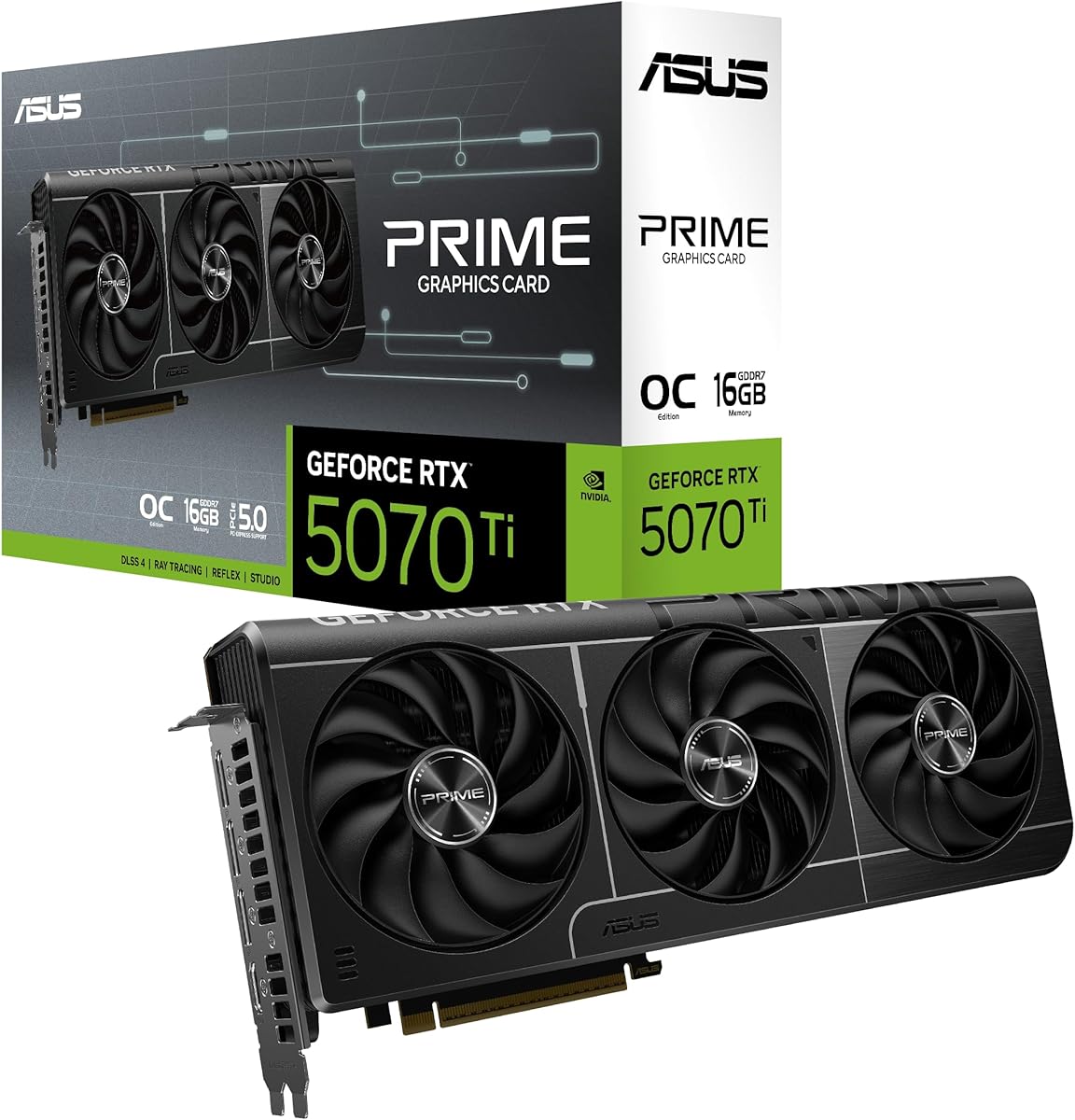
The ASUS Prime RTX 5070 Ti OC is a graphics card rather than a PSU, but it is directly relevant because its requirements show why a modern 750W-class supply is the practical baseline. The product data calls for a minimum 750W PSU with a 16-pin 12V-2×6 connector, giving buyers concrete guidance when comparing power supplies.
We may earn a commission when you buy through this link, at no additional cost to you.
The card uses NVIDIA's Blackwell architecture and supports DLSS 4, with a 2.5-slot SFF-Ready design that helps it fit more easily into compact cases. Axial-tech fans promote downward airflow, a phase-change thermal pad supports heat transfer, and a dual BIOS lets the user switch between Quiet and Performance profiles.
Because it is a high-end graphics card, the requirement should not be interpreted as permission to run every system at the bare minimum. Efficient processors are preferable with a 750W supply, while a powerful CPU or planned upgrade can justify an 850W or 1000W PSU. The physical dimensions, slot spacing, and case clearance also need verification.
For a small-form-factor build, this Prime model is a useful reference point. It demonstrates that a 16-pin connection and a minimum 750W recommendation can coexist with a relatively compact 2.5-slot cooler. It is worth reviewing alongside a compatible power supply because its stated requirements should guide the final capacity and connector decision.
A minimum 750W recommendation is a compatibility boundary rather than a target for maximum operating load. A system with a high-power processor, several expansion cards, and sustained graphics demand benefits from additional headroom, while a more efficient CPU can work well within the stated baseline.
The 2.5-slot form factor and 306mm length make this easier to accommodate than many triple-slot alternatives. The design is particularly relevant when the graphics-card purchase is part of a smaller system where cooler thickness, case clearance, and adjacent slot access are limited.
We may earn a commission when you buy through this link, at no additional cost to you.
The CORSAIR RM850e (2025) combines 850 watts with ATX 3.1 certification and a value-focused design, making it a compelling option for builders who prioritize capacity over premium refinement. Its 4.6 rating reflects a generally favorable customer response, while the specification list emphasizes transient protection and dependable component selection.
We may earn a commission when you buy through this link, at no additional cost to you.
The unit supports PCIe 5.1 and is designed to withstand two transient power excursions from the GPU. Fully modular cabling helps keep the interior tidy, and the 120mm rifle bearing fan uses a specially calculated curve intended to remain quiet even under load. Rated 105°C capacitors support stable operation and long-term reliability.
One important uncertainty is connector detail. Unlike several other power supplies in this guide, the supplied product information does not explicitly state that a native 12V-2×6 cable is included. Buyers using an RTX 5070 or RTX 5070 Ti should verify the retail package contents and the manufacturer's support guidance before purchase.
The RM850e is best for a high-power gaming system that needs more capacity than 750 watts but does not require the most elaborate cable package. It is particularly attractive for value-focused builders who value modularity, quiet fan behavior, and modern transient handling. Confirming the included GPU cable is the final step before selecting it.
Graphics cards can demand power in short, sharp bursts that are not fully represented by a simple average-load estimate. ATX 3.1 certification and support for two transient excursions make this 850W unit better aligned with contemporary GPU behavior than a basic older standard.
A calculated fan curve and full modularity work together to improve the everyday experience. The fan can remain less active during moderate demand, while unused cables stay out of the chassis, making the installation tidier and easier to inspect.
We may earn a commission when you buy through this link, at no additional cost to you.
The CORSAIR RM1000x is the high-capacity choice for an RTX 5070 Ti system that may later include a more demanding processor, additional expansion, or another generation of graphics hardware. Its 1000-watt rating, ATX 3.1 compliance, and native 12V-2×6 connector cover the main requirements of a high-end modern PC.
We may earn a commission when you buy through this link, at no additional cost to you.
Cybenetics Gold certification rates efficiency for up to 91 percent, which can help limit waste and heat. The RM1000x is fully modular and includes embossed cables with low-profile combs. This combination makes it easier to maintain good airflow and a clean appearance despite the greater number of power leads a demanding system may require.
The trade-off is obvious: a basic RTX 5070 gaming PC does not need 1000 watts. A larger capacity unit may take up more room, and unused headroom does not improve performance directly. It makes sense when the total system draw justifies the extra capacity or when avoiding a near-term PSU replacement is a priority.
The RM1000x suits enthusiasts who want one robust platform for several possible upgrade paths. It combines modern connector support, efficient operation, transient resistance, and generous wattage in a well-known modular design. For those builders, it is more adaptable than a 650W or 750W unit, although it is not the sensible minimum for every configuration.
A 1000W supply can reduce the chance that a future CPU or graphics upgrade immediately exceeds a tighter power budget. That flexibility is most valuable in a high-end workstation-style gaming PC where users may add demanding hardware over multiple upgrade cycles.
A unit with more rated capacity does not need to operate at its maximum just to remain efficient. Cybenetics Gold certification indicates attention to efficiency across operating conditions, helping a well-matched system remain cool and acoustically pleasant.
We may earn a commission when you buy through this link, at no additional cost to you.
The CORSAIR CX650M (2025) is the most focused value option for an RTX 5070 build, earning a 4.7 rating while providing 650 watts, ATX 3.1 support, and a native 12V-2×6 cable. It is best viewed as a carefully matched 650W option rather than a universal choice for every RTX 5070 Ti configuration.
We may earn a commission when you buy through this link, at no additional cost to you.
The supplied data says the 650W version can provide up to 450W of GPU power through one cable and is sufficient for the RTX 5070 and 5070 Ti, as well as certain RTX 40-series cards. A 120mm low-noise fan is designed to remain quiet under low and medium loads, while LLC topology and 105°C capacitors support modern power delivery and component durability.
Its limitations are equally clear. The semi-modular design leaves the main power cables attached, and 650W leaves less room for a power-hungry CPU and a high-end GPU running heavy sustained loads. Corsair specifically recommends using its PSU calculator and matching the unit to the completed system's requirements.
This model is a sensible recommendation for a mainstream RTX 5070 PC built around an efficient processor and conventional gaming peripherals. It provides the important native connector and modern standard without a larger capacity requirement. For an RTX 5070 Ti, it requires more careful system matching than the 750W, 850W, or 1000W alternatives.
The key question is not whether the RTX 5070 can operate with 650W, but whether the entire computer can. An efficient CPU, modest expansion, and typical gaming workloads create a much more favorable match than a high-power processor and prolonged maximum-load gaming.
Cybenetics Bronze certification confirms attention to baseline efficiency, while the low-noise 120mm fan is designed to remain unobtrusive below full load. Together, these features make the unit practical for a gaming build where background fan noise would be distracting.
We may earn a commission when you buy through this link, at no additional cost to you.
The ASUS ROG Strix RTX 5070 Ti OC is another graphics card in the product set, included to illustrate the kind of high-end hardware that benefits from a generous PSU. Its 16GB of GDDR7 memory, 1492 AI TOPS, and substantial three-fan cooler position it as a performance-focused RTX 5070 Ti option.
We may earn a commission when you buy through this link, at no additional cost to you.
The card operates at up to 2625MHz in OC mode and 2602MHz by default, according to the supplied information. Its 3.2-slot design uses a large fin array and scaled-up Axial-tech fans to move air through the cooler. A phase-change GPU thermal pad supports heat transfer, while 0dB technology allows the fans to remain inactive during suitable light workloads.
Its size is the main consideration for PSU selection because the entire build must be compatible. A large graphics card consumes physical space, may obstruct adjacent slots, and may require a case with strong airflow. It also benefits from a PSU with adequate sustained capacity and transient response, making a 750W minimum a starting point rather than a complete system-planning method.
For a high-end PC, this Strix card should be paired with a modern 750W or larger power supply, selected according to the processor and expected system draw. A native 12V-2×6 connection is desirable. The card's own performance may be excellent, but the surrounding power and cooling design must be matched to it.
A large graphics card can sustain substantial power demand while producing considerable heat. The oversized cooler and phase-change thermal pad help manage that heat, but a quiet, efficient PSU is still needed to support the card consistently without turning every load increase into a system-wide fan event.
The 3.2-slot format means buyers should check motherboard slot spacing, cooler clearance, and case dimensions. These physical constraints belong alongside electrical planning because even a perfectly matched PSU cannot compensate for a graphics card that does not fit inside the chosen chassis.
We may earn a commission when you buy through this link, at no additional cost to you.
The ASUS TUF Gaming RTX 5070 Ti OC combines 16GB of GDDR7 memory with a 2610MHz clock and a 3.125-slot cooler. It offers a more substantial physical design than compact SFF-ready alternatives, making it a useful reference for builders who intend to pair a powerful RTX 5070 Ti with a full-size enthusiast system.
We may earn a commission when you buy through this link, at no additional cost to you.
TUF's design emphasizes durability with military-grade components, a protective PCB coating, and a vented exoskeleton. Axial-tech fans are listed as moving up to 31 percent more air than standard fans, while a phase-change thermal pad supports GPU heat dissipation and longevity. The dual BIOS provides Quiet and Performance profiles, and GPU Tweak III adds tuning, thermal control, and monitoring tools.
As a GPU, it still needs careful PSU pairing. Its substantial size and performance orientation make it a better candidate for a system with a powerful processor and at least a 750W-class supply, with 850W offering more flexibility. The native 16-pin connection requirement should also be addressed during cable planning.
This TUF model is appealing to gamers who want a large, durable RTX 5070 Ti with adjustable operating profiles. In a PSU guide, it reinforces the importance of checking graphics-card dimensions and system-wide power needs together. A suitable ATX 3.1 power supply with 12V-2×6 support completes the modern system concept.
The protective PCB coating, premium component selection, and vented exterior are intended to handle the wear associated with a large, frequently used gaming component. These qualities are especially relevant to a card that may run warm during extended sessions and remain installed for many upgrade cycles.
The product data calls TUF RTX 5070 Ti models a companion for 850W or 1000W power supplies. For a build like this, a unit with native 12V-2×6, ATX 3.1 transient handling, and sufficient capacity for the CPU is the safest approach.
We may earn a commission when you buy through this link, at no additional cost to you.
The ASUS Prime RTX 5070 provides a useful reference for the lower end of the graphics-card range covered in this guide. It has 12GB of GDDR7 memory, a 2.5-slot SFF-Ready design, and a 4.7 customer rating, making it relevant to compact builds where a full-size enthusiast card would be difficult to accommodate.
We may earn a commission when you buy through this link, at no additional cost to you.
Its cooling design uses smaller-hub Axial-tech fans and a barrier ring that increases downward air pressure. A phase-change GPU thermal pad supports heat transfer and can help maintain cooler operating temperatures. The 2.5-slot format preserves more room for expansion and case clearance than a triple-slot alternative.
Because this is the standard RTX 5070 rather than the Ti model, it can be a more natural match for a 650W or 750W PSU, depending on the processor and rest of the system. A native 12V-2×6-capable supply is still desirable, and the selected case should have sufficient space around the card for its cooler and power connector.
The Prime RTX 5070 is a strong centerpiece for a compact mainstream gaming system. Its power requirements are easier to satisfy with a carefully chosen midrange PSU, while its size broadens case compatibility. Pair it with an efficient CPU and a 650W to 750W unit, or move to 850W when the processor and expansion demand additional margin.
The standard RTX 5070 avoids the higher power and physical demands associated with some Ti models. That makes it easier to balance with a mainstream PSU while retaining the visual and functional benefits of a modern 2.5-slot graphics-card design.
SFF-Ready construction can simplify case selection, but the builder should still verify the exact card length, slot clearance, and connector position. A compact PSU with a native 12V-2×6 cable can further improve routing in a small enclosure.
We may earn a commission when you buy through this link, at no additional cost to you.
The right power supply depends on the complete system rather than the graphics card alone. Use the following factors to match capacity, electrical standards, efficiency, connectivity, acoustics, and physical clearance to your particular RTX 5070 or RTX 5070 Ti build.
Calculate the expected power use of the processor, graphics card, motherboard, memory, storage, fans, and expansion devices. The GPU's advertised power figure is only one part of the total, and a PSU should operate below its maximum rating under realistic sustained load. This matters even for a standard RTX 5070 because an inefficient or high-power CPU can raise the entire system requirement.
Leave reasonable headroom above normal peak consumption rather than adding to the GPU number alone. A 650W supply can fit an efficient, conventional RTX 5070 build, while 750W provides more flexibility. An RTX 5070 Ti paired with a powerful processor is better served by 750W or 850W, and 1000W is appropriate for extensive or upgrade-oriented systems.
ATX 3.1 is specifically relevant to modern graphics cards because it accounts for short-duration power excursions that can occur when a GPU changes demand rapidly. A compliant unit is better prepared to manage these events than a design built only around older steady-state expectations. The difference can contribute to system stability in demanding games and compute workloads.
Look for explicit ATX 3.1 compliance in the product documentation and verify how the manufacturer describes transient handling. Some units also use the PCIe 5.1 designation, but the two terms are not interchangeable in every listing. For an RTX 5070-series build, ATX 3.1 support is a more meaningful selection criterion than an older wattage label alone.
Current RTX 5070 and RTX 5070 Ti cards use a 16-pin 12V-2×6 power connection in many configurations. A PSU with a native 12V-2×6 cable allows a direct connection, reduces the need for adapters, and generally makes cable routing cleaner. Check the exact connector pictured in the product listing, because visually similar 12VHPWR and 12V-2×6 terminology can cause confusion.
If a unit does not include the native cable, verify whether the graphics-card manufacturer permits the appropriate adapter and whether additional cables are needed for multiple power connectors. Never fold or sharply bend the connector at the point where the cable enters the GPU. A native cable is generally the simplest and cleanest arrangement for a new build.
Efficiency determines how effectively a PSU converts AC power into usable DC power. A more efficient unit wastes less energy as heat, which can reduce cooling demands and help the fan remain quieter. Certification labels are most useful when they are current and independently defined rather than based only on a manufacturer's broad efficiency claim.
80 PLUS and Cybenetics certifications cover different aspects of efficiency testing, and seeing both can be reassuring. Gold-class efficiency is a common target for a modern enthusiast gaming PC, while Bronze can still be appropriate in a carefully matched budget build. The right level should be balanced against the system's total draw and the desired acoustic character.
A fully modular PSU includes removable cables for every connection, allowing builders to leave unused leads out of the chassis. A semi-modular design permanently attaches the main motherboard power cables but detaches less frequently used connections. Either can produce a clean build, although full modularity provides more freedom in compact cases and airflow-sensitive systems.
Cable quality also matters beyond appearance. Flexible embossed cables and low-profile combs can simplify bends and reduce obstruction around the motherboard tray. Ensure every connector clicks fully into place and that the 12V-2×6 cable reaches the GPU without a hard bend at either termination.
PSU fan noise is closely related to load, temperature, and the unit's fan curve. A larger fan or a well-calibrated curve can remain quiet during gaming while still providing the airflow needed for sustained power delivery. Look for a design that balances acoustics with effective cooling rather than assuming a permanently stopped fan is the quietest option.
Components such as 105°C-rated capacitors and a carefully designed internal layout contribute to thermal control and reliability. Ensure the PSU has unobstructed intake and exhaust space inside the case. A modular cable setup can also help airflow by preventing unused wiring from blocking the intake path.
A capable PSU is of little use if it does not fit the chassis. Check the power supply's length, the case's supported form factor, and the distance from the PSU fan to the case intake. Modular connectors and bendable cables can make installation easier, but adequate physical clearance remains essential.
The graphics card deserves equal attention. The ASUS Prime cards in this list use a 2.5-slot design, while the ROG Strix and TUF models are substantially larger. Confirm case length, slot spacing, cooler clearance, and the position of the GPU power connector. A native cable is most helpful in a compact build where every millimeter of routing space matters.
A PSU selected for the RTX 5070 or RTX 5070 Ti may also need to support the next major platform change. Upgrades to the processor, memory, storage, expansion cards, and graphics hardware can raise total consumption, and replacing the PSU later adds another installation step. Slightly more capacity can be worthwhile when the chassis and budget can accommodate it.
This does not mean choosing the largest available unit by default. A 1000W model makes sense for a high-end system with heavy CPU draw, extensive expansion, or a clear plan to upgrade the GPU. An efficient, modest 650W or 750W setup may be more appropriate for a contained system. Match the investment to realistic upgrade plans rather than an imagined future.
Install the PSU with the fan facing toward a clear case intake, unless the chassis uses a bottom-mounted arrangement with a filtered intake. Connect the motherboard power, processor power, SATA power, and graphics-card cables with the system switched off and disconnected from wall power. Use the cable set supplied or explicitly approved for that PSU model rather than mixing cables from unrelated units.
For the RTX 5070 or RTX 5070 Ti, use the native 12V-2×6 connection whenever available. Insert the connector firmly without forcing it, route the cable with a gentle bend, and avoid a tight fold immediately beside the GPU. If an adapter is required, confirm that the graphics-card manufacturer permits it and connect every specified PCIe power lead.
After assembly, inspect the interior for loose screws, exposed cable ends, and obstructions before powering on. Review BIOS settings, GPU monitoring software, and the operating system for unexpected shutdowns or alerts. Keep intake filters clean, avoid stacking items against vents, and arrange cables so they do not interfere with fan blades or press against hot components.
A 650W PSU can be appropriate for an RTX 5070 when it is paired with an efficient processor and the rest of the system is conventional. A 750W unit provides a safer margin for higher-power CPUs, additional expansion, and a more flexible upgrade path. The graphics card should never be considered in isolation from the processor, motherboard, and peripherals.
A 750W PSU is a practical starting point for many RTX 5070 Ti configurations, while 850W offers more confidence with a powerful CPU or planned upgrades. A 1000W supply makes sense for exceptionally power-hungry or rapidly changing systems. The ASUS Prime RTX 5070 Ti listing specifically identifies 750W as the minimum for that card.
A native 12V-2×6 cable is strongly preferable for a new RTX 5070 or RTX 5070 Ti build. It provides a direct connection, simplifies routing, and avoids the need for an adapter setup. If your selected PSU lacks the cable, verify compatibility and the adapter instructions published by the graphics-card manufacturer before installation.
The ASUS Prime RTX 5070 Ti OC product information states that a minimum 750W PSU with a 16-pin 12V-2×6 connector is required. Treat that figure as the minimum for the specified card and verify the processor's consumption as well. A more powerful system may need 850W or more to maintain sensible operating headroom.
ATX 3.1 is not a substitute for adequate wattage, but it is a valuable feature because the standard addresses modern transient power behavior from graphics cards. For a new RTX 5070-series system, choosing an ATX 3.1 unit gives the PSU and GPU a more appropriate electrical design for rapid changes in demand.
It can be enough for a carefully matched RTX 5070 system with an efficient CPU and few high-power expansion devices. It becomes less suitable for an RTX 5070 Ti or a power-hungry processor, where a 750W or 850W model is preferable. Use the PSU manufacturer's calculator and compare its result with the planned components.
Fully modular PSUs offer greater routing flexibility and keep unused cables outside the case, which is useful in compact builds. Semi-modular models leave the motherboard cables attached and detach the other leads, providing a simpler fixed layout. Both can work well; the case design and preferred tidiness usually determine which is more convenient.
An older PSU may have enough nominal wattage, but it may lack ATX 3.1 transient support, native 12V-2×6, suitable efficiency, or modern standby behavior. Check the connector, wattage, and manufacturer requirements for the exact graphics card. If an adapter is involved, confirm that the card manufacturer supports it and use the specified cable arrangement.
The Seasonic Focus GX-750 is the most balanced overall choice, combining 750 watts, strong efficiency certifications, a native 12V-2×6 connector, and quiet hybrid fan control. The CORSAIR RM850x is the premium option for buyers who want additional headroom and fully modular wiring, while the CORSAIR CX650M offers the most focused solution for a well-matched, efficient RTX 5070 system.
Prioritize the complete system calculation, ATX 3.1 transient handling, and the correct graphics-card connector before considering smaller refinements. Pair a 650W unit only with suitably efficient hardware, use 750W or 850W for most RTX 5070 Ti configurations, and choose 1000W when a powerful CPU or future upgrade path justifies the extra capacity.
Finally, check the current product listing, package contents, compatibility guidance, and retail availability before purchasing, because details and prices can change. Confirm that a native 12V-2×6 cable is included when that feature is important, and verify case clearance for both the power supply and the chosen graphics card.