
MECCANIXITY 20AWG Silicone Ribbon Cable
5.0Editor score
Ten 20 AWG conductors
Flexible silicone insulation
Rated for 600 volts
Explore flat ribbon cables for electrical projects, comparing gauge, pitch, length, insulation, conductor construction, and connector compatibility.
Flat ribbon cables for electrical work combine multiple insulated conductors in a compact, orderly package. They suit low-voltage power, control wiring, internal electronics, LED installations, and other projects where a conventional bundle of loose wires would be difficult to route, terminate, or maintain.
The products in this guide were compared using the specifications supplied for each cable, including conductor gauge, number of cores, pitch, length, insulation material, temperature capabilities, and intended applications. The list covers silicone wire, PVC ribbon cable, IDC assemblies, FFC extensions, and a flat pedal patch cable so buyers can compare distinct formats.
Each review explains where the cable is strongest, what trade-offs to consider, and which type of electrical project it best serves. Ratings reflect the supplied customer feedback, while material, electrical, and dimensional claims are limited to the product information. Current prices and availability can change, so check the listing before purchasing.
5.0Editor score

4.9Editor score

4.9Editor score
This side-by-side comparison organizes all ten cables by construction, wire size, pitch, length, and intended use, making it easier to distinguish power-oriented silicone and PVC options from IDC and FFC interconnect cables.



The BNTECHGO 28 Gauge Silicone Ribbon Cable is a five-conductor, 25-foot cable with a customer rating of 4.9. It is designed for electrical work requiring a compact bundle of separate wires, particularly in models, appliances, instruments, motors, and other equipment where flexibility and temperature resistance are important.
We may earn a commission when you buy through this link, at no additional cost to you.
Its standout construction is the use of premium silicone insulation around high-strand-count tinned copper conductors. Each core contains 16 strands of 0.08 mm tinned copper wire, helping create a flexible, efficient conductor. The five cores are arranged in parallel with an outside diameter of 1.2 mm per core, while the stated voltage rating reaches 600 volts.
Silicone insulation is listed for operation from approximately -60°C to 200°C, making this a practical option for projects exposed to substantial heat or cold. The tinned copper surface provides corrosion resistance and is easier to solder than untreated copper, although the individual cores still require appropriate stripping, crimping, or soldering to suit the connection.
This cable is best for builders who want a versatile raw wire rather than a fixed connector assembly. It works well for model aircraft, model cars, model boats, household appliances, heating appliances, meters, instruments, motors, and digital equipment. Choose it when high flexibility, five parallel conductors, and broad temperature tolerance matter more than a pre-installed connector.
The primary limitation is its raw-cable format. It does not include IDC sockets, so every termination must be created separately. The five-core layout also offers less wiring density than the larger-count rainbow and IDC options. Even so, its combination of flexibility, solder-friendly tinned copper, a 600-volt rating, and a 25-foot length makes it an excellent general-purpose electrical ribbon cable.
Soft silicone insulation allows the five conductors to bend and move without requiring the stiffness associated with many conventional PVC wire bundles. That makes the cable useful in model builds, appliance interiors, motor leads, and custom equipment where routing space is limited and the wiring may need to tolerate movement.
The high-strand tinned copper construction balances flexibility with solder handling. Tinning supports corrosion resistance, while the fine strands make the conductors easier to integrate into compact terminals. Match each core to the circuit’s current and voltage requirements before installation.
We may earn a commission when you buy through this link, at no additional cost to you.
The Antrader IDC Flat Ribbon Cable provides ten conductors in a continuous gray ribbon measuring approximately 32.8 feet. Its 4.6 customer rating reflects a generally positive reception, and the long length gives installers more freedom than a short premade harness when routing through larger equipment.
We may earn a commission when you buy through this link, at no additional cost to you.
The conductors use a 1.27 mm pitch and are intended to mate with 2.54 mm insulation displacement connectors. Each wire is made from seven-core tinned copper beneath a PVC cover. This arrangement is particularly useful for internal computer wiring, industrial instruments, and automation machinery where a repeatable multi-pin connection is more convenient than wiring each conductor separately.
One of the most useful attributes is the ability to cut the ribbon to the required length and terminate it with compatible IDC sockets. Ribbon conductors can remain parallel and maintain a neat physical arrangement, simplifying connections in control panels and electronic assemblies. The tinned copper also provides a practical surface for soldering or other approved termination methods.
This is a good choice for technicians who routinely work with IDC-based systems and want one long cable to use across multiple projects. It is less suitable for wiring that must endure high ambient temperatures, because the stated temperature capability is not given. Buyers should also confirm that the connector pitch and conductor count match their device.
The trade-offs are straightforward: this is a specialized interconnect cable rather than a general-purpose temperature-resistant wire bundle. It requires the right connectors and some care during termination. For internal electronics, automation equipment, and computer-related projects, however, the combination of ten conductors, a substantial continuous length, and standard IDC spacing makes it highly functional.
A roughly 32.8-foot continuous ribbon can be cut into several assemblies as needed. This is useful for installers who need several short IDC-terminated runs but do not want to purchase a separate premade cable for every connection.
Keeping ten conductors in a flat ribbon makes them easier to route, label, and bundle inside computers, instruments, and automation machinery. The result is generally tidier than an equivalent collection of separate insulated wires.
We may earn a commission when you buy through this link, at no additional cost to you.
The Armacost Lighting 20AWG 2C 24ft Copper Ribbon Flat Cable is a two-conductor option developed for low-voltage installations, particularly custom LED lighting. It has a 4.9 customer rating and a specified 24-foot length, giving installers enough material for several compatible lighting runs.
We may earn a commission when you buy through this link, at no additional cost to you.
The cable uses corrosion-resistant copper with a UL-listed, flame-resistant PVC jacket. Its stated temperature rating extends to 80°C, and the construction is described as easy to strip, cut, and reconnect. These qualities make it more directly aligned with LED drivers, power supplies, dimmers, transformers, stereos, CB radios, and other low-voltage appliances.
Unlike multicore silicone or IDC ribbons, this is a two-core flat cable intended to carry a pair of conductors together. That simplicity is a benefit for LED runs and other straightforward power connections because it avoids carrying unnecessary cores. The larger 20 AWG conductor size also differentiates it from the finer 28 AWG signal-oriented ribbons in this guide.
Best suited to custom lighting installers, the cable is a practical choice when the project requires a listed, flame-resistant flat wire that can be adapted on site. It is not the right selection for a high-temperature motor lead or a dense digital harness, because its two conductors and 80°C limit narrow its applications. Verify local electrical requirements and the connected equipment’s specifications.
Its premium selection reflects the documented UL listing, copper construction, and lighting-specific suitability rather than simply a longer feature list. For installers working with LED systems and low-voltage equipment, it offers a more focused purpose than a general-purpose electronics ribbon cable while remaining easy to cut and terminate.
The product is optimized for custom LED lighting, LED drivers, power supplies, dimmers, and transformers. Its two-conductor format pairs neatly with typical lighting runs where only two conductors are needed to complete the circuit.
The jacket is described as easy to strip, cut, and reconnect. That makes the ribbon practical for tailoring cable lengths during a lighting installation instead of requiring every segment to be premeasured and factory terminated.
We may earn a commission when you buy through this link, at no additional cost to you.
The 20 Pin Rainbow Color Flat Ribbon IDC Cable is a five-meter, 20-conductor cable with a 4.7 customer rating. It is aimed at projects that need more conductors than a basic power cable can provide but do not necessarily need the extreme thinness of an FFC assembly.
We may earn a commission when you buy through this link, at no additional cost to you.
The cable uses plastic insulation around copper conductors and has a 1.27 mm pitch, allowing it to work with compatible IDC connector arrangements. Its listed capacitance is 40 PF/M, and the overall ribbon width is 24 mm. A 20-core layout provides enough parallel paths for digital equipment, control connections, and other compact internal harnesses.
Rainbow coloring is the defining practical feature. Distinct conductor colors help installers trace individual lines, particularly when the cable enters a crowded enclosure or connects to a multi-pin header. That visual identification reduces the chance of misrouting a connection and is especially helpful during maintenance when the original documentation may be difficult to locate.
The cable is a good fit for electronics builders who need a moderate ribbon length, twenty selectable conductors, and standard IDC spacing. It is less convenient for projects needing a very small number of wires because the full twenty-core ribbon may be wider than necessary. It is also important to verify that twenty-pin IDC connectors and the intended 1.27 mm arrangement are available.
Although this is a 16.4-foot length rather than an extremely long spool, it should accommodate many bench-level interconnects and compact equipment installations. Its combination of dense conductor count, color coding, and accessible pitch makes it more versatile than a simple two-core power ribbon, provided the enclosure has enough space and the compatible connector is available.
Rainbow insulation makes each conductor position easier to identify during assembly and troubleshooting. The visual distinction is valuable in crowded control cabinets, computer cases, and DIY electronics projects where several small wires may otherwise be difficult to follow.
Twenty parallel paths give the installer more connection options than a standard two-core cable. The 1.27 mm pitch and 24 mm width still preserve a practical flat profile for internal electronic equipment.
We may earn a commission when you buy through this link, at no additional cost to you.
The Antrader 6pcs 30cm 16Pin IDC Ribbon Cables set includes six 12-inch assemblies, each fitted with female-to-female 16-pin sockets. Its 4.7 rating reflects a strong fit for users who need compact, ready-made interconnects rather than bulk cable and separate connectors.
We may earn a commission when you buy through this link, at no additional cost to you.
Each socket uses two rows of eight pins with a 1.27 mm center spacing, matching 2.54 mm pin headers. The 28 AWG stranded wire is specified at 300 volts. Because the conductors can be separated for clean terminations, the ribbons can also work with standard wire connectors, jacks, and pins when a permanent IDC socket is not suitable.
The main advantage is convenience. Six matched assemblies are available for connecting digital cameras, camcorders, laptops, LCD televisions, and monitors. The same format also suits many Atmel AVR JTAG debuggers, in-system programmers, and ISP download devices, all of which are listed among the cable’s applications.
The fixed length is the main consideration. These cables are intended for short connections inside or between devices, so they may be unsuitable when a project needs a long run or custom cable length. Users should also verify that both devices use the expected 16-pin, 2.54 mm header arrangement and that the proposed application remains within the stated electrical characteristics.
For technicians, hobbyists, and repair professionals, this set reduces the work involved in making short ribbon interconnects. It is particularly appealing when several identical connections are needed, as the included quantity provides a convenient set for repair benches, prototypes, and programming or diagnostic setups.
Factory-terminated female connectors remove the need to install sockets on both ends of each ribbon. The result is a quicker setup for programming, diagnostics, displays, cameras, and other compact electronics.
Six assemblies allow the same connection to be made more than once or across several projects. That is useful for technicians who need spare cables for testing, assembly-line work, or repeated temporary connections.
We may earn a commission when you buy through this link, at no additional cost to you.
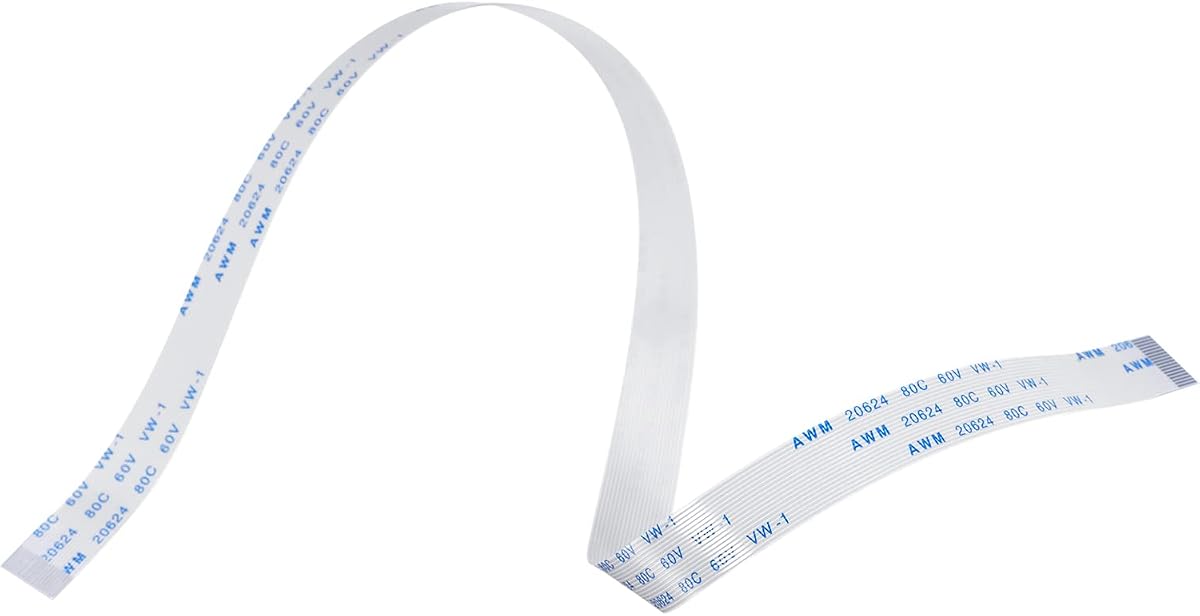
The MECCANIXITY 20AWG Silicone Ribbon Cable is a ten-core, 9.8-foot cable with a 5.0 customer rating. It combines a relatively large 20 AWG conductor size with silicone insulation, making it a notable option for compact power and control assemblies that need more cores than a simple lighting cable.
We may earn a commission when you buy through this link, at no additional cost to you.
Each core is made from high-density stranded tinned copper and measures 1.8 mm in outside diameter. The cable is rated for 600 volts and temperatures up to 200°C. Its silicone sleeve is described as resistant to abrasion, corrosion, and high heat while retaining enough flexibility for routing through models, appliances, and equipment housings.
Ten parallel conductors offer substantially more wiring capacity than the two-core Armacost ribbon or the five-core BNTECHGO cable. That makes this option useful for model wiring harnesses, line lighting, motor connections, digital equipment, household appliances, lamps, and electric heating appliances. The larger gauge is also worth considering for current-carrying circuits that need more conductor capacity than a fine signal ribbon.
The cable is supplied without connectors and is intended to be cut and terminated as needed. That provides installation flexibility but requires suitable terminals and care during stripping. The product guidance also warns against excessive bending, which is sensible for any stranded wire even when the insulation itself is highly flexible.
Although it is shorter than the 25-foot BNTECHGO spool, this cable offers a rare combination of ten cores, 20 AWG sizing, 600-volt capability, and 200°C silicone insulation. That balance makes it an excellent choice for builders who need a manageable length of versatile multi-core power wiring.
Ten 20 AWG conductors provide a generous selection of separate paths within one compact ribbon. This is helpful when an appliance, model, or motor assembly needs several power and control connections without using a broad bundle of unrelated loose leads.
The 200°C temperature capability, abrasion resistance, and 600-volt rating support use in electrically demanding or heat-exposed projects. Verify each connected load, terminal type, and environmental condition before final installation.
We may earn a commission when you buy through this link, at no additional cost to you.
The Glarks Rainbow Flat Ribbon IDC Wire Cable Kit includes 10-, 14-, 16-, and 20-wire cables. Each ribbon measures 10 feet, producing 40 feet, or 12 meters, of total cable. Its 4.4 rating is the lowest among the listed products, but the set offers a broad and useful assortment for general electronics work.
We may earn a commission when you buy through this link, at no additional cost to you.
Every cable uses a 0.05-inch, or 1.27 mm, center spacing intended for use with 2.54 mm connectors and insulation displacement connectors. The different conductor counts let an installer select a cable that more closely matches a device or project rather than leaving extra wires in every assembly. This can simplify both routing and termination.
Rainbow coloring makes individual conductors easier to distinguish, which is especially helpful when connecting multiple signals into crowded prototype boards or equipment interiors. The kit is well suited to hobby electronics, programmers, instrument projects, and general computer accessory work where different IDC headers may be encountered.
Each cable is only 10 feet long, so a builder needing a long continuous run may need another source. The assorted set is more compelling when several short assemblies are needed, when a technician wants flexible pin-count options, or when a workshop wants one kit to cover multiple common connector configurations. Confirm the conductor count and pitch before cutting or terminating.
The main advantage is versatility within a single package. Instead of selecting only one ribbon width, the user receives four common widths with the same color coding and connector spacing. That breadth makes the kit a practical bench accessory, even though it does not offer the extreme temperature performance of the silicone options or the long continuous length of some bulk cables.
Having 10-, 14-, 16-, and 20-wire options helps the installer avoid carrying unnecessary conductors. Select the ribbon that best matches the available header and intended number of connections, then cut it to the required length.
The assortment provides several common IDC formats in one organized set. It is useful for prototyping, repair, and educational electronics tasks where the exact connector size may vary from one project to another.
We may earn a commission when you buy through this link, at no additional cost to you.
The MECCANIXITY 28AWG IDC Wire Flat Ribbon Cable is a six-conductor, 9.8-foot extension cable with a 4.8 rating. Its narrow 7 mm overall width makes it a focused choice for digital equipment, compact electronics, and other internal interconnects requiring six parallel paths.
We may earn a commission when you buy through this link, at no additional cost to you.
The ribbon uses 28 AWG wire with a 1.27 mm pin pitch. That fine conductor size and compact pitch are appropriate for data-oriented interconnections rather than high-current power distribution. The cable is listed for use with personal computers, digital instruments, LED displays, automobiles, color televisions, DVDs, and expansion equipment.
Its primary convenience is that a flat six-conductor ribbon can connect a motherboard or digital device to an expansion peripheral while maintaining a narrow, organized profile. Individual conductors can be separated for clean terminations with standard connectors and pins when a full IDC socket is not required. The 3-meter length also gives the installer room to bridge internal or adjacent components.
Buyers should check the device’s pin count, pitch, and required connector orientation before ordering. Six cores may be insufficient for a larger multi-function header, while a more compact connector may not match the 1.27 mm spacing. The product is also not described as a high-temperature silicone cable, so it should not be treated as interchangeable with the 200°C options in this guide.
For anyone needing a short, narrow digital extension rather than a broad power harness, this ribbon fills a useful middle ground. It combines a modest number of conductors, a standard IDC pitch, and enough length for typical equipment interconnection work while remaining narrower than most premade ribbon assemblies.
At 7 mm wide, the six-conductor ribbon occupies little space within a device enclosure. That makes it easier to route around internal components and fan out to a smaller six-pin connection.
The 3-meter length provides useful separation between a device and an expansion peripheral. It can also be shortened and terminated to suit a more compact internal arrangement.
We may earn a commission when you buy through this link, at no additional cost to you.
The MECCANIXITY FFC FPC Flat Flexible Cable set includes five 18-pin cables with a 0.5 mm pitch and 300 mm length. Its 4.6 customer rating reflects its usefulness for compact electronics, and the package is particularly useful when several identical display or accessory connections are required.
We may earn a commission when you buy through this link, at no additional cost to you.
These cables are much finer and more compact than standard 1.27 mm IDC ribbons. The FFC format is commonly found in laptops, DVD players, LCD monitors, audio equipment, cameras, and 3D printers. Reinforced stiffeners at both ends are intended to provide stability and strength during insertion into compatible board connectors.
The A-type arrangement places contacts on the same side, while the 18-pin count and 0.5 mm pitch define the required interface. Those dimensions must match exactly at both ends of the intended connection. The cable width is listed as 9.5 mm, although the product information notes that manually measured dimensions may vary by approximately 0.1 inch.
This set is an extension solution rather than a general electrical wiring cable. It is not intended to replace heavier power conductors, and the 0.5 mm contact arrangement is not interchangeable with the larger IDC connectors used elsewhere in this guide. Installation begins by connecting the cable to the equipment board, followed by a functional test of the linked device.
For repairers and hobby builders working with compatible LCD, camera, printer, TV, laptop, or audio equipment, five matching cables offer convenient spares. The ultra-thin construction is the key benefit, allowing a display or peripheral to be positioned with very little added cable bulk. Confirm the connector type, pin count, pitch, and contact orientation before installation.
The 0.5 mm pitch and 9.5 mm width allow eighteen conductors to fit into a much smaller profile than standard IDC ribbon. This is valuable in compact screens, cameras, printers, and other devices where internal clearance is limited.
Including five matching assemblies is helpful for repeated repair work or projects requiring more than one connection. The reinforced ends add support where the cable enters a small, sensitive connector.
We may earn a commission when you buy through this link, at no additional cost to you.
The Ernie Ball Flat Ribbon Patch Cable is a 12-inch black patch cable with a 4.8 customer rating. It is designed specifically for guitar pedal boards, where a low-profile connection can reduce cable clutter and make it easier to arrange effects units in a compact pedalboard.
We may earn a commission when you buy through this link, at no additional cost to you.
Its flat ribbon shape provides more positioning flexibility than a round patch cable, while the low-profile metal connectors and integrated strain relief support a durable, streamlined installation. The cable uses 99.95 percent oxygen-free copper to resist corrosion, and shielding is included to preserve the signal and reduce handling noise.
The twelve-inch length is useful for linking neighboring pedals on a board. Its compact profile is particularly valuable where pedal spacing is limited or where a raised round connector would interfere with the board layout. The metal connector housings also provide a more substantial feel and protection at the connection points.
This is a specialized audio accessory rather than a general-purpose electrical harness. The product information does not provide the pin count, conductor count, voltage rating, or broader wiring specifications, so it should not be selected as a substitute for power cable, IDC ribbon, or FFC interconnect wire. Compatibility with the intended pedal or jack is the central requirement.
For musicians assembling or maintaining a pedalboard, the cable is a strong choice when a short, tidy, noise-conscious patch connection is needed. It combines a useful length with flat routing and low-profile hardware, making it especially effective where a conventional round cable would take up more space or create unnecessary visual clutter.
The flat profile lies more closely to the board than a conventional round patch cable. This can make pedal spacing easier to manage and keep the overall installation visually uncluttered.
Shielding helps preserve the audio signal by limiting handling noise, while the metal connectors and built-in strain relief support repeated use. These features are especially relevant in mobile pedalboard setups.
We may earn a commission when you buy through this link, at no additional cost to you.
The right flat ribbon cable depends on the circuit, connector, installation space, and environmental conditions. Begin with the cable format and conductor count, then verify pitch, wire gauge, insulation, length, and termination requirements before making a selection.
Flat ribbon cables are not interchangeable simply because they look similar. The guide includes raw silicone wire, flat PVC power cable, standard 1.27 mm IDC ribbon, fine-pitch FFC/FPC cable, premade IDC assemblies, and a shielded pedal patch cable. Each format is intended for a different kind of connection. Silicone multi-core ribbons suit internal power and control wiring, IDC cables serve structured digital interconnects, FFC cables connect high-density compact devices, and the pedal patch cable is designed for instrument applications.
The number of conductors determines how many separate circuits or signals the cable can carry. A two-core cable is suitable for a simple power pair, five cores offer more flexibility for low-voltage wiring, and ten or more conductors support denser control or digital systems. Pin count is equally important for premade IDC and FFC assemblies because the connector must physically match the equipment header. Some ribbon cables can be separated and terminated with individual connectors, but their intended layout and available space still matter.
Pitch is the center-to-center spacing between adjacent conductors, and it must agree with the connector or header. The 1.27 mm pitch used by many IDC products in this guide is distinct from the finer 0.5 mm pitch of the FFC set. A cable can have the right number of contacts and still be unable to connect if its spacing differs. Always inspect the existing connector markings, measure the header, and check the product listing before cutting the ribbon or attaching a socket.
The listed 28 AWG cables are intended primarily for signal and control interconnects or lighter-duty wiring, while the 20 AWG products offer greater conductor size for low-voltage power and control applications. Wire gauge should be considered alongside the load, conductor length, installation method, and termination rating. A larger conductor is not automatically suitable for every circuit, and a fine conductor is not automatically unsuitable, but each must match the current, voltage, and thermal conditions of the project.
PVC-covered cables, including the Armacost, Antrader, rainbow, and IDC products, should be considered for ordinary internal or low-voltage environments where the listed temperature range is sufficient. The silicone options are documented for much broader temperature capability, including operation up to 200°C. Temperature resistance alone does not determine suitability, so also consider flame resistance, exposure, conductor size, local electrical requirements, and the ratings of every connected component.
Length should reflect the actual route plus enough serviceability for stripping, termination, and future maintenance. The guide includes bulk lengths of 9.8, 16.4, 24, 25, and 32.8 feet, along with shorter 12-inch assemblies. A longer bulk cable can be cut to size and may be more useful across multiple projects, while a short premade assembly is convenient for fixed connections. Avoid excessive slack in compact equipment, and avoid forcing a long cable into a tight bend.
Some products arrive as raw cable, some include sockets at both ends, and others are intended for fine-pitch board connectors. Raw silicone wire requires stripping and a suitable terminal or soldered connection. IDC assemblies can often be cut and terminated with compatible insulation displacement sockets, while their individual conductors can also be separated where appropriate. FFC cables require exact connectors, and the Ernie Ball cable is a fixed patch assembly. Selecting the right format prevents avoidable assembly work.
For digital signals, pitch, conductor arrangement, capacitance, shielding, and connection stability can matter. For power wiring, conductor size, voltage capability, insulation temperature rating, and flame performance take greater priority. Environmental exposure also affects the decision: abrasion, corrosion, moisture, heat, and frequent flexing should be evaluated separately. The shielding in the Ernie Ball patch cable serves audio signal preservation, while the silicone products focus on flexibility and temperature tolerance in electrical equipment.
Begin by identifying the source, load, grounding arrangement, conductor count, and connector requirements. Turn off and isolate the relevant electrical supply before modifying any wiring, and verify the cable’s voltage, current, temperature, and environmental specifications against the intended application. For raw ribbon cable, assign each conductor carefully and record the mapping so future servicing remains accurate.
Prepare the termination according to the cable construction. For IDC ribbon, use a compatible socket and the correct crimping tool, ensuring every conductor is fully seated. For silicone wire, strip only the required length, fit an appropriately rated terminal, or solder the tinned copper while protecting the nearby insulation. For fine-pitch FFC connectors, align the stiffener and contacts precisely and avoid pulling on the cable body.
Route the ribbon away from sharp edges, moving parts, excessive heat, and concentrated moisture sources. Do not create a tight bend or repeated flexing point unless the product is specifically designed for that movement. Secure the cable with appropriate ties or clips, preserve a service loop where maintenance is likely, and check the finished installation for loose connections, damaged insulation, conductor exposure, and proper seating.
A flat ribbon cable carries multiple parallel conductors in one compact assembly. It is commonly used for internal electronics, data connections, LED and low-voltage wiring, control systems, model wiring, and other compact installations. The exact suitability depends on conductor gauge, insulation, pitch, length, and whether the cable has IDC, FFC, or no preinstalled connector.
Many IDC sockets and headers sold in a 2.54 mm size accept ribbon cable with 1.27 mm conductor spacing because two adjacent contacts align with one header position. However, connector dimensions must still be checked, including pin count, rows, and contact arrangement. Do not rely on pitch alone when the connector style or orientation differs.
Ribbon cable generally refers to a broader group of flat insulated conductors, while FFC is a finer, more specialized form of flat flexible cable. FFC commonly uses very fine pitches such as 0.5 mm and is designed for compact electronics such as displays, cameras, and laptops. Standard IDC ribbon cable is usually easier to work with when larger pitch and more accessible conductors are needed.
A 20 AWG two-core ribbon can be appropriate for certain low-voltage LED installations when its listed electrical and environmental specifications match the circuit. The Armacost Lighting cable is specifically intended for LED drivers, power supplies, dimmers, and transformers. Confirm voltage, current, load, connection method, and local installation requirements before selecting it.
Silicone ribbon cable is preferable when flexibility, broad temperature tolerance, abrasion resistance, or heat exposure is important. The reviewed silicone options are documented up to 200°C and include stranded tinned copper conductors. PVC-covered ribbons may be more appropriate for ordinary internal equipment connections, but only within their stated environmental and electrical limits.
No. The BNTECHGO, Armacost, Glarks, and several MECCANIXITY products are supplied as raw ribbon cable, so appropriate terminations must be added. The Antrader 16-pin set includes female-to-female sockets, while the FFC set uses fine-pitch board connectors. Check the package contents and connector compatibility before installation.
Start with the circuit’s load and electrical requirements, then account for conductor length and terminal rating. The 20 AWG options in this guide offer larger conductors suited to appropriate low-voltage power applications, while 28 AWG options favor signal, control, and lighter-duty interconnections. Neither gauge should be used without considering the full installation and connected equipment.
It depends on the cable and the required connection. IDC ribbon can be cut to length and crimped into compatible sockets with the correct tool, while raw silicone or PVC wire can be stripped and terminated with suitable connectors. Fine-pitch FFC assemblies generally require exact connector alignment and careful handling. If the termination is critical and the method is unfamiliar, follow the connector manufacturer’s instructions or consult a qualified technician.
The BNTECHGO five-core silicone cable stands out as a versatile general-purpose choice, combining stranded tinned copper, 600-volt capability, broad temperature tolerance, and a useful 25-foot length. The MECCANIXITY ten-core 20 AWG silicone option is compelling when a project needs more conductors and greater wire size, while the Armacost Lighting cable is the focused choice for listed low-voltage LED and lighting installations.
For structured digital connections, the Antrader, Glarks, and MECCANIXITY IDC products cover different conductor counts and lengths, while the 18-pin FFC set addresses much finer, space-constrained equipment. The Ernie Ball flat patch cable serves a narrower audio-pedal application. Prioritize connector compatibility, pitch, conductor size, insulation temperature rating, and the physical route before choosing any of them.
Ratings, product details, prices, and availability can change, so review the current listing before buying. Confirm the exact conductor count, cable dimensions, connector type, electrical load, and environmental requirements, and select the product that best matches the installation rather than the one with the longest feature list.