
aosu T2 Pro 3K Dual Cam
4.0Editor score
Coordinated dual 3K cameras
Lock-capture automatic tracking
Flexible detachable solar panel
Perimeter monitoring zones
Local and cloud storage
Our security camera for pasture guide compares cellular, solar, wireless, and wired options for livestock, perimeter monitoring, remote coverage, and alerts.
Monitoring a pasture requires more than a general indoor camera. Useful pasture cameras must provide dependable outdoor coverage, operate without nearby power or WiFi, capture activity at varying distances, and remain effective through changing weather, dust, heat, and nighttime conditions.
This guide compares cellular, solar-powered, battery-operated, and wired outdoor cameras across connectivity, field of view, night visibility, motion alerts, storage options, installation needs, and livestock-oriented features. The selection includes single cameras, multi-camera kits, and dual-camera systems for properties where remote coverage matters.
Each review explains the strongest reasons to consider the camera, along with practical trade-offs involving power, network access, storage, field of view, and installation. Product ratings reflect the supplied customer feedback, while prices and promotions can change, so confirm current listings before purchasing.
A camera positioned near a pasture gate may need to recognize people and vehicles without confusing every passing animal for an emergency. Coverage also depends on where the lens can safely be mounted, how well it handles darkness, and whether the owner can receive alerts from a location with a dependable cellular or WiFi signal.
4.0Editor score

4.0Editor score
4.3Editor score
The comparison below evaluates ten outdoor cameras by connectivity, imaging, power, detection, and storage capabilities. The strongest options for remote pastures rely on cellular service or solar power, while wired and WiFi-based models can suit properties with existing infrastructure.


The TACTACAM Defend 360 has a 4.0 customer rating and stands out as the most broadly suitable camera for a pasture without dependable WiFi. It uses LTE cellular connectivity rather than a home network, allowing it to operate at a remote gate, barn, cabin, or other off-grid location as long as the area has cellular service.
We may earn a commission when you buy through this link, at no additional cost to you.
Its central advantage is the combination of cellular communication, a rechargeable battery, and solar charging. Owners do not need to run power cables or install a WiFi network, while the remote pan, tilt, and zoom controls make it possible to inspect different portions of a field from one installation point. The camera also provides 4K still photos, 1080p video, and motion notifications delivered to a phone.
The principal trade-off is reliance on cellular coverage rather than WiFi. Signal quality at a pasture can differ from conditions near a residence, so the installation location should be checked before mounting. Another consideration is that its video is 1080p even though still images can reach 4K. These limitations are reasonable for a camera whose main advantage is dependable remote operation without conventional infrastructure.
This is the strongest general recommendation for owners who need one flexible camera to cover a remote pasture. It is particularly attractive when a gate, field entrance, or livestock area is too far from the house for dependable WiFi. A TACTACAM Defend 360 can also serve as a secondary observation point when a property includes both developed and undeveloped land.
The LTE connection is the key pasture-oriented feature because it removes the need for a nearby router. It also allows the camera to remain useful in fields, barns, and remote gates where electrical access and WiFi coverage may both be limited.
Solar charging replenishes the built-in battery, while motorized pan, tilt, and zoom let one camera cover a wider area. This reduces the need to install several fixed units when a single adjustable mounting point provides a practical view.
We may earn a commission when you buy through this link, at no additional cost to you.
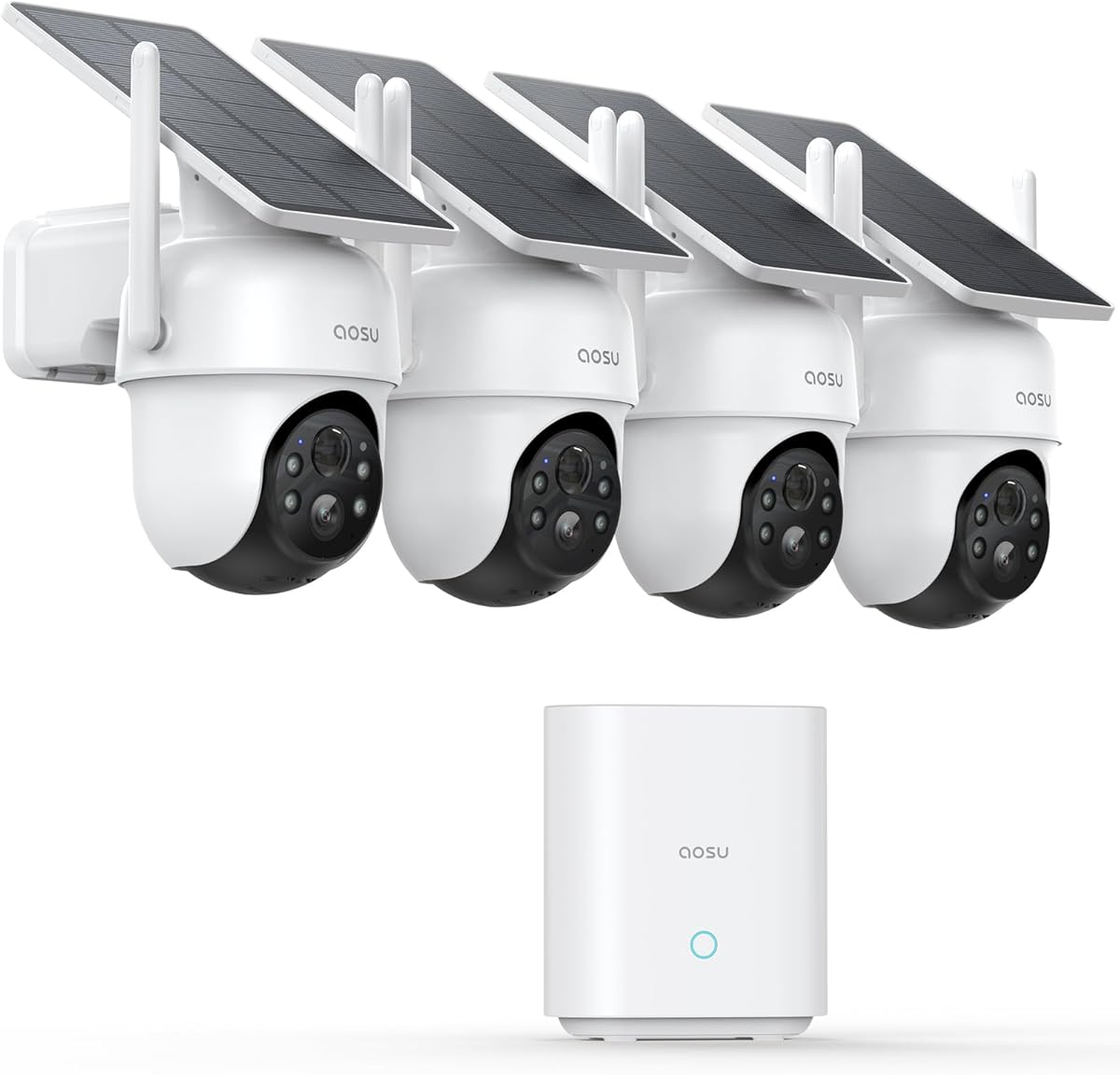
The aosu D1 Classic 4-Cam Kit carries a 4.3 rating and is a practical choice for a pasture large enough to need coverage at more than one entrance. The four-camera package gives owners a way to monitor separate gates, fence lines, or approaches without managing four unrelated systems.
We may earn a commission when you buy through this link, at no additional cost to you.
Each outdoor camera is solar powered and offers 360-degree pan-and-tilt coverage with automatic motion tracking. The description also lists 2K capability, although a separate bullet refers to 3MP resolution, so buyers should evaluate the final displayed specifications carefully. Cross-camera tracking relates recordings from the same period, while four simultaneous live views make it easier to supervise different parts of a property.
Storage is one of the kit's strongest features. aosuBase stores encrypted recordings without a required subscription and includes 32GB of local storage, supporting up to four months of loop recording according to the supplied information. Even if a camera is damaged or lost, the listed data remains available. The trade-off is that all four units need adequate 2.4GHz WiFi coverage, making the system less appropriate for remote fields without a network connection.
Choose this kit when the objective is broad, centralized pasture monitoring rather than one isolated camera. It is especially useful for properties with several gates or outbuildings and an established WiFi network. The four-camera format also provides redundancy, allowing one unit to cover a particularly active area while others watch less frequently visited locations.
Four cameras can be assigned to separate gates, entrances, and yard areas, while cross-camera organization helps a property owner review simultaneous events. The included local storage and subscription-free aosuBase service simplify ongoing footage access.
Each camera includes a solar panel and rechargeable battery, avoiding the need to connect four units to wired power. That makes the kit suitable for a farm layout where convenient outlet access is limited, provided the cameras remain within WiFi range.
We may earn a commission when you buy through this link, at no additional cost to you.
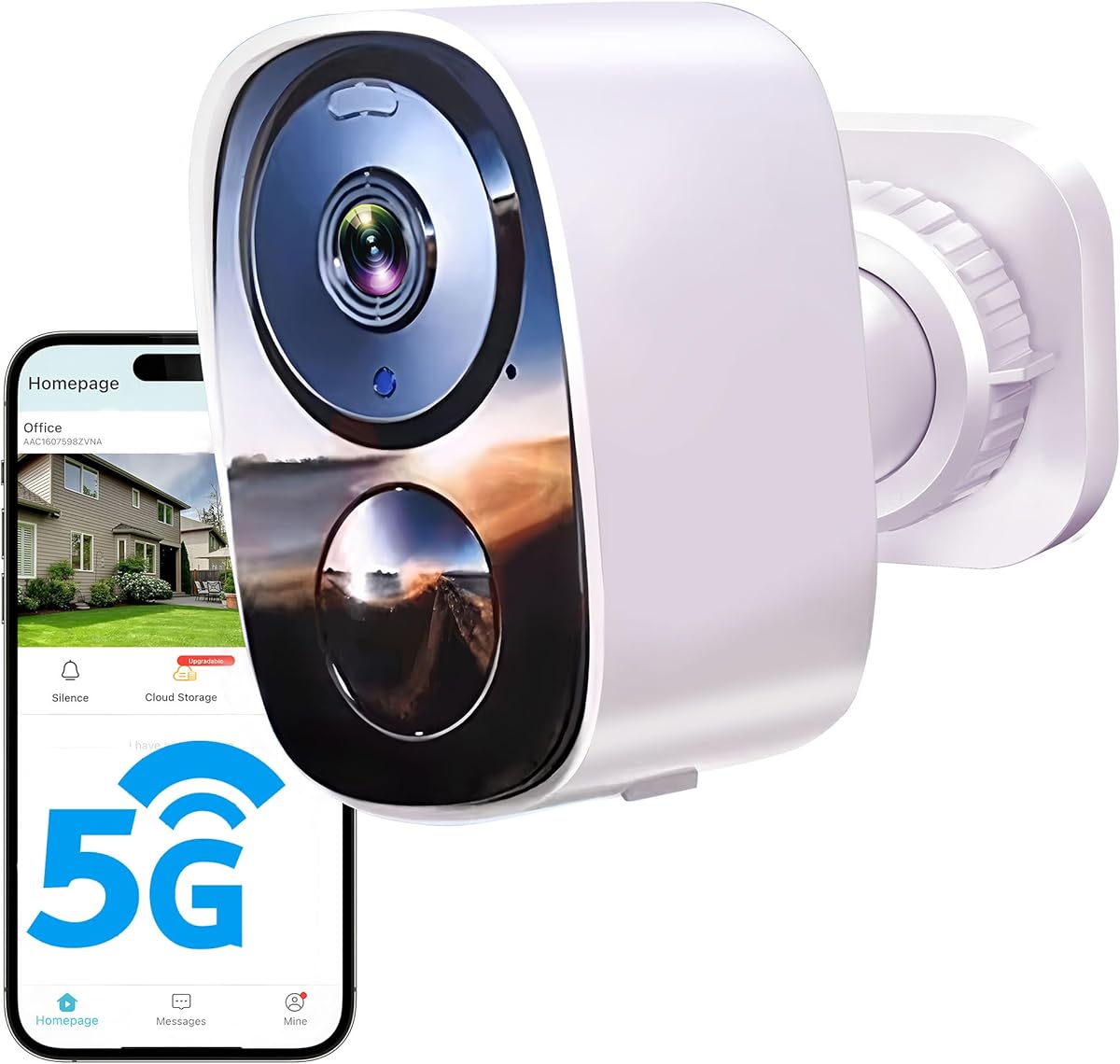
The 2026 Upgraded 2K camera has a 4.3 rating and delivers an unusually broad set of features for an entry-level outdoor security camera. It is a sensible value option for a pasture near a home or barn where 2.4GHz and 5GHz WiFi can reach the mounting location.
We may earn a commission when you buy through this link, at no additional cost to you.
Its 2K ultra HD video, full-color night vision, built-in LED lighting, dual-band WiFi, and two-way audio make it versatile. A rechargeable battery can last between one and six months depending on activity and conditions, while an IP66 rating supports outdoor use. The camera also offers AI motion detection, instant phone notifications, a spotlight, and a siren alarm.
Storage can be handled through a microSD card or the cloud service. The free plan provides SD-quality access, while HD cloud footage requires a paid plan, and the microSD card is not included. Battery performance also varies with motion frequency, recording mode, and temperature; the supplied test description cites 60 days with 100 daily triggers and theoretical longevity of up to six months at lower activity.
This camera is best for owners who want useful 2K images, night visibility, and smartphone alerts without investing in a premium kit. It also supports both WiFi bands, which gives it more connection flexibility than many competing models. A pasture owner should verify WiFi reach at the camera position and avoid assuming that maximum battery claims will apply to a high-traffic field.
The 2K sensor, full-color night mode, and LED illumination provide a more useful nighttime image than a basic infrared-only setup. Two-way talk also allows an owner to communicate from a remote location rather than merely watching silently.
A supported microSD card enables local recording, while the free cloud plan offers an alternative. Buyers who want the highest cloud quality should review the available paid options before installation.
We may earn a commission when you buy through this link, at no additional cost to you.
The AlkiVision Solar Camera has a 4.6 rating, the highest listed rating in this comparison, and combines 2K color night vision with a 360-degree adjustable view. Its compact design and separate solar panel are well suited to a pasture post, gate, or exterior wall.
We may earn a commission when you buy through this link, at no additional cost to you.
The camera includes a 5000mAh battery and a modular solar panel. According to the supplied description, two hours of direct sunlight per day can support continuous operation, while a single charge is stated to last as long as six months. A 120-degree adjustable case creates the advertised panoramic coverage, and a large-aperture lens plus built-in spotlights support color imagery at night.
AI detection can identify people, vehicles, pets, and packages, but those recognition features require a subscription. Cloud storage is also listed as subscription-based, while local microSD cards up to 128GB are supported and not included. The camera relies on 2.4GHz WiFi, so buyers should not choose it for a pasture beyond dependable network coverage. The stated long battery duration also depends on real-world sun exposure, motion frequency, and operating temperature.
This is a compelling choice for a pasture near a residence or barn with reliable 2.4GHz WiFi. Its combination of 2K color night vision, active deterrence features, and a wide adjustable view is particularly helpful for monitoring an entrance after dark. Owners who do not need subscription-based recognition can still use local storage and the core camera functions.
The spotlight and color night mode make nighttime activity easier to evaluate than standard infrared footage. This can help distinguish shapes and movement around gates or feed areas when low ambient light would otherwise obscure the scene.
The modular panel can be positioned for better sunlight than the camera body. This is useful where a convenient camera mounting point is shaded but a nearby fence or pole can receive direct solar exposure.
We may earn a commission when you buy through this link, at no additional cost to you.
The aosu T2 Pro 3K Dual Cam has a 4.0 rating and is built around a coordinated two-camera design. A fixed 170-degree wide-angle lens provides a broad overview, while a 360-degree pan-tilt-zoom camera provides detailed views and can follow moving people, vehicles, and pets.
We may earn a commission when you buy through this link, at no additional cost to you.
Its lock-capture technology allows the fixed camera to identify an event and the PTZ camera to zoom and track it. Users can also tap the wide view in the aosu app to send the PTZ camera to a specific area. Dual 3K lenses, up to 8x hybrid zoom, independent spotlights, and infrared LEDs are intended to preserve detail both during the day and after dark.
On-device AI supports custom monitoring zones around driveways, fences, yards, and other outdoor areas. A detachable 5W solar panel and built-in 9200mAh battery support wire-free installation, and the supplied information states that as little as 90 minutes of direct sunlight per day can maintain operation. Local microSD storage is available, with optional cloud backup and 2.4GHz WiFi connectivity.
This camera is ideal when one mounting point must provide both situational awareness and a closer look at moving subjects. The fixed overview reduces the chance that a PTZ camera will miss something outside its narrower attention area. Its premium dual-camera construction is less necessary for a small field, but for a large or irregular pasture, the coordinated views can reduce blind spots and improve event review.
The 170-degree fixed lens continually shows the wider scene, while the PTZ lens follows important activity. This coordinated approach gives a pasture owner both context and close detail without installing a separate overview camera.
Custom virtual boundaries can focus alerts around fences, parked vehicles, gates, and yards. The result is fewer irrelevant notifications and faster review of events that occur inside important pasture areas.
We may earn a commission when you buy through this link, at no additional cost to you.
The SOLIOM S600 4G LTE has a 3.9 rating and is explicitly positioned for farms, pastures, gardens, and other locations without conventional network or power infrastructure. Like the TACTACAM Defend 360, it uses cellular connectivity, making it a practical option for a remote field with usable nationwide LTE service.
We may earn a commission when you buy through this link, at no additional cost to you.
Its large 15600mAh battery and included 8W solar panel are designed for permanent outdoor operation. The camera offers 320-degree horizontal pan, 90-degree vertical tilt, and 3x digital zoom through the Soliom+ app. A PIR sensor combined with software pixel analysis is intended to reduce false alarms, while a motion-activated spotlight provides color night vision up to 32 feet.
Setup involves mounting the camera, inserting a SIM card and memory card, and scanning a QR code. Storage supports microSD cards up to 128GB, although none is included, and an optional Soliom Cloud service offers a 30-day trial. The principal ongoing requirement is a cellular data plan, so this camera is less attractive where reliable LTE reception is unavailable or where recurring cellular service is not desired.
Choose the SOLIOM S600 when the pasture is genuinely remote and cellular coverage is the only realistic communications option. Its large battery, solar panel, and remote camera controls offer a solid off-grid package. The lower 3.9 rating does not change the usefulness of those core capabilities, but it makes it wise to review the product's current customer feedback before committing.
The camera avoids dependence on household WiFi and external electrical outlets. A compatible SIM card provides the connection, allowing owners to monitor locations such as back fields, distant gates, or agricultural areas beyond reliable network range.
The 15600mAh battery and 8W panel are useful where frequent manual charging would be inconvenient. Local recording through a supported microSD card can also reduce reliance on continuous cloud uploads.
We may earn a commission when you buy through this link, at no additional cost to you.
The GMK 4 Pack Cameras System has a 4.3 rating and is designed for properties that need several wireless outdoor viewpoints. Its four cameras can cover different gates, outbuildings, yard sections, or pasture approaches, all controlled through the VicoHome app.
We may earn a commission when you buy through this link, at no additional cost to you.
The listed imaging is 2K three-megapixel video with color night vision and infrared modes. Each camera uses a rechargeable battery with a stated one-to-six-month standby duration, supports up to 3,000 or more motion triggers per charge, and recharges in six to eight hours. An IP65 rating helps the cameras handle rain, snow, heat, and other outdoor conditions.
This system has useful installation flexibility. Cameras can operate without power cables, while a constant plug-in option is available for busy locations that generate frequent alerts. The trade-off is that the cameras support only 2.4GHz WiFi, and advanced cloud and AI features are associated with a subscription following the listed trial period. MicroSD storage provides a local alternative.
This kit is a strong fit for a farm or homestead that already has reliable 2.4GHz coverage and wants flexible placement without hardwiring every camera. It is especially appealing at gates, coops, barns, and other active points where owners can choose battery operation for remote corners or wired power for heavily used entrances.
Cordless operation is convenient for fence lines and outlying corners, while plug-in power suits gates that experience frequent motion. That flexibility allows owners to match each camera's power method to its location and activity level.
Family members and friends can receive secure view-only access through the multi-user feature. Administrators retain control over settings and footage, which can be useful when several people need pasture awareness.
We may earn a commission when you buy through this link, at no additional cost to you.
The Jet Black Outdoor Camera has a 4.6 rating and offers a compact, cordless approach to pasture observation. It combines 2K wide-angle video, a rechargeable battery, an IP65 weather-resistant housing, and an included mounting bracket in a design suitable for gates, sheds, and nearby outdoor areas.
We may earn a commission when you buy through this link, at no additional cost to you.
Its night capabilities include full-color and infrared modes, with the listed infrared visible range reaching 33 feet. AI motion analysis can recognize people, vehicles, pets, and packages, and notifications are pushed through the app. A built-in microphone and speaker support two-way talk, while a flashing light and siren offer active deterrence.
The camera provides one to five months of use per charge according to the supplied description. Footage can be stored on a microSD card up to 128GB or in optional cloud storage, but the card is not included. It uses 2.4GHz WiFi only, which may limit placement in newer dual-band-only networks or distant areas with weak signal.
This camera is a good choice for a single pasture zone that needs clear 2K imagery, flexible installation, and nighttime communication without a permanent power connection. The strong 4.6 rating supports its general appeal, although users should confirm that their network supports 2.4GHz and that the desired AI, siren, and cloud functions work as expected in the app.
The included bracket and screws allow installation without a network cable or nearby outlet. That makes the camera easier to reposition as grazing areas, gate activity, or livestock movement changes.
The combination of a siren, flashing white light, and two-way audio gives an owner several ways to respond. It can be used to speak with a visitor or warn someone away without physically traveling to the field.
We may earn a commission when you buy through this link, at no additional cost to you.
The DEKCO 2K Outdoor WiFi Security Camera has a 4.3 rating and is the most straightforward wired option in this list. Because it is a plug-in pan-tilt dome rather than a battery camera, it can remain continuously powered without requiring regular field visits for recharging.
We may earn a commission when you buy through this link, at no additional cost to you.
Its motorized movement covers 350 degrees horizontally and 90 degrees vertically, allowing remote control from a phone. Motion tracking can automatically record and follow a moving subject, while app alerts inform the owner of detected activity. Bright floodlights, infrared illumination, full-color night vision, and a 4x zoom improve visibility in dark conditions.
Two-way audio allows communication with visitors, and an IP66 rating supports outdoor operation. Footage can be saved to a microSD card up to 128GB, though one is not included, or handled through encrypted cloud storage. The camera supports 2.4GHz WiFi but not 5GHz, and the need for a power connection is its primary limitation in a remote pasture.
DEKCO is most appropriate where a barn, gate, or stable already has electrical access and 2.4GHz WiFi. In that setting, continuous power eliminates battery-life uncertainty and makes the wide pan-tilt mechanism practical for monitoring a large field from a high mounting point. For isolated acreage without infrastructure, a cellular or solar model is the better fit.
A wired connection is advantageous near barns and farm buildings because the camera does not depend on battery charge cycles or solar exposure. It is especially convenient for busy gates that generate frequent motion events.
The 350-degree horizontal range and 90-degree vertical tilt allow a single dome to cover much of a yard or pasture. Motion tracking helps keep an identified object centered after it enters the frame.
We may earn a commission when you buy through this link, at no additional cost to you.
The eufy Security Floodlight Camera E30 has a 4.4 rating and is a strong choice for a pasture where nighttime visibility is the main concern. It records in 2K and uses motion-activated 2,000-lumen LED floodlights to produce full-color images in low-light conditions.
We may earn a commission when you buy through this link, at no additional cost to you.
The camera offers 360-degree coverage through automated patrol schedules and manual control. Built-in AI detects and tracks movement from humans and vehicles, automatically panning and tilting to keep an important subject in view. That tracking behavior is potentially valuable around pasture gates where a person or vehicle may enter, stop, and change direction.
A power amplifier is designed to strengthen 2.4GHz WiFi signals and improve wall penetration, with a claimed 50% increase in range compared with a standard connection. Because the E30 is hardwired, it can support uninterrupted 24/7 recording and has an IP65 weatherproof rating. The trade-offs are the need for permanent electrical power and the absence of 5GHz WiFi support.
Choose the E30 for a barn entrance, house-adjacent pasture, or other area with a power source and an interest in bright, continuous surveillance. Its floodlights and automatic tracking make it especially useful after dark. For truly remote land without outlets, the solar cellular cameras in this guide are more practical.
The motion-activated 2,000-lumen floodlights illuminate a wide outdoor area and support full-color recording. This is a major advantage when a pasture gate or path is too dark for useful standard night footage.
Human and vehicle detection can trigger automatic panning and tilting, helping preserve a moving subject in the frame. The feature is particularly relevant to entrances where arriving vehicles may be the main concern.
We may earn a commission when you buy through this link, at no additional cost to you.
The right pasture camera depends on infrastructure, terrain, animal movement, nighttime visibility, and the distance between the camera and the owner. Prioritizing connectivity and power first usually prevents a visually capable camera from becoming impractical in the field.
Connectivity determines whether footage and alerts can reach an owner away from the property. LTE cellular models are best for remote fields, barns, and gates without dependable router coverage, but they require a suitable SIM or data service and a location with usable cellular reception. WiFi cameras are usually easier to operate around a home or barn and may offer richer local ecosystems, though their range depends on the router, obstructions, and whether 2.4GHz or 5GHz is supported.
Choose cellular for isolated acreage and WiFi for developed property. Confirm the signal at the exact mounting location before purchasing.
Pasture cameras should not force an owner to recharge devices frequently or run extension cables across dangerous terrain. Solar panels, rechargeable batteries, and long stated battery durations provide more self-sufficient operation. Actual runtime depends on sunlight, temperature, recording frequency, motion activity, WiFi strength, and whether the camera streams live video continuously, so the best-case figure should be treated as a guide rather than a guarantee.
Prioritize solar for remote installations and verify that the panel can receive direct sunlight. Use wired power near barns when uninterrupted recording is more important.
A pasture may have an irregular shape, multiple gates, and vegetation that blocks fixed sightlines. Wide-angle lenses capture more surroundings, while pan-tilt-zoom and dual-camera designs allow a closer look at moving subjects. Automatic tracking can follow a vehicle or person, but a fast animal may move out of frame, and a fixed overview remains useful for maintaining context.
Look for a broad overview paired with a detailed or movable view. Test the claimed tracking behavior against the kinds of movement that matter most on your land.
Pasture monitoring often becomes most important after dark, when predators, trespassers, or unusual livestock behavior may be easier to miss. Infrared imaging provides monochrome visibility without illuminating the surroundings, while color night vision and spotlights offer more natural detail but may be visible to animals or create glare. Floodlight cameras are particularly useful near entrances, although their illumination can also disturb grazing animals.
Match lighting to the location. Use low-light color or infrared for a broad field and a spotlight or floodlight for a controlled gate area.
Pastures contain constant motion, from wind-blown grass to roaming animals. PIR sensors and software analysis help separate meaningful changes from the background, while AI recognition can distinguish people, vehicles, pets, or packages. Detection zones also let an owner ignore a busy tree line and concentrate alerts on gates, water troughs, feed stores, or fence crossings. Even advanced detection is not perfect, so notification settings should be refined after installation.
Prioritize adjustable zones and object filtering. Expect to test sensitivity in actual wind, rain, and animal traffic before relying on remote-only monitoring.
Local microSD storage keeps recordings accessible without an ongoing cloud subscription and can be valuable where cellular data is limited. Cloud storage offers off-device backup and easier multi-device access, but some advanced AI, high-resolution cloud, or event features require a paid plan. Buyers should compare the free tier with paid options, confirm maximum card capacity, and check whether the camera records continuously or only when motion is detected.
Use local storage as the primary method when uninterrupted capture matters. Choose cloud support when remote sharing and off-site backup are worth the added service.
A pasture camera remains exposed to rain, wind, dust, insects, heat, and cold. An IP65 or IP66 rating indicates resistance to dust and water ingress, while IP67 provides a higher level of water protection. Solar panels and cameras may still degrade faster when mounted in direct sun or exposed to heavy wind. A sturdy bracket, suitable cable routing, and a location that minimizes accidental livestock contact are just as important as the weather rating.
Check the stated IP rating and choose a secure, shaded mount where possible. Confirm that brackets and panels can withstand local wind and animal activity.
The best specification cannot compensate for poor placement. A camera mounted too low may be blocked by brush or produce a view dominated by the ground, while an excessively high position can make animals and people difficult to identify. Aim for a clear view of gates, paths, fences, and other meaningful boundaries, and test the app from the owner's usual remote location. Distance also determines whether 2K, zoom, spotlights, or multiple cameras will produce useful evidence.
Prioritize clear sightlines over raw resolution. Place cameras to identify the relevant areas, then add lighting or another unit for details that the main view cannot capture.
Begin by mapping the areas that require observation, such as the main gate, water points, feed storage, barn entrances, and fence lines. Check cellular or WiFi signal at each proposed mounting point, observe the direction of direct sunlight, and look for obstructions. Install the bracket securely, aim the lens toward the useful field of view, and avoid positioning the camera where livestock could reach, rub against, or repeatedly bump it.
Configure the camera according to the site rather than accepting every default. Define motion zones around gates and other important areas, exclude trees or fence lines that generate constant movement, choose an appropriate alert method, and set recording preferences. Test day and night images from the app while standing or driving near the monitored area. If the view is too distant, adjust the mounting height or angle before adding extra cameras.
Routine care is especially important in outdoor agricultural environments. Clean the lens and solar panel as dirt accumulates, check bracket tightness, and inspect for water, insect, or dust intrusion. Monitor battery or connection health, confirm that local or cloud recordings remain accessible, and review the service plan for cellular or cloud features. Replace or resize the storage card as needed and adjust detection zones when seasons change the amount of vegetation or animal traffic.
Only if the camera uses cellular connectivity. Models with LTE require compatible service and sufficient reception, while WiFi cameras need a dependable connection to the local network. Remote pastures often favor cellular because pulling a network cable or extending router coverage may be impractical. Verify service strength at the intended camera location before installation.
Some cameras use AI detection to identify people, vehicles, pets, packages, and other categories, while simpler models primarily detect motion. Results vary with vegetation, weather, movement speed, and camera angle. For livestock monitoring, combining AI detection with carefully drawn motion zones usually produces fewer distracting alerts than relying on unrestricted motion detection.
Solar power can support year-round operation when the panel receives adequate direct sunlight and the camera is positioned for a suitable viewing angle. Cloudy periods reduce charging, while frequent motion, cold weather, and weak WiFi can increase power consumption. A larger battery, an efficient panel, or a connection to wired power may be preferable in heavily shaded or high-activity locations.
The best height balances visibility, detail, and tamper resistance. A pole or elevated exterior location can reduce interference from grass and animals, but an excessively high view may make people difficult to identify. Aim for a clear line of sight to the gate or field, then check the live image at both day and night from the app.
It depends on the model and selected settings. Some offer event-based recording, while wired systems may support continuous 24/7 capture. Continuous recording consumes more storage and power, whereas event-based recording is more efficient but depends on effective motion detection. Review the available recording modes, local card capacity, and cloud retention policy before choosing.
One camera can cover a modest or regularly shaped pasture if it has a wide lens, adequate resolution, and the correct mounting height. Large, wooded, or irregular properties often contain blind spots and benefit from several cameras or a dual-camera system. A cellular or solar unit can extend coverage to areas where WiFi or electrical power is unavailable.
Local storage can be more dependable and economical for owners who mainly need recordings on the camera, while cloud storage provides remote access and off-site backup. Many cameras support both. The best choice depends on card capacity, retention needs, desired recording quality, and whether the manufacturer places advanced features such as AI recognition behind a paid cloud plan.
Use adjustable motion zones to include gates, paths, and other important locations while excluding windblown branches or areas with constant animal movement. AI object filters can further reduce irrelevant events when supported. Adjust PIR sensitivity, test the camera in different weather and seasons, and avoid pointing it directly toward moving tree branches or reflective surfaces.
The TACTACAM Defend 360 is the strongest general choice because cellular connectivity, solar charging, and remote pan-tilt control meet the defining needs of a remote pasture. The aosu T2 Pro Dual Cam offers the most advanced single-installation coverage, while the 2026 Upgraded 2K Camera provides a practical value option for pasture areas already supported by WiFi.
Prioritize the infrastructure at the camera location before comparing image quality. Cellular models suit isolated fields, WiFi kits suit developed farms, and wired cameras suit barns with convenient power. From there, match night illumination, field of view, tracking, local storage, and weather resistance to the animals, entrances, and seasonal conditions that matter most.
Ratings, availability, service plans, and promotions can change over time. Review the current product listing and third-party feedback before buying, especially for a camera that will operate outdoors and may depend on cellular coverage, a subscription, or a compatible mobile app.