
CMF by Nothing Buds Neo
4.4Editor score
App-enabled spatial audio
Up to 35dB active cancellation
52 hours with charging case
Our guide compares 10 Bluetooth Earbuds for Spatial Audio, highlighting soundstage quality, noise control, codecs, battery life, comfort, and smart features
Bluetooth Earbuds for Spatial Audio should make music, films, games, and podcasts feel wider, deeper, and more convincingly placed around the listener. The right pair does more than add heavy bass: it creates stable positioning, realistic instrument separation, and a sense of space while keeping voices intelligible and everyday use comfortable.
We compared the featured earbuds using their supplied specifications, focusing on spatial processing, driver and codec support, active noise cancellation, microphone systems, battery performance, connectivity, water resistance, and app controls. The list includes models designed for cinematic HRTF sound, dynamic head tracking, fixed wide soundstage effects, and advanced lossless wireless transmission.
Each review explains the product's strongest attributes, practical limitations, and ideal listener. Featured models earn badges only when they stand out as a budget, overall, or premium choice, while the comparison table gives you a fast view of the full field. Product availability and prices change, so confirm current details before ordering.
4.4Editor score

4.6Editor score

4.6Editor score
This side-by-side comparison highlights the spatial-audio approach, noise control, sound hardware, connectivity, and battery specifications of all ten featured earbuds, with duplicate CMF Buds 2 colorways included as separate listings.




These wireless earbuds combine app-enabled immersive spatial audio, adaptive noise cancellation, extensive sound controls, and unusually long battery life. With a 4.6 rating among the featured products, they offer the broadest package of useful features for listeners who want more than a basic fixed soundstage effect. The 11mm dynamic driver and support for SBC and AAC provide a solid foundation for music, video, and games.
We may earn a commission when you buy through this link, at no additional cost to you.
The standout feature is the combination of spatial audio and 28 preset EQ profiles, standalone bass boost, and customizable touch controls. The companion app allows listeners to build a more convincing sense of width for compatible content. Adaptive ANC is specified to reach 50dB, while Transparency Mode and wind-noise resistance make the earbuds more versatile outdoors. Six microphones with AI-based noise reduction are intended to improve voice pickup in traffic, offices, and crowded locations.
Battery performance is another major advantage. The earbuds provide up to 10 hours of playback with ANC enabled and 15 hours with it disabled, while the case raises the stated total to 60 hours. A 10-minute charge supplies three more hours, dual-device connection allows effortless switching between devices, and the app can help locate a misplaced earbud through an audible signal and last-connected location record. The main uncertainty is that the product listing does not identify the exact spatial algorithm or describe head tracking, so buyers seeking a specified HRTF system or dynamic tracking should look elsewhere.
This is a strong recommendation for travel, commuting, office work, and mixed entertainment. The lightweight 4.4g housing, three silicone tip sizes, game mode, and broad app controls make it especially practical for anyone who wants adjustable spatial processing without committing to a specific mobile ecosystem. It is our Editor's Choice because it combines immersive listening, customization, noise control, connectivity, and endurance in one unusually well-equipped package.
Spatial audio is most useful when it can be balanced against the recording. Twenty-eight EQ presets, separate bass boost, and app-based touch customization give listeners several ways to shape the presentation without sacrificing the underlying spatial effect.
Adaptive ANC, transparency mode, dual-device pairing, and up to 60 hours of combined playback make this model practical for travel and office days. The 4.4g weight also helps reduce the fatigue associated with wearing in-ear earbuds for extended periods.
We may earn a commission when you buy through this link, at no additional cost to you.
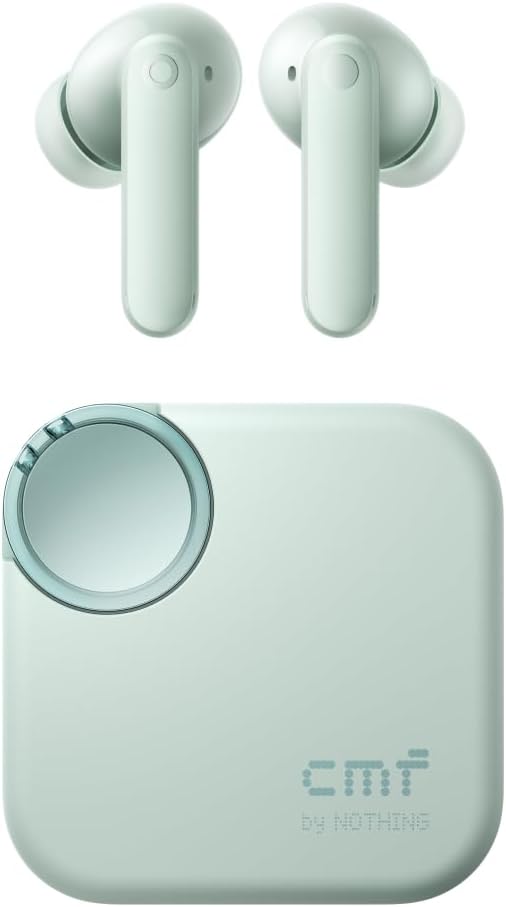
CMF by Nothing Buds Neo deliver the most approachable entry into app-enabled spatial audio in this list. They have a 4.4 rating, a 12.4mm dynamic driver, up to 35dB active noise cancellation, and a stated maximum of 52 hours of playback with the case. Spatial Audio is enabled through the companion app, making this a practical choice for listeners who want a wider presentation without moving into a premium platform.
We may earn a commission when you buy through this link, at no additional cost to you.
The Nothing X app adds multiple EQ presets and several levels of bass enhancement, allowing the sound to be adjusted alongside the spatial effect. Four HD microphones and Clear Voice Technology are designed to isolate speech during calls, while Dual Connection makes it convenient to move between two devices. Low Lag Mode supports more synchronized game audio, and Bluetooth 6.0 is listed as the connection standard. The charging case's lanyard hole adds useful everyday portability.
The 35dB ANC specification is lower than the figures claimed by several competitors in this roundup, so this is not the strongest choice for the noisiest environments. Maximum 52-hour battery life also applies with ANC off; the 11-hour per-earbud figure is likewise tied to that condition. The supplied information does not detail the precise spatial-audio algorithm, head-tracking behavior, water-resistance rating, or wireless codec, which limits certainty for buyers with specialized requirements.
The Buds Neo are best for budget-conscious listeners who want app controls, spatial audio, large drivers, and long battery life in a simple package. They also suit commuters and students who value Dual Connection and portability. For listeners who want a defined HRTF system, powerful dynamic head tracking, or the highest possible noise cancellation, the more specialized alternatives in this guide deserve closer consideration.
The combination of app-enabled Spatial Audio, adjustable EQ, bass enhancement, and a 12.4mm driver gives the Buds Neo more tuning flexibility than a basic stereo earbud. It is a straightforward way to evaluate whether spatial presentation suits your preferences.
Bluetooth 6.0, Dual Connection, and Low Lag Mode cover several everyday needs. Four microphones support voice pickup, while the case's lanyard hole makes the earbuds easier to carry during commutes and travel.
We may earn a commission when you buy through this link, at no additional cost to you.
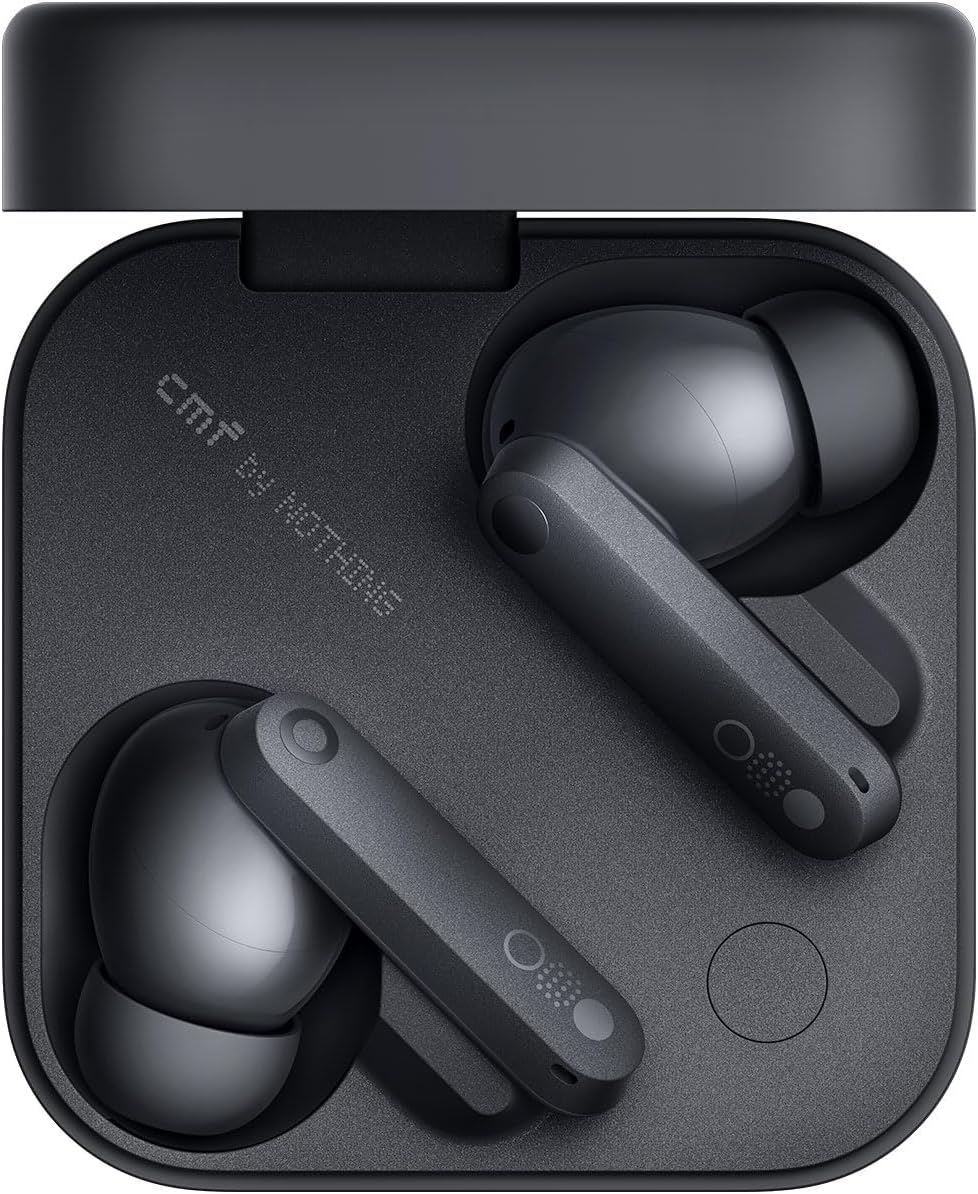
CMF Buds 2 are among the most compelling choices for listeners who want a clearly described spatial-audio system. The 360° Cinematic Sound effect uses an HRTF-based algorithm, giving the product a more technically defined approach to virtual positioning than a generic wide-stereo mode. Its 4.3 rating is supported by 48dB hybrid ANC, environmental adaptation, Dirac Opteo tuning, and a 55-hour battery specification.
We may earn a commission when you buy through this link, at no additional cost to you.
The 11mm PMI driver is tuned for deep bass and clear treble, while Dirac Opteo is intended to improve vocal clarity and instrument separation. Those attributes work well with the HRTF effect because a more precise stereo image gives the virtual soundstage a useful foundation. The Nothing X app provides EQ, Ultra Bass, ANC, and Low Lag Mode controls, and the product integrates with other Nothing devices. A 10-minute top-up supplies up to seven and a half hours of playback.
Call quality is supported by six HD microphones, Clear Voice Technology 3.0, and Wind Noise Reduction 3.0. In-ear detection is another useful convenience, while IP55 water and dust resistance makes the earbuds suitable for workouts and light rain. The supplied information does not identify support for LDAC or another advanced codec, and the practical effect of the HRTF mode will depend on compatible content and the app implementation. Those are worth considering if lossless transmission is your main priority.
This Dark Grey version is a strong recommendation for movie watchers, gamers, and music listeners who want a documented spatial algorithm, substantial noise cancellation, and flexible app controls. It balances cinematic positioning with long battery life and durable construction. The functionally equivalent Light Green listing appears separately in the comparison, but this Dark Grey option stands out for buyers who prefer a neutral, understated appearance.
The HRTF-based algorithm is designed to create a cinematic soundstage with more convincing spatial placement. That makes the Buds 2 a natural match for surround-style film mixes, game audio, and recordings that already contain spatial cues.
Environmental Adaptive mode adjusts noise reduction to surrounding conditions, while the listed 5200Hz frequency range suggests a broad cancellation target. Six microphones, clear-voice processing, and wind reduction add practical value outside the home.
We may earn a commission when you buy through this link, at no additional cost to you.
The Light Green CMF Buds 2 offer the same core listening proposition as the Dark Grey version, including an HRTF-based 360° Cinematic Sound effect, Dirac Opteo tuning, and a 48dB hybrid ANC system. They carry a 4.3 rating and are aimed at listeners who want a colorful, distinctive design without giving up sophisticated noise cancellation or app-based controls.
We may earn a commission when you buy through this link, at no additional cost to you.
Audio comes from an 11mm PMI driver, with Dirac Opteo handling tuning and separation. The spatial effect is intended to create a cinema-grade presentation for films, games, and music. Environmental Adaptive ANC adjusts to the surroundings, and the Nothing X app allows adjustment of EQ, Ultra Bass, ANC settings, and Low Lag Mode. The 55-hour total runtime and 10-minute charge that supplies up to seven and a half hours make the model convenient for travel and extended workdays.
Six HD microphones support Clear Voice Technology 3.0 and Wind Noise Reduction 3.0, while in-ear detection provides basic playback automation. IP55 water and dust resistance adds confidence for workouts and outdoor use. As with the Dark Grey edition, the supplied specifications do not mention LDAC, aptX, or another advanced codec, and the spatial processing remains dependent on compatible material and the Nothing X app. Color is the main practical difference between the two listings.
Choose the Light Green version if you want the Buds 2's HRTF spatial effect, adaptive ANC, and long battery life with a more expressive color option. It is a strong all-purpose recommendation for commuters, casual listeners, and mobile gamers. Buyers comparing the two CMF Buds 2 entries should focus on appearance and current availability rather than expecting a meaningful acoustic distinction.
The Light Green finish gives the earbuds a more noticeable look without altering the underlying feature set. Buyers still receive Dirac Opteo tuning, HRTF-based spatial processing, and app-adjustable sound controls.
IP55 protection, wind-noise reduction, adaptive ANC, and 55 hours of combined playback cover common commuting and exercise scenarios. A short top-up can restore several more hours when needed.
We may earn a commission when you buy through this link, at no additional cost to you.
UGREEN EchoBuds Plus are built for listeners who want detailed wireless transmission and a wide spatial presentation. They have a 4.1 rating and combine Hi-Res certification, LDAC decoding, a 12.4mm dynamic driver, and 360-degree spatial audio. This makes them especially interesting for listeners who already own an LDAC-capable phone or player and want more codec headroom than standard AAC or SBC can offer.
We may earn a commission when you buy through this link, at no additional cost to you.
The LDAC specification reaches up to 990kbps at 96kHz and 24-bit, while a 12.4mm large-diaphragm driver handles the sound output. The spatial effect is intended to wrap music and movies in a cinema-like stage. Adaptive ANC and physical noise isolation are specified to achieve up to 55dB of reduction, one of the highest figures in this lineup. The app includes eight EQ presets, four ANC modes, Game Mode, Dual Connection, and a dedicated spatial-sound setting.
The 600mAh charging case supports 50 hours of total playback. The earbuds themselves run for up to 10 hours with ANC off and six and a half hours with ANC on, while a 10-minute charge adds four hours. Six microphones, AI noise reduction, and wind-noise handling support call quality. Bluetooth 6.0 and an 80ms latency figure are useful for video and games, and IPX5 protection suits workouts and light rain.
This is a compelling option for codec-conscious listeners who value detail, broad spatial imaging, and aggressive noise cancellation. The trade-off is that LDAC's advantages depend on a compatible source and a stable connection, and the 4.1 rating is the lowest among the ten featured models. Buyers should also consider that some Android devices make greater use of advanced codec options than others, while iPhone users may not benefit from LDAC at all.
Hi-Res certification and LDAC transmission provide a clear technical advantage when paired with a compatible source. The 12.4mm driver and 360-degree spatial effect then provide a wide canvas for high-detail recordings and cinematic content.
Up to 55dB adaptive cancellation, four selectable ANC modes, and physical isolation create several options for noisy environments. EQ presets and a dedicated spatial setting make the listening profile easy to adjust for different media.
We may earn a commission when you buy through this link, at no additional cost to you.
CMF Buds Pro 2 use a more elaborate speaker arrangement than most entries in this guide. An 11mm ultra-bass driver works alongside a 6mm tweeter, Dirac tuning refines the result, and LDAC support targets high-resolution wireless transmission. The earbuds hold a 4.3 rating and are positioned as a flexible option for music, video, calls, and gaming rather than relying on a single headline feature.
We may earn a commission when you buy through this link, at no additional cost to you.
The dual-driver layout should provide dedicated handling for bass and higher frequencies, while Dynamic Bass Boost 2.0 adjusts the rhythm. The supplied product information does not explicitly describe a named spatial-audio mode, but the tuned multi-driver platform and immersive listening claim make it relevant to listeners building a wide soundstage. LDAC requires a compatible source, while the remaining system supports the usual Bluetooth connection through Bluetooth 5.4.
Adaptive hybrid ANC is designed to detect noise leakage between the earbud and ear canal, helping it adjust cancellation to the fit. Ambient sound recognition and transparency mode improve awareness during runs. A smart dial on the case handles volume, track changes, and noise modes. Six HD microphones and Clear Voice Technology 3.0 improve voice pickup, while 120ms low latency is designed for competitive gaming.
Battery life reaches up to 10 hours per charge and 43 hours with the case, while a 10-minute charge adds three hours. IP55 protection allows a quick post-swim rinse, according to the listing. These limitations matter if maximum runtime is your priority, especially because other CMF models offer 55 hours. Overall, the Buds Pro 2 are best for listeners who prioritize dual-driver detail, LDAC, physical controls, and fit-aware noise cancellation.
The 11mm bass driver and 6mm tweeter divide low- and high-frequency duties. Combined with Dirac tuning and LDAC, this arrangement appeals to listeners who want cleaner detail and more controlled tonal balance.
The smart dial gives the charging case a tactile way to manage volume, tracks, and noise modes. Adaptive ANC attempts to account for seal-related leakage, which can make cancellation more consistent across different ears.
We may earn a commission when you buy through this link, at no additional cost to you.
Raycon Everyday earbuds focus on the fundamentals: active noise cancellation, a secure in-ear fit, broad device compatibility, and sweat resistance. They carry a 4.2 rating and are positioned for listeners who want dependable everyday earbuds for work, travel, calls, podcasts, gaming, and music. Their appeal comes from practical comfort rather than a specifically documented spatial-audio system.
We may earn a commission when you buy through this link, at no additional cost to you.
The lightweight in-ear design includes multiple ear-tip sizes, helping listeners find a stable and comfortable seal. Active noise cancellation is intended to reduce distractions at home, in the office, and while traveling. The earbuds pair with iOS and Android devices, making them a straightforward option for people who move between different platforms and do not want to depend on a proprietary spatial ecosystem.
IPX4 sweat and water resistance makes the Raycon suitable for running and other activities, although it should not be interpreted as protection suitable for swimming. The supplied information does not identify a dedicated spatial-audio mode, HRTF processing, dynamic head tracking, advanced codecs, detailed battery figures, or specific microphone count. Those omissions limit their appeal if immersive positioning is the deciding feature, but they do not diminish their straightforward utility.
Choose the Raycon Everyday earbuds if comfort, cross-platform compatibility, secure fit, and active noise cancellation matter more than advanced spatial processing. They are especially practical for commuters, remote workers, and casual listeners who want a resilient pair for exercise. For a more cinematic soundstage, consider the CMF Buds 2, JBL Tune Buds 2, or AirPods 4 instead.
The in-ear housing and several tip sizes are intended to create both comfort and stability. That makes the Raycon a natural choice for office wear, travel, and light exercise where a loose-fitting earbud would be inconvenient.
Compatibility with both iOS and Android keeps setup straightforward. The model avoids a clearly specified spatial ecosystem, which may be a drawback for immersive-audio specialists but is useful for listeners who prioritize ease of use.
We may earn a commission when you buy through this link, at no additional cost to you.
Apple AirPods 4 are the premium choice for listeners who want the most explicitly defined spatial-audio experience in this lineup. Personalized Spatial Audio with dynamic head tracking is designed to place sound around the user and maintain that placement as the head moves. With a 4.6 rating, they combine that immersive feature with the Apple H2 chip, Voice Isolation, and a redesigned open-fit form.
We may earn a commission when you buy through this link, at no additional cost to you.
The refined contour, shorter stem, and quick-press controls are intended to improve comfort and stability. Personalized Spatial Audio supports music, television, movies, and games, making the earbuds particularly effective for content created with positional audio. Dynamic head tracking adds a stronger sense of realism than a static wide-stereo effect because the soundstage can adjust with head movement. The H2 chip also powers computational audio and improved background-noise reduction during calls.
Apple ecosystem integration is a central part of the experience. Siri can play music, manage calls, and check schedules, and Siri Interactions add head-based responses. Nearby device pairing, audio sharing between two sets of AirPods, and a skin-detecting sensor further simplify use with compatible Apple devices. Voice Isolation focuses on clarity in loud environments, although the listing does not specify a numeric microphone count or detailed ANC figure.
Battery life reaches up to five hours per charge and 30 hours with the USB-C case, which is less endurance than many competing models in this guide. The USB-C case and sweat and water resistance make the AirPods 4 convenient for travel and active use. They are best for Apple users who want dynamic, personalized spatial audio and seamless integration, and they remain capable for other Bluetooth devices, though the richest experience is designed around the Apple ecosystem.
Dynamic head tracking is the defining feature, allowing compatible audio to remain convincingly positioned while the listener turns their head. Personalization is intended to tailor the processing further to the individual, creating a more consistent theater-like presentation.
The H2 chip, Voice Isolation, Siri Interactions, quick pairing, audio sharing, and wear detection create a seamless experience within Apple's ecosystem. These conveniences are a major reason to choose AirPods 4 over a more generic alternative.
We may earn a commission when you buy through this link, at no additional cost to you.
OPPO Enco Buds3 combine a 4.5 rating, 3D Spatial Sound, and a 12.4mm dynamic driver in a straightforward in-ear package. They are aimed at mobile listeners who want a broad presentation, responsive gaming audio, long battery life, and durable construction. The product information highlights Bluetooth 5.4, 47ms ultra-low latency, dual-device connectivity, and IP55 protection.
We may earn a commission when you buy through this link, at no additional cost to you.
The 3D Spatial Sound feature is intended to add width and depth to compatible content, making the earbuds relevant to music, video, and games. A 12.4mm driver supplies the sound foundation, while the very low 47ms latency figure helps keep footsteps, effects, and dialogue closely aligned with on-screen action. Dual-device connectivity allows a smooth transition between a smartphone and tablet.
Battery life reaches 48 hours, and a 10-minute fast charge supplies up to four hours of playback, although the listing gives inconsistent wording about charging output elsewhere. Touch controls can be personalized, and a double-tap can trigger a phone photo or activate Google AI Assistant. IP55 dust and water resistance makes the earbuds appropriate for sports. Unlike most competitors in the guide, the supplied information does not mention active noise cancellation, advanced codecs, or the exact implementation of the spatial effect.
The Enco Buds3 are a good recommendation for Android-oriented users who value low latency, 3D sound, long battery life, and useful touch customization. They are also a credible choice for casual music and video listeners. Buyers who need active noise cancellation for commutes or a precisely defined HRTF spatial system should favor models that explicitly provide those functions.
The listed 47ms latency helps align game sound with visible action. Combined with Bluetooth 5.4 and dual-device connectivity, it makes the Enco Buds3 well suited to sessions that move between a tablet and a phone.
A 12.4mm driver and 3D Spatial Sound provide a wider presentation for music and video. While the precise algorithm is not explained, the feature gives mobile users another way to add depth beyond ordinary stereo playback.
We may earn a commission when you buy through this link, at no additional cost to you.
JBL Tune Buds 2 stand out because JBL Spatial Sound is described as transforming stereo sound from any source or device into a more immersive experience. That makes them an interesting option for listeners who do not want to depend exclusively on content mixed specifically for spatial playback. They carry a 4.2 rating and combine 10mm Pure Bass drivers, adaptive noise cancellation, and 48 hours of total battery life.
We may earn a commission when you buy through this link, at no additional cost to you.
The spatial effect expands conventional stereo into a wider soundstage for playlists, movies, and games. JBL Pure Bass supplies the low-frequency emphasis, while the app allows listeners to adjust ANC level, ambient sound control, fit, and other settings. Ambient Aware provides a continuous awareness option, and TalkThru is designed for quick conversations without removing the earbuds. The app can also create a Relax playlist and help find misplaced earbuds.
Six microphones use environmental noise cancellation and echo suppression to support clear calls, including in windy conditions. Battery runtime reaches up to 10 hours with ANC on and 12 hours with ANC off, with the case adding up to 48 hours. The supplied information does not mention a specific spatial algorithm, dynamic head tracking, an advanced codec, or a water-resistance rating, which places the model below more fully specified options in some areas.
The Tune Buds 2 are a good fit for mainstream listeners who want JBL sound, a visible spatial effect, practical noise control, and long battery life without committing to a premium platform. They are especially useful when stereo sources dominate your listening. For head-tracked spatial audio, document-based HRTF processing, or lossless codec support, consider AirPods 4, CMF Buds 2, or UGREEN EchoBuds Plus.
JBL Spatial Sound is described as expanding stereo from any source or device. That makes the effect accessible to ordinary music libraries and streamed videos rather than limiting immersion to specially mixed content.
Adaptive Noise Cancelling, Ambient Aware, and TalkThru cover quiet, aware, and conversational listening needs. The app controls these modes and other settings, while the case supports up to 48 hours of combined playback.
We may earn a commission when you buy through this link, at no additional cost to you.
The right spatial-audio earbuds depend on the content, device, and level of control you want. Start with the spatial system and codec, then balance those features against noise cancellation, comfort, connectivity, and battery life.
Spatial audio is not a single standardized feature across every brand. AirPods 4 use Personalized Spatial Audio and dynamic head tracking, while CMF Buds 2 describe an HRTF-based spatial effect. Other models, including JBL Tune Buds 2 and OPPO Enco Buds3, offer wider soundstage processing without the same level of algorithmic detail in their supplied specifications. HRTF processing can create convincing positional cues, whereas head tracking keeps compatible sound elements aligned as the listener moves. A static or fixed spatial effect is usually simpler and works with more content, though it may not create the same sense of realism.
In short, choose a named HRTF or head-tracked system when placement is your priority, and choose a general wide-soundstage effect when you mostly listen to ordinary stereo music.
Spatial effects can only create a convincing stage if the underlying audio has good channel separation and tonal balance. The featured models use 10mm, 11mm, or 12.4mm dynamic drivers, with the CMF Buds Pro 2 adding a separate 6mm tweeter. Dirac Opteo, JBL Pure Bass, and Dynamic Bass Boost 2.0 provide additional tuning layers. These features can improve instrument separation, vocal clarity, and low-frequency impact, although a stronger bass setting does not automatically create more accurate spatial positioning.
In short, prioritize balanced tuning and clear separation over exaggerated bass, then use the app's EQ or bass controls to refine the final result.
AAC and SBC are common baseline codecs, while LDAC appears in the UGREEN EchoBuds Plus and CMF Buds Pro 2. LDAC can carry substantially more data than standard Bluetooth audio and is attractive for compatible Android devices and high-resolution source material. The benefit is less relevant when the phone does not support the codec, and actual performance also depends on wireless conditions. Some models do not specify a codec beyond their general Bluetooth version, making codec support one of the most important details to verify before buying.
In short, check that your phone supports the advertised codec and only choose an advanced codec model when your source material and listening setup can benefit from it.
Active noise cancellation can make spatial effects easier to hear on trains, in offices, or around construction noise. Listed maximum figures range from 35dB on the CMF Buds Neo to 50dB on the Active Noise Cancelling Ear Buds, 48dB on CMF Buds 2, 50dB on CMF Buds Pro 2, and up to 55dB on UGREEN EchoBuds Plus. Raycon and JBL also offer active noise cancellation, while OPPO's supplied information does not mention it. These maximum figures should be treated as manufacturer-stated specifications rather than a direct guarantee of equivalent real-world performance.
In short, if you regularly listen in noisy places, prioritize adjustable ANC, transparency mode, and a secure seal over battery life alone.
Microphone count alone does not determine call quality, but the supplied specifications reveal several different systems. The top-ranked earbuds use six microphones with AI noise reduction, CMF Buds 2 use six HD microphones with Clear Voice Technology 3.0, and CMF Buds Pro 2 likewise lists six HD microphones. CMF Buds Neo uses four HD microphones, while JBL uses six microphones with environmental cancellation and echo suppression. Wind reduction is explicitly mentioned by several models, making them more practical for outdoor calls and cycling.
In short, look for voice isolation, wind reduction, and multiple microphones if you take calls in traffic or crowded spaces rather than focusing on a microphone count by itself.
Battery specifications usually include two different numbers: listening time from the earbuds and the total obtained with the charging case. Several models reach 48 to 60 hours overall, while AirPods 4 provide up to 30 hours and CMF Buds Pro 2 provide 43 hours. Be careful with ANC: on many products, runtime is longer with noise cancellation off. Fast charging is also useful, with stated additions ranging from three hours in ten minutes to seven and a half hours. The OPPO listing gives inconsistent fast-charge wording, so its exact recovery figure should be confirmed directly.
In short, compare both earbud-only and case totals, check whether ANC reduces runtime, and choose a quick-charge model if you often travel without a full battery.
Spatial listening is most enjoyable when the earbuds remain comfortable and maintain a consistent seal. The top-ranked model weighs 4.4g per earbud and includes three tip sizes. CMF Buds Neo emphasizes an ergonomic design, while Raycon offers multiple tip sizes for an all-day in-ear fit. A stable seal can also improve bass response and the consistency of noise cancellation. Water-resistance standards include IPX4 for Raycon, IPX5 for UGREEN, and IP55 for several CMF and OPPO models, but none of these ratings should be interpreted as permission to swim unless the manufacturer explicitly says so.
In short, choose a lightweight shape, try multiple tip sizes if possible, and match the durability rating to your intended use rather than treating all water-resistance labels as equivalent.
Bluetooth 5.4 appears across several models, while Bluetooth 6.0 is used by the CMF Buds Neo and UGREEN EchoBuds Plus. Dual-device or multipoint connection is especially useful for switching between a phone and computer. Low-latency modes range from 47ms on the OPPO Enco Buds3 to 50ms on the top-ranked earbuds and 120ms on the CMF Buds Pro 2. App support can add spatial controls, EQ, ANC modes, fit guidance, device switching, gaming modes, and lost-earbud tools. The CMF Buds Pro 2 also has a physical smart dial, while AirPods 4 integrate deeply with Apple devices and Siri.
In short, prioritize seamless two-device switching and dependable app controls, and consider the wider smart features of your phone ecosystem before choosing.
Begin by fully charging the earbuds and case, then pair the earbuds with your intended source device. Open the companion app where one is available, choose the appropriate spatial-audio or soundstage setting, and use the supplied EQ controls to set a balanced starting profile. Spatial effects work best with supported films, games, surround mixes, and spatial recordings, so test a familiar track before deciding whether the effect improves the experience.
For everyday use, select the appropriate noise-control mode before entering a noisy environment. Transparency or ambient modes can improve awareness, while full ANC is more useful on aircraft, trains, and busy offices. If the earbuds support two-device connection, set up both a phone and computer for smoother transitions. Update the firmware through the manufacturer or earbud app when updates are offered, because processing and stability can be refined through software changes.
To maintain performance, remove the earbuds regularly and clean the tips and microphone openings with a dry, soft material. Keep the charging contacts clean and avoid exposing the earbuds to moisture beyond their stated rating. Replace damaged or deformed ear tips so the seal remains consistent, store the earbuds in their case when not in use, and check the app's battery tool if a device appears to drain faster than expected.
No. Spatial processing may work best with video and music encoded for surround or spatial playback, while some fixed soundstage effects can also process ordinary stereo. Compatibility varies by phone, app, and service, so check the manufacturer's requirements before purchase. A model that expands stereo can still be useful, but it may not offer the same positional control as HRTF or head-tracked processing.
It depends on how you listen. Head tracking is most noticeable with compatible media and can make positional cues feel more stable as you turn your head. For music on the go or films watched on a television, a fixed wide soundstage may be sufficient. AirPods 4 are the featured option with explicit dynamic head tracking, while CMF Buds 2 emphasize an HRTF-based effect.
No. LDAC can provide higher-resolution wireless transmission, but spatial processing and codec support are separate features. The UGREEN EchoBuds Plus and CMF Buds Pro 2 list LDAC, while other models use standard Bluetooth audio and still provide spatial effects. An advanced codec only adds value when your source device supports it and the content has sufficient detail.
ANC can improve spatial listening by reducing background sound that masks subtle positioning cues and dialogue. The effect is most valuable on flights, trains, and in open offices. You can usually switch to transparency or ambient mode when awareness is more important. Remember that maximum cancellation figures across brands are not perfectly comparable because the supplied specifications do not describe identical test methods.
Apple AirPods 4 provide the clearest premium choice for Apple users because they offer Personalized Spatial Audio, dynamic head tracking, the H2 chip, Voice Isolation, and Siri interactions. They also pair naturally with other Apple devices. Other earbuds in the guide may still work with an iPhone, but the richest integration is centered on Apple's own hardware and software.
Several models have relevant water-resistance ratings. UGREEN lists IPX5, while CMF Buds 2, CMF Buds Pro 2, and OPPO Enco Buds3 list IP55; Raycon lists IPX4. These ratings indicate different levels of sweat and water protection, so follow the manufacturer's care guidance. None should be treated as universally swim-safe unless explicitly approved for that activity.
The correct priority depends on your routine. Frequent travelers may value 48 to 60 hours of combined playback, while dedicated film and game listeners may prefer HRTF processing, head tracking, or higher-resolution codecs. Many strong options also offer fast charging, so it is sensible to balance immersion, ANC, comfort, and endurance rather than maximizing only one specification.
It depends on the model. AirPods 4 provide Personalized Spatial Audio as part of the Apple experience, while CMF Buds Neo explicitly enable Spatial Audio through the app. UGREEN includes a spatial-sound setting in its app, and other brands use their companion apps for equalization and feature control. Download the relevant app before shopping if having fine control over the soundstage is important to you.
The Active Noise Cancelling Ear Buds are the most flexible overall pick, combining app-enabled spatial audio, extensive EQ options, adaptive ANC, dual-device connectivity, and up to 60 hours of battery life. CMF Buds Neo offer the most budget-focused route into spatial listening, while AirPods 4 stand apart for Personalized Spatial Audio, dynamic head tracking, and refined Apple integration.
Your priorities should determine the winner. Choose CMF Buds 2 for a documented HRTF effect, UGREEN EchoBuds Plus for LDAC and a wide spatial presentation, CMF Buds Pro 2 for dual drivers and a smart case dial, and JBL Tune Buds 2 for expanding ordinary stereo sources. Fit, ANC, battery life, codecs, and app quality can matter just as much as the headline spatial feature.
Before ordering, verify current availability, device compatibility, charging-case details, and the latest product information. Prices and promotions change frequently, so use the review as a feature-based guide and confirm the current listing before making a final purchase.