
Occer 12×25 Compact Binoculars for Adults and Kids
4.4Editor score
Long eye-relief design
Rubber eyecups retract
Compact portable construction
Best binocular for glasses guide comparing 10 options for magnification, fit, focus, optics, comfort, and hands-free viewing needs.
Finding a binocular that works well with prescription glasses requires more than comparing magnification alone. Eyepiece spacing, eye relief, focus controls, weight, and frame stability all affect comfort and image quality, particularly when every movement of the glasses can shift the viewing angle.
This guide compares ten products across wearable binocular glasses and conventional compact binoculars. The evaluation considers the advertised magnification, optical coatings, adjustment options, compatibility with eyeglass wearers, portability, comfort, and suitability for theater, sports, birding, fishing, travel, and everyday viewing.
Each entry explains the product's strongest features, practical limitations, and ideal buyer, so you can choose according to your viewing environment rather than relying on a single specification. Product availability, ratings, and prices can change, so confirm current details before purchasing.
4.4Editor score

4.5Editor score
4.0Editor score
This side-by-side comparison highlights magnification, adjustment, portability, and the most relevant strength of each model, helping distinguish true wearable glasses from compact conventional binoculars.


This wearable binocular combines eightfold magnification with a glasses-based form, earning a 4.5 rating among the products compared. It is especially suited to anglers, bird watchers, sports spectators, and concertgoers who want more magnification than a typical theater glass without continually holding a traditional binocular.
We may earn a commission when you buy through this link, at no additional cost to you.
Its strongest attraction is the adjustable focus wheel combined with support for people with prescriptions up to +7 diopters. The included lens holder accepts multiple polarized lens options, which can help reduce glare from water and sunlight. Soft gel nose pads, a broad nose bridge, and an ergonomic design also distinguish it from many simpler wearable models.
The trade-off is that eightfold magnification and front-mounted optics create more visual weight and bulk than a low-power opera glass. Users should expect to make small focus corrections as targets move, and the polarized lenses must be installed correctly to achieve their intended glare-control effect.
This is a strong choice for active users who specifically need hands-free eightfold magnification and will take advantage of polarized lenses. It is less suitable for someone seeking the simplest possible fit, but it offers an unusually flexible feature set for fishing and outdoor observation.
The floating magnifier is intended to help users follow fishing floats and other moving targets without repeatedly lifting binoculars to the eyes. A manual zoom wheel provides finer control than a fixed-focus wearable design.
The interchangeable lens holder is particularly valuable around reflective water. Different polarized lens options can be selected for changing light conditions, although buyers should verify compatibility with their own sunglasses or existing prescription glasses.
We may earn a commission when you buy through this link, at no additional cost to you.
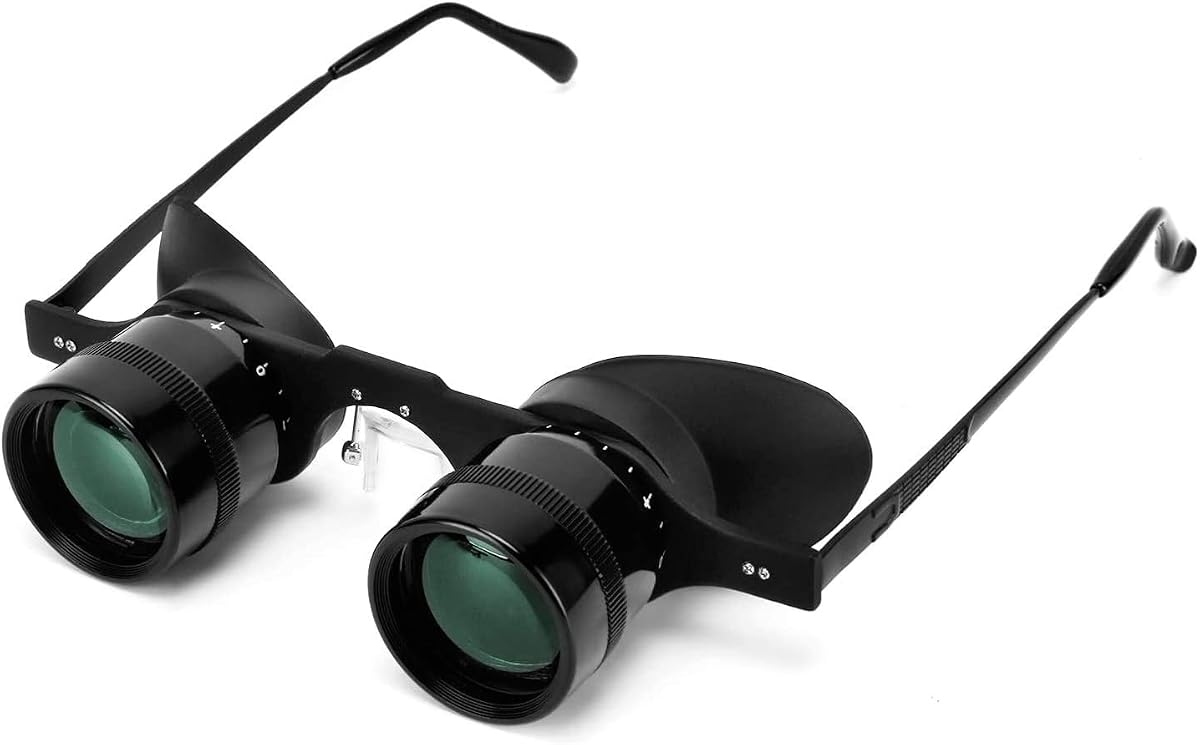
This hands-free opera glass offers threefold magnification in a notably light frame that weighs 0.15 pounds. Its 3.7 rating reflects a basic product with broad intended uses, including television, concerts, theater, sports, bird watching, and following a fishing float.
We may earn a commission when you buy through this link, at no additional cost to you.
The product uses green-film fully multi-coated lenses, BAK4 prisms, and built-in low-light vision. Its alloy arms bend to accommodate different faces, while adjustable nose pads help position the optics more naturally. A hard case and cleaning cloth make it convenient to transport and store.
The manufacturer explicitly acknowledges that threefold magnification cannot match normal eightfold or tenfold handheld binoculars. Image magnification and low-light performance should therefore be judged as benefits for casual viewing rather than substitutes for serious distance observation.
This model works well for viewers who prioritize low weight and broad versatility over maximum magnification. It is particularly useful for someone who wears glasses, wants both hands free, and needs a simple optical aid for moderate-distance indoor or outdoor scenes.
Flexible alloy arms and adjustable nose pads allow the optical section to sit more evenly over different facial structures. That adjustability matters for glasses wearers because shifting frames can otherwise create uneven alignment between the two eyes.
At 0.15 pounds, the glasses-style format can be carried more easily than conventional binoculars. The included hard case helps protect the optics during travel, storage, or trips to large venues.
We may earn a commission when you buy through this link, at no additional cost to you.
The YCXXKJ model presents a straightforward hands-free viewing option with a 3.8 rating. It focuses on easy adjustment, portability, and user-friendly operation for theaters, outdoor events, bird watching, and general magnified viewing.
We may earn a commission when you buy through this link, at no additional cost to you.
Individual focus controls are the most useful technical feature, allowing each eye to be adjusted separately. Its compact, lightweight frame makes it easy to wear and carry, while the glasses-like design keeps the user's hands available for programs, tickets, controls, or other activities.
The supplied information does not state a magnification figure, objective size, field of view, or detailed coating configuration. That makes it harder to compare image scale and optical performance precisely with the more fully specified products in this roundup.
This product is most appropriate for buyers who prioritize a simple wearable format, independent focusing, and easy transport. Those seeking a known magnification level, formal prescription support, or detailed specifications may prefer one of the more clearly documented alternatives.
Separate focusing for each side can compensate for differences between a wearer's eyes. This is useful for casual users who may not be able to achieve a comfortable image with a single shared adjustment.
The hands-free format reduces the need to raise and lower a separate binocular. That makes the product approachable for concerts, sports, birding, and casual observation where one hand may already be occupied.
We may earn a commission when you buy through this link, at no additional cost to you.
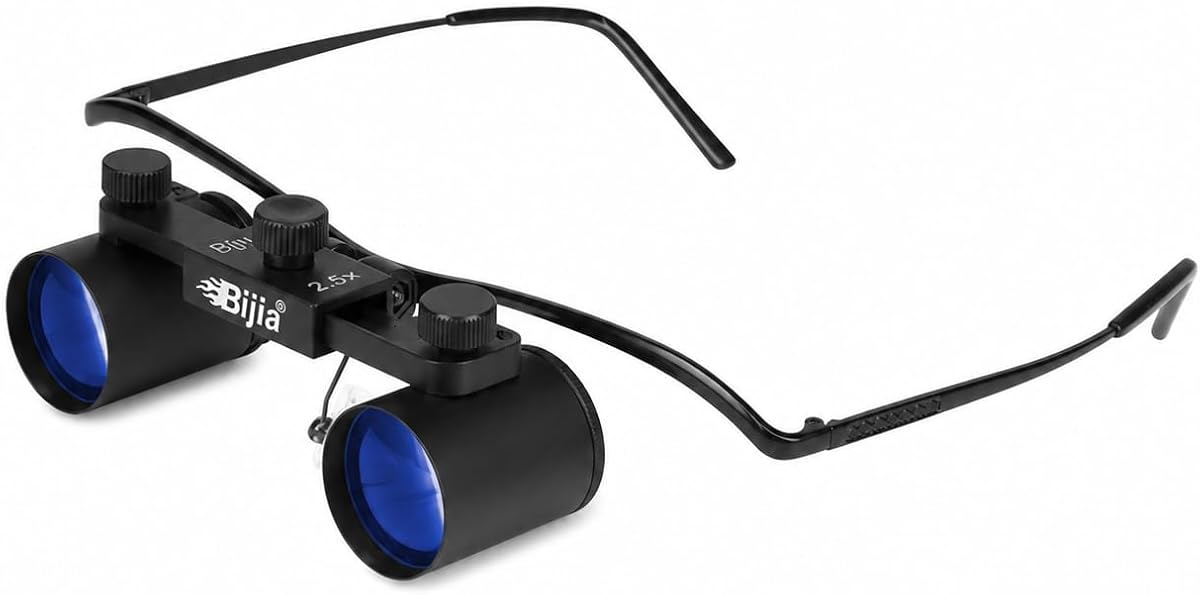
BIJIA's 2.5X wearable opera glasses use a refined flip-up format that allows users to alternate between normal vision and magnification without removing the glasses. The product has a 4.0 rating and weighs only 59 grams, making it one of the lightest designs in the roundup.
We may earn a commission when you buy through this link, at no additional cost to you.
The optical barrels can be raised when magnification is wanted and lowered for ordinary viewing. Each barrel focuses independently, the interpupillary distance is adjustable, and high-transmission coatings are paired with a hydrophobic nano coating intended to reduce water and smudges.
Its principal limitation is magnification. At 2.5X, the glasses are better suited to moderately distant stage details and live events than to distant wildlife, sports played across a large field, or other situations demanding substantial image scale. The low power also places fewer demands on focus precision.
This is a compelling option for theatergoers, concert attendees, and anyone who wants glasses-like normal vision with the option to magnify. The flip-up mechanism and low weight set it apart from bulkier wearable telescopes, especially for long viewing sessions.
The flip-up barrels can be lowered between viewing intervals without taking off the glasses. This preserves a conventional sightline when the user needs to read a program, speak with someone, or look around the venue.
A 59-gram frame and flexible adjustment help reduce the fatigue associated with longer events. The water- and smudge-resistant coating also makes the glasses easier to maintain during travel or outdoor use.
We may earn a commission when you buy through this link, at no additional cost to you.
This BIJIA model is a wearable opera glass designed specifically for theater, opera, concert, and performance viewing. Its 3.6 rating places it among the lower-rated products here, but the specification package includes features aimed at stable stage viewing and personalized adjustment.
We may earn a commission when you buy through this link, at no additional cost to you.
An upgraded lanthanum achromatic doublet lens with FMC coating is intended to reduce color fringing and improve clarity. Silicone nose pads, anti-slip ear hooks, and an included neck lanyard help stabilize the glasses, while separate eyepiece focus and interpupillary-distance controls support alignment.
Like other glasses-style options, it offers only moderate magnification and does not replicate the detail of a high-powered handheld binocular. Stable viewing also depends on fitting the nose pads and ear hooks correctly, so users should expect to make minor adjustments before an event.
The product is best for spectators who want dedicated performance magnification without holding a separate binocular. Its secure fit, coated optics, and presentation box make it a thoughtful choice for opera, theater, and concert gift occasions.
The achromatic doublet lens and FMC coating target clearer images with less color fringing than basic designs. These features are particularly relevant when stage costumes, lighting gradients, and distant performers are being viewed.
Adjustable silicone nose pads and anti-slip ear hooks help prevent the optics from drifting. The optional neck lanyard can add support during longer performances, reducing the chance that the frame will slide.
We may earn a commission when you buy through this link, at no additional cost to you.
The Fockety glasses offer 10X magnification, the highest power among the wearable products listed here. Its 3.6 rating indicates a more specialized design aimed at users who value magnification over the low weight associated with conventional opera glasses.
We may earn a commission when you buy through this link, at no additional cost to you.
The product uses fully multi-coated optics, which the manufacturer says enhance light transmission by as much as 90%. Independent focus controls for each eye, a 13mm eyepiece field of view, silicone ear hooks, and a triangular nose pad are intended to provide a wide, aligned view for users with differing eyesight.
The significant trade-off is weight distribution. Mounting 10X optics in front of the frame makes the front heavier than ordinary glasses, and the product description explicitly recognizes that front-heavy balance. Rubber eye covers also block outside light, which may help in low-light viewing but can reduce peripheral awareness.
This model suits users willing to accept more bulk in exchange for strong magnification and hands-free operation. It may appeal to anglers, birders, and sports fans who track distant moving targets, provided they prioritize adjustment precision and stable placement.
Tenfold magnification offers a much larger apparent image than the two-and-a-half- to threefold theater models. That makes the glasses more suitable for following distant floats, birds, players, and performers.
Independent left and right adjustments help users balance different eyesight and establish a centered binocular image. Silicone supports and triangular nose pads are designed to keep the heavier front section from slipping.
We may earn a commission when you buy through this link, at no additional cost to you.
The Occer 12×25 is a conventional compact binocular designed with eyeglass wearers in mind. Its 4.4 rating makes it one of the strongest-rated products in the roundup, and its retractable rubber eyecups, long eye relief, and large 15mm eyepieces directly address common glasses-wearing concerns.
We may earn a commission when you buy through this link, at no additional cost to you.
The binocular provides 12X magnification through 25mm objective lenses and offers a stated field of view of 273 feet at 1,000 yards. FMC broadband coatings and a BAK4 prism support image quality, while the ABS body, rubber armor, and included strap make it manageable for adults and children.
Unlike the wearable alternatives, this product must be held in both hands for steady viewing. Its 12X power also requires more accurate alignment and focus than low-power glasses, particularly when the user wears glasses with strong prescriptions.
For a buyer searching specifically for binocular glasses, the Occer is not wearable, but it may be the most suitable compact binocular for prescription eyewear. It is ideal for travel, birding, sports, and casual nature viewing where clearer optics and a 4.4 rating outweigh the need for hands-free operation.
The pull-down rubber eyecups let a wearer bring the eye closer to the eyepiece, while long eye relief and large eyepieces improve the chance of seeing a complete image with prescription glasses in place.
The compact ABS body, included strap, and pocket-friendly proportions suit travel, camping, cruises, birding, and sports. Rubber armor adds grip and helps protect the housing during ordinary outdoor handling.
We may earn a commission when you buy through this link, at no additional cost to you.
This eightfold binocular-glasses model targets fishing, birding, sports, concerts, and theater. Its 3.2 rating is the lowest numerical score among the ten products, so buyers should pay particularly close attention to fit, image quality, and the supplied polarized-lens options before deciding.
We may earn a commission when you buy through this link, at no additional cost to you.
The product uses a floating magnifier, dual-layer optics, a manual focus wheel, and a holder for multiple polarized lenses. Soft gel pads and a broad nose bridge are designed to reduce pressure, while the stated adjustment range accommodates prescriptions up to +7 diopters.
The main concerns are the relatively low rating and the bulk inherent in placing high-power optics on a glasses frame. Front weight may become noticeable over long sessions, and the effectiveness of the polarized lenses will depend on correct installation and suitable lighting conditions.
Despite its lower score, the feature combination remains useful for outdoor users who value eightfold magnification and interchangeable polarization. It is best suited to active applications where tracking a float or distant wildlife matters more than the discreetness of an opera glass.
The supplied polarized lenses can help reduce glare from sunlight and water. Their usefulness is greatest around reflective surfaces, making them a notable feature for anglers and spectators seated in bright conditions.
Soft gel pads and an 85-degree bridge are intended to distribute contact more comfortably than rigid nose pieces. Correct positioning remains essential, particularly when the optical section adds forward weight.
We may earn a commission when you buy through this link, at no additional cost to you.
This BIJIA model is a hands-free opera glass intended for concerts, theater, opera, sports, travel, museums, wildlife viewing, and fishing. It carries a 3.6 rating and combines threefold magnification with a 30mm objective lens for a relatively open and bright viewing effect.
We may earn a commission when you buy through this link, at no additional cost to you.
Separate left and right barrel focus, a large focusing wheel, adjustable pupil distance, and adjustable frame legs help accommodate different users. The product weighs 99 grams, considerably less than the roughly 433 grams attributed to a traditional binocular in the supplied description.
The optics still place the center of gravity toward the front, which can cause fatigue over long periods. The manufacturer suggests ear hooks and a lanyard to shift the balance backward, which is particularly relevant for anyone who already wears prescription glasses.
This option is well suited to general culture, travel, and casual observation. It is a reasonable choice for someone who needs moderate magnification and many adjustment options, though users seeking distant detail should look toward the eightfold or tenfold models.
The stated 30mm objective lens is wider than the 25mm objective found in many compact products. According to the product information, the larger opening can admit more light and create a brighter, more open viewing effect.
Adjustable frame legs, a soft adjustable-width nose pad, independent barrel focusing, and movable pupil spacing offer several ways to establish alignment. These adjustments are valuable for glasses wearers whose facial geometry changes the effective viewing position.
We may earn a commission when you buy through this link, at no additional cost to you.
The Sanpyl 8X is a portable wearable binocular intended for fishing, bird watching, sports, concerts, and theater. It has no numerical rating in the supplied data, which makes it difficult to compare its customer reception with the rated products in this guide.
We may earn a commission when you buy through this link, at no additional cost to you.
Its central feature is an eightfold floating magnifier with a manual focus wheel. A holder accepts different polarized lens options, while dual-layer optics are advertised as reducing stray light and speckle. Soft gel pads and an 85-degree bridge are designed to improve wearing comfort.
Because the rating is unavailable and no additional objective size, coating details, or total product weight are provided, prospective buyers should evaluate the listing carefully. The high magnification also adds bulk and can make small focus adjustments more noticeable than with lower-power opera glasses.
The product is most relevant to anglers and outdoor users seeking portable hands-free magnification with polarization. Its feature list is compelling, but the lack of a rating and broader specifications makes it a more speculative choice than the better-documented alternatives.
The floating magnifier is designed to keep a fishing float visible while the user's hands remain active. Eightfold magnification offers more apparent detail than typical theater glasses.
The lens holder supports several polarized options for use around water or in sunlight. Buyers should confirm which lenses are included and whether any prescription insert is required.
We may earn a commission when you buy through this link, at no additional cost to you.
The right binocular for glasses balances magnification with clear alignment, stable positioning, and comfortable eye relief. These factors determine whether a product feels useful during long events or becomes frustrating quickly.
Magnification determines how much larger distant subjects appear, but it should be matched to the activity. Low-power glasses around two-and-a-half to threefold are comfortable for theater, concerts, and television, while eightfold or tenfold wearable models provide greater apparent detail for birds, floats, and sports. Higher power also makes hand movement, frame movement, and focus changes more noticeable.
Eye relief is the distance between the eyepiece lens and the eye. It must be sufficient for the user's eyeglass frames and the binocular's eyecup to avoid pressing the glasses into the face. Compact models may offer long eye relief, pull-down rubber eyecups, and large eyepieces, while wearable designs need adjustable nose supports and stable temples to keep the optics aligned.
Independent focus controls are useful when the user's eyes have different focusing needs. Diopter adjustment, independently moving barrels, and adjustable interpupillary distance can make a binocular easier to align. Some wearable products state support for prescriptions up to +7 diopters, but that should not be treated as a substitute for professional advice or a guarantee of compatibility with every strong prescription.
Wearable binocular glasses keep both hands free and resemble ordinary eyewear, making them convenient for concerts, theater, fishing, and crowded sports venues. Conventional compact binoculars generally offer stronger magnification and a wider selection of optical specifications but must be held in the hands. Decide which tradeoff matters more: hands-free convenience or greater image scale and steadier alignment.
A light product can still feel uncomfortable if its optics pull the frame forward. Soft gel nose pads, flexible silicone supports, adjustable temples, ear hooks, and neck lanyards can improve stability. Conventional binoculars place their weight in the hands, while wearable designs need careful balancing across the nose and ears. Extended wear deserves more attention than a brief showroom trial.
Fully multi-coated lenses, FMC broadband coatings, green-film optics, ED lenses, and achromatic doublets are used across this category to improve light transmission, contrast, color, or edge clarity. Low-light claims should be interpreted cautiously because no binocular should be expected to provide true night vision. Indoor theater lighting and daylight sports may create very different image results from dim woodland viewing.
Polarized lenses can reduce glare from water, pavement, and other reflective surfaces, making them useful for fishing, boating, and outdoor sports. Several wearable products include a holder for different lens colors. Buyers should confirm whether lenses are included, how they attach, and whether the product can be used with prescription glasses without creating conflicting frames.
Compact traditional binoculars are easy to place in a pocket or small bag, while wearable glasses can be worn continuously and carried with less risk of dropping. Consider whether the main use is indoor entertainment, travel, birding, fishing, or stadium viewing. Matching the product to the environment is often more valuable than choosing the highest magnification available.
Start by fitting the product before using it in an important event. Adjust the temples, nose pads, ear hooks, or eyecups so the optical centers sit evenly in front of both eyes. For a wearable model, take a moment to distribute its weight across the nose and ears without pressing against your prescription frames.
Focus with the intended target at a familiar distance. Use the central or individual focus controls in small increments, and avoid forcing an adjustment when the image simply remains uncomfortable. If the two images do not merge cleanly, realign the pupil distance, nose position, and barrel alignment before changing focus again.
Clean the lenses with a soft microfiber cloth and avoid abrasive pads, solvents, and water that could enter the housing. Store wearable glasses in their case when possible, loosen adjustable parts before packing, and keep conventional binoculars away from moisture and direct heat. Recheck alignment whenever the product has been carried in a bag or worn through a demanding outing.
Many wearable models are designed to fit over prescription eyewear, but the clearance and stability vary. Look for adjustable nose pads, flexible temples, and a frame shape that leaves room for your lenses and frames. You may need to alter or replace your prescription frames if the binocular glasses sit poorly or press against the bridge.
Wearable glasses are usually better for concerts, theater, fishing, and situations where both hands need to remain free. Handheld binoculars generally provide greater magnification, steadier alignment, and a wider field of view for birding and distant sports. The right choice depends on whether portability and hands-free use matter more than optical scale.
Around two-and-a-half to threefold magnification is generally suited to moderately distant stage viewing. Higher magnification can make small details appear larger, but it also magnifies frame movement and can reduce the apparent field of view. Lower-power models are often more comfortable for long performances.
They can magnify distant objects and may make some activities easier to see, but they are not a substitute for corrective lenses or professional eye care. Independent focus and interpupillary adjustments can improve usability when the two eyes differ in strength. Users with significant vision changes should consult an eye-care professional before relying on an optical aid.
Yes, because polarization can reduce glare from water, roads, grass, and other reflective surfaces. It is particularly useful for anglers following a float and for spectators exposed to bright sun. However, lens performance depends on correct installation, adequate illumination, and the quality of the polarized filter.
Check eye relief, eyecup position, nose-pad clearance, and the distance between the optical centers and your pupils. A compact binocular with long eye relief or retractable cups may work better than a close-fitting wearable model. Confirm that the frames do not force your glasses to sit unevenly or press painfully against your face.
Some models advertise low-light capability, and coated lenses can help preserve brightness, but wearable binoculars do not create true night vision. Performance will vary with the environment, lens coating, and magnification. For very dark conditions, a product with a larger objective lens and stable handheld support is usually more practical.
Adjust the nose pads and temple arms first, then use ear hooks or a neck lanyard if the product supports them. Correct positioning over the bridge of the nose and behind the ears improves stability. Cleaning the frames and nose pads also helps because residue and skin oils can reduce grip.
The strongest all-around wearable choice is the eightfold fishing and bird-watching model because it combines useful magnification, adjustable focus, prescription support, and interchangeable polarized lenses. The BIJIA 2.5X model stands out for compact flip-up convenience, while the Occer 12×25 remains the most convincing compact binocular specifically engineered around eyeglass compatibility.
Prioritize the use you will have most often rather than selecting only by magnification. Theatergoers should favor low power and low weight, anglers should consider polarization, and distant bird or sports viewing may justify eightfold or tenfold optics. Comfort, eye relief, and the ability to align both images cleanly are equally important.
Before buying, verify the current product specifications, included accessories, customer rating, and return terms. Prices and availability can change, and prescription needs vary considerably. A careful fit adjustment at home is the final step for turning a suitable binocular into a comfortable glasses-wearing setup.