
AFERIY P280 Portable Power Station
4.4Editor score
2048Wh lithium iron phosphate
2800-watt continuous output
Expandable to 10.24kWh
Under-10ms UPS response
Compare the best battery to run refrigerator options for off-grid cooling, including portable fridges, power stations, adapters, cords, and circulation fans
Running a refrigerator from a battery requires more than simply matching a plug to a socket. Capacity, power output, connection type, cooling demand, and low-voltage protection all determine whether a setup will remain cold, safe, and useful during travel, camping, road trips, or a power outage.
This guide compares ten relevant products across three practical roles: refrigerators powered by portable energy, power stations and batteries that supply them, and accessories that connect or improve the cooling system. We evaluated the listed specifications, compatibility, capacity, power draw, and intended use without claiming personal hands-on testing.
The selections show that there is no single universal solution. A compact adapter may suit tool-battery-powered coolers, a dedicated power station may support longer off-grid runs, and a well-matched portable refrigerator can serve as the core appliance. Product availability and prices can change, so confirm current details before purchasing.
4.4Editor score

4.6Editor score
4.4Editor score
The table below compares all ten selections by their primary role, power source, key capability, and best use case. Because the list includes complete refrigerators, portable power stations, connection accessories, and airflow helpers, it is most useful as a system-building guide rather than a conventional list of interchangeable refrigerators.


The BougeRV 12v Refrigerator 23 Quart is the strongest all-around choice in this guide for travelers who need reliable cooling from a vehicle or portable power source. It carries a 4.6 rating and combines a 23-quart compressor design with a wide stated temperature range, making it useful for chilled food, drinks, and frozen items rather than a single-purpose cooler.
We may earn a commission when you buy through this link, at no additional cost to you.
Its standout strengths are efficient power use and flexible installation. The refrigerator operates on 12/24-volt DC power, includes both a DC power cord and a 6.56-foot AC cord, and is designed for SUVs, trucks, RVs, campers, vans, and boats. The ECO mode draws less than 45 watts, while maximum operation is listed at 60 watts. A three-level battery monitor helps prevent the connected source from being drained to depletion.
The stated cooling performance is also attractive for a portable unit. BougeRV says the compressor can cool from 77°F to 32°F in 15 minutes and reach -5°F in 50 minutes. That makes it substantially more versatile than a passive storage box, although actual results will vary with ambient temperature, contents, lid openings, and the selected mode.
This is not a battery and refrigerator combined; it requires a suitable vehicle, power station, or other compatible source. It also should not be placed in direct sunlight because the door may deform. Even so, the strong rating, useful capacity, low-noise operation, and vehicle-oriented design make it the most complete single-appliance answer for most camping and road-trip users.
We recommend this model to anyone who wants one capable portable refrigerator rather than a collection of small accessories. Buy it when you already have, or intend to add, a dependable 12/24-volt supply and prioritize cold storage capacity, flexible cooling, and low-voltage safeguards.
Its most appealing benefit is the combination of portable capacity and controlled power draw.
The 23-quart interior and -8°F to 50°F stated range give it flexibility for food storage, chilled drinks, and freezing. The ECO setting and selectable battery cutoff help make continued operation more practical, especially when the refrigerator is connected to a vehicle battery during stops.
The three-level battery monitor is especially relevant for road trips and extended camping. It lets the user choose the voltage at which the refrigerator stops, reducing the risk of leaving a vehicle battery overly depleted while the cooling unit is running.
The 23-quart format offers a useful middle ground between compact drink coolers and larger freezer-class units. At the same time, its 22.27-pound weight and dimensions of 22.68 by 12.60 by 12.97 inches make portability a consideration for users with limited vehicle space.
We may earn a commission when you buy through this link, at no additional cost to you.
The AFERIY P280 Portable Power Station is the premium option for users who want a battery that can support more than a small cooler or a short camping trip. Its 4.4 rating reflects a capable 2048Wh lithium iron phosphate battery, a 2800-watt continuous AC inverter, and expansion up to 10.24kWh when additional batteries are used.
We may earn a commission when you buy through this link, at no additional cost to you.
Its UPS function is a major point of differentiation. The stated response is under 10 milliseconds, allowing the station to activate battery backup when utility power fails. Pure sine wave AC input and output are also useful for sensitive electronics, while the 2800-watt continuous output provides more headroom than a small portable power bank.
Charging flexibility is another strength. The unit supports 1800 watts of AC input, 1200 watts of PV input, and dual solar input paths. According to the product information, it can charge from zero to 80 percent in 38 minutes under the stated charging conditions, making replenishment between trips more practical when suitable solar or wall power is available.
The tradeoff is that this is a power station, not a refrigerator. It does not include a dedicated cooling compartment, and buyers must confirm the connector, voltage, and power requirements of the refrigerator they intend to run. The NEMA TT-30 outlet and high output are attractive for broad power use, but a portable refrigerator generally expects a 12-volt DC connection. The correct cable is therefore an essential part of the purchase.
We recommend the P280 for households, campers, or mobile users who need a resilient battery platform for refrigeration plus other equipment. It is especially compelling when solar charging, UPS backup, expandable storage, and high inverter output matter more than carrying the smallest possible power solution.
Its main advantage is the flexibility of a larger battery platform.
A refrigerator is only one of several loads the P280 can support. The 2800-watt output, expandable energy capacity, and fast recharging options make it more versatile than a dedicated small cooler battery, particularly for users who also need devices, tools, lighting, or communications equipment during an outage.
The advertised sub-10-millisecond response makes this station relevant to users who want a refrigerator to continue running after a sudden power interruption. A small transfer delay is less disruptive to food than a prolonged outage, although actual switchover behavior should be verified with the intended appliance.
Dual PV inputs and a stated 1200-watt PV input capacity can help recharge the station away from conventional power. Actual charging time depends on solar conditions, panel setup, battery state, and whether other loads are operating.
We may earn a commission when you buy through this link, at no additional cost to you.
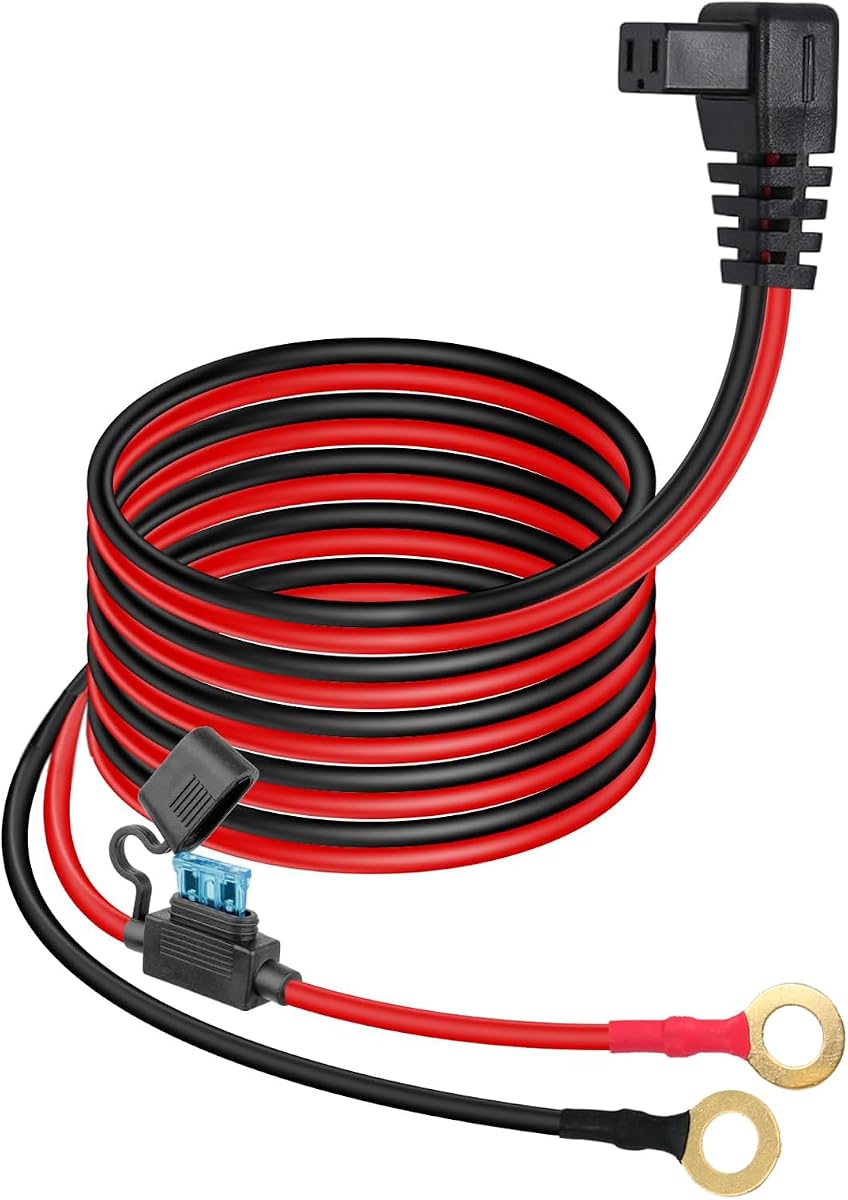
The 12V DC Car Fridge Power Cord is the budget pick for anyone whose portable refrigerator has a damaged or missing lead. It has a 4.4 rating and provides a practical way to connect a compatible 12-volt refrigerator directly to a vehicle battery or other suitable 12-volt DC source through O-ring terminals.
We may earn a commission when you buy through this link, at no additional cost to you.
Its broad compatibility is the main appeal. The product information names Alpicool, Bodega, Euhomy, BougeRV, ARB, Dometic, ICECO, Setpower, and JoyTutus, as well as most 12V/24V portable refrigerators. That makes it a useful cross-brand replacement cable rather than a proprietary accessory tied to one model.
The cable is listed as 10 feet long and uses 14AWG pure copper wire. A 15-amp fuse is included to help protect against overvoltage, overcurrent, overheating, and short circuits. Those electrical-protection details make the lead more useful than a simple connector, while the extra length gives users flexibility when the refrigerator is positioned farther from the battery.
The important limitation is interface compatibility. The seller explicitly advises checking the refrigerator's power interface and notes that the cord is not for MINI car refrigerators. It is also important not to assume that every 12V/24V refrigerator uses the same current draw or connector profile.
This cable is best for a user who already owns a compatible portable refrigerator and needs a replacement or a convenient direct battery connection. It is not a battery itself and will not cool food without a powered appliance. For its narrow purpose, however, it is a useful, economical way to complete or repair a vehicle-based cooling setup.
Its strongest benefit is compatibility with many established portable-fridge brands.
A common challenge in portable cooling is connector mismatch. This cable addresses many of the most common brands in one design, reducing the need to hunt for a model-specific replacement while retaining a protected and adequately sized conductor.
The O-ring terminal connector is intended for installation on a battery. This makes the lead useful for fixed vehicle arrangements where a cigarette-lighter connection is inconvenient, provided the refrigerator's power requirements and the battery connection method are compatible.
A 15-amp fuse adds a useful layer of protection against several common electrical faults. It does not make an incompatible refrigerator safe, so the interface, current rating, and operating instructions should still be checked carefully.
We may earn a commission when you buy through this link, at no additional cost to you.
The 12V Car Refrigerator Adapter is designed for a specific but highly practical scenario: running a portable refrigerator from a compatible DeWalt 18V or 20V tool battery. It carries a 4.3 rating and can serve as a bridge between battery-powered job-site equipment and a 12-volt cooler, eliminating the need for a wall outlet or permanently installed vehicle supply.
We may earn a commission when you buy through this link, at no additional cost to you.
The listed compatible batteries include DCB201 through DCB206 models, and the unit is described as a 12V/24V refrigerator adapter. It is particularly relevant to contractors, outdoor workers, and campers who already own these tool batteries. A broad list of cooler brands is also included, including AstroAI, ARB, Aspenora, AUTOOMMO, BougeRV, BODEGA, Eucmy, ICECO, JOYTUTUS, Kalamera, Kohree, Setpower, and Wagam.
USB-A and USB-C ports allow the same adapter to charge mobile devices, reducing the need to carry a separate charging accessory. Its compact dimensions of 2.75 by 3.74 by 1.37 inches, 142-gram weight, and 1.96-foot cable also make it easy to place in a toolbox.
The adapter includes no battery, which is both a cost-saving feature and a major compatibility consideration. Users must already own a suitable DeWalt battery. It is also not suitable for every portable refrigerator; the seller's warning specifically says to confirm whether the refrigerator's power requirements are compatible.
Choose this adapter when portability and use of existing tool batteries are the priorities. It is best suited to intermittent cooling during work breaks, tailgating, camping, or other situations where a compact power source is more useful than a permanently installed system.
Its main benefit is freedom from a fixed power outlet.
Once a compatible tool battery is installed, the adapter can provide a portable power route for a compatible refrigerator. This makes it useful for users who value compact equipment and already have the required battery platform.
The adapter turns a commonly owned battery platform into a mobile power source. This can be economical for people who would use the batteries for other tools anyway, although actual runtime depends on battery capacity, refrigerator demand, ambient temperature, and operating mode.
The USB-A and USB-C outputs are practical for phones, lights, and other small devices. They add flexibility, but they should not be confused with additional refrigerator output or a guarantee that every device will charge at its maximum supported rate.
We may earn a commission when you buy through this link, at no additional cost to you.
The RV Fridge Fan is a small circulation accessory rather than a refrigerator or a power source. It earns a 3.5 rating and is intended to move chilled air around an RV refrigerator, helping address the uneven temperatures that can develop when cold air settles in one area.
We may earn a commission when you buy through this link, at no additional cost to you.
Its motor is listed at 3,000 RPM, with ventilation openings on multiple sides to promote airflow. The unit uses two D batteries, making the power requirement easy to understand and service. A bottom control and compact housing allow it to fit inside a refrigerator without taking up a large amount of usable space.
The product can help move air past stored food and potentially reduce localized warm spots. However, it does not cool the cabinet independently and cannot replace the refrigerator's compressor or thermostat. Its value is greatest in an RV unit where air movement is restricted or where consistent circulation is important.
Users planning to store the fan for long periods should remove the batteries, as the product information specifically advises. The rating is also lower than those of the primary refrigerator and power options in this list, so buyers should evaluate whether their existing refrigerator needs circulation help before choosing it.
This fan is most appropriate for RV owners seeking a minimal, inexpensive improvement to internal air movement. It is less relevant to someone who still needs a battery-powered cooling appliance or a portable power station.
Its focused advantage is consistent air movement in a confined cabinet.
The multi-side openings allow the small motor to circulate cold air in several directions. This may be useful after opening the door, when warm outside air enters and the compressor needs time to restore an even internal temperature.
Using standard D batteries makes the fan convenient for occasional travel. Because the cells are removable, they can be taken out during long storage periods to reduce leakage risk and preserve battery life.
The small form factor is appropriate for refrigerators where shelf space is limited. Buyers should still leave enough room for the fan's air intake and outlet openings to function without being pressed directly against food or the cabinet walls.
We may earn a commission when you buy through this link, at no additional cost to you.
The RV Refrigerator Fan is a circulation-focused alternative for RV, camper, trailer, and boat refrigerators. Its 3.8 rating is modest, but the product directly targets a common issue in compact refrigeration: cold, dense air settling in one part of the cabinet while other areas remain warmer.
We may earn a commission when you buy through this link, at no additional cost to you.
The fan has a rated motor speed of 3,000 RPM and multiple ventilation openings intended to promote airflow in several directions. The product information says this can help maintain more consistent temperatures from top to bottom shelves and may reduce freezing or frosting on internal fins.
A bottom sliding switch provides straightforward operation and is designed to reduce accidental shutdown when the fan is bumped by nearby contents. The product is also described as quiet, compact, and durable, all useful qualities in a small living space where noise and dimensions matter.
Two D batteries are required but not included. Like the other fan in this guide, it does not cool food on its own; it only helps an existing refrigerator distribute the cold air produced by that appliance. It is therefore most useful for owners whose refrigerator works but does not circulate air evenly.
Choose this fan if low noise and an unobtrusive control are important, particularly in an occupied RV or boat. It is less useful for off-grid setups needing a new power source or for users whose main concern is the total amount of cold-storage capacity.
Its main benefit is more uniform air movement throughout a compact refrigerator.
By moving air in multiple directions, the fan can reduce temperature differences between shelves. This is especially helpful in tall RV refrigerators where a single cooling zone may not provide the same conditions throughout the interior.
Low-noise operation matters in an RV or boat where background sound is already limited. The stated motor speed and quiet-operation design aim to circulate air without becoming a prominent source of cabin noise.
The bottom-mounted sliding switch is easy to reach and is intended to resist accidental changes when items shift during travel. It also provides a clear way to stop the fan and conserve the two D batteries when circulation is not needed.
We may earn a commission when you buy through this link, at no additional cost to you.
The Alpicool C30 Portable Car Freezer is a 28-quart compressor appliance for users who need more storage than a compact cooler can provide. Its 4.2 rating and stated ability to function as either a refrigerator or freezer make it a versatile choice for camping, driving, and RV travel.
We may earn a commission when you buy through this link, at no additional cost to you.
Cooling performance is the central selling point. The product information states that the C30 can reach 32°F from 77°F in 30 minutes and cool as low as -4°F. Users can select MAX for faster cooling or ECO for more conservative energy use, making the appliance adaptable to changing battery conditions.
Vehicle battery protection includes three levels labeled Low, Medium, and High, along with a temperature memory function. This is a useful feature because portable compressors are often left running while a vehicle is stationary, where an overly aggressive low-voltage cutoff can interrupt cooling or an absent cutoff can flatten the vehicle battery.
The exterior measures 25.66 by 14.52 by 14.05 inches and holds 28 quarts, or 26.7 liters. The stated capacity accommodates 42 twelve-ounce cans, while the stainless-steel case, corner protection, and durable handle are designed for mobile use.
The C30 is a strong choice for families or groups that value capacity and the ability to freeze items. It accepts both 12/24-volt DC and 100-240-volt AC, offering flexibility at home, in campgrounds, and in vehicles. It is still not a self-powered unit, so a suitable battery remains part of the equation.
Its key benefit is the combination of roomy storage and deep-freezing capability.
A stated 28-quart capacity and -4°F minimum give it more range than a beverage-only cooler. The three protection levels help users balance cooling continuity against vehicle battery preservation.
The two operating modes make the compressor easier to adapt to available power. MAX favors speed, while ECO is intended to reduce consumption. Selecting the correct mode can be especially useful during long camping stops or when using a smaller battery.
The stainless-steel case, reinforced corners, and sturdy handle suit frequent transport. Its larger dimensions should be compared with available trunk, bed, or camper space before purchase, particularly if the unit will remain in a vehicle during hot weather.
We may earn a commission when you buy through this link, at no additional cost to you.
The black BougeRV CRPRO 21QT is a compact portable refrigerator with a 4.5 rating and a feature set tailored to vehicle travel. It combines a 21-quart compressor interior with a -8°F to 50°F stated range, giving users both chilled and frozen storage options in a relatively manageable package.
We may earn a commission when you buy through this link, at no additional cost to you.
Its power consumption is listed at 60 watts in MAX mode and 45 watts in ECO mode. The refrigerator operates on 12/24-volt DC and includes a dedicated DC charging cord for a portable battery, a standard vehicle-style power cord, and a 100-240-volt AC adapter. That range of included connections makes it adaptable to several common power sources.
Four safety tie-down points, located on both sides, allow the refrigerator to be secured to a seat or other slippery surface with rope. This is a meaningful driving-safety feature because a loose appliance can shift under acceleration, cornering, or uneven roads. A 45dB operating level also supports quiet use during travel and sleep.
The storage box can hold a 266Wh BougeRV portable power station and related accessories, although that power station is not included and must be obtained separately. An interior LED light makes nighttime access easier without requiring the user to open the unit in complete darkness.
Choose the CRPRO when a 21-quart capacity is enough and you value secure mounting, quiet operation, and included connection options. It is well suited to couples, small families, or individual travelers who want a dedicated portable refrigerator without moving a full-size 28-quart unit.
Its most distinctive benefit is the combination of secure mounting and portable-power flexibility.
The tie-down points address a common problem in mobile refrigerators, while the included battery charging cord simplifies the transition between wall power, vehicle power, and a compatible portable power station.
The holes on both sides provide several anchoring options for rope or suitable tie-down hardware. The refrigerator should be secured without blocking its vents, and installation should follow the manufacturer's guidance for the vehicle and appliance.
A stated 45dB operating level is appropriate for sleeping passengers and quiet campsites. Actual sound varies with the surface beneath the unit, the selected mode, and the amount of heat the compressor must remove.
We may earn a commission when you buy through this link, at no additional cost to you.
The grey BougeRV CRPRO 21QT shares the core strengths of the black version: a 4.5 rating, compressor cooling across a -8°F to 50°F range, 45dB operation, and a 21-quart capacity. It is a strong choice for travelers who want more performance than a passive cooler but less bulk than a larger freezer.
We may earn a commission when you buy through this link, at no additional cost to you.
The listed 60-watt MAX and 45-watt ECO power draw gives users a clear way to manage energy. The package includes a 12/24-volt DC power cord, a DC charging cord for a portable battery, and a 100-240-volt AC adapter. As a result, the refrigerator can be used with a vehicle, wall outlet, or compatible portable battery depending on the available equipment.
Four safety tie-down points help keep the unit stable in a vehicle. The shock-proof design is stated to tolerate uneven road conditions and operation at up to a 30-degree inclination when off-road. These claims make the refrigerator more relevant to mobile use than a standard household model, while the interior LED improves usability at night.
The storage box is designed to hold a 266Wh BougeRV portable power station and accessories, but that power station is not part of the package. A separate compatible battery is therefore needed for users who want cordless operation away from a vehicle or outlet.
We recommend this model for campers, road-trippers, and RV users with limited space who value quiet operation and secure installation. It is less suitable for a household expecting large freezer volumes, since 21 quarts prioritizes portability and mixed-temperature storage over bulk capacity.
Its main benefit is portable cooling in a relatively compact format.
The 21-quart interior balances useful storage with easier transport. Multiple included cords and a portable-battery charging lead provide flexibility without requiring a permanent installation.
The compressor can function across a wide stated temperature range, making the unit suitable for drinks, refrigerated food, and smaller frozen items. Users needing bulk ice or freezer storage should consider a larger capacity model.
Included vehicle, portable-battery, and AC connections provide flexibility for road trips, campsites, and fixed locations. The correct battery and cable remain necessary, and low-voltage behavior should be confirmed before prolonged unattended use.
We may earn a commission when you buy through this link, at no additional cost to you.
The Portable Mini Refrigerator is included as a compact, battery-oriented option for travel and vehicle use. It has no published rating, so buyers should place greater weight on the stated functions and their compatibility with the intended setup. Its headline benefits are portability, automatic defrosting, a simple thermostat, and operation across common vehicle types.
We may earn a commission when you buy through this link, at no additional cost to you.
The automatic defrost function is designed to maintain cooler air inside the cabinet and reduce frost accumulation. That feature can be particularly useful in a portable unit used in humid conditions or frequently opened. A thermostat with a stop function gives the user straightforward temperature control without requiring a complicated digital interface.
The product information describes low-noise operation, a lightweight and compact form, and broad use in SUVs, trucks, RVs, campers, vans, and boats. These qualities make the refrigerator relevant to users who want cold storage without a large installed appliance.
The supplied information contains fewer exact specifications than the other entries, including no stated wattage, battery capacity, temperature range, or dimensions. It also does not provide a customer rating. Those omissions make it difficult to calculate runtime, compare cooling speed, or verify connector details from the available data alone.
This refrigerator is best for buyers who prioritize a small format and simple operation and can verify its power requirements and cooling performance from the current listing. For a battery-run system with a known power budget or demanding freezing performance, one of the more fully specified compressor refrigerators may be a safer choice.
Its defining benefit is portable refrigeration with minimal controls.
The automatic defrost and thermostat with stop function reduce routine maintenance and make the cabinet easier to manage. Its low-noise, compact construction is intended for travel and camping environments where space is valuable.
Automatic defrost is intended to keep the interior cleaner and maintain more consistent cooling. Users should still keep the lid closed when possible and avoid obstructing any vents or the thermostat's air circulation.
A thermostat with a stop function keeps interaction simple. The trade-off is that the available product information does not provide a detailed temperature range, so buyers should confirm the desired set points and included controls before ordering.
We may earn a commission when you buy through this link, at no additional cost to you.
A reliable battery-powered refrigerator begins with the appliance, not the battery alone. The most important considerations are cooling capacity, power draw, battery chemistry and capacity, connector compatibility, low-voltage behavior, and how long the unit must operate away from wired power.
Capacity should reflect both the amount of food and the space available in the vehicle or campsite. A 21- or 23-quart compressor refrigerator is a practical middle ground for many travelers, while a 28-quart unit offers more room for group meals, drinks, and frozen goods. Check the external dimensions as well as the stated interior capacity because a larger compressor needs room for ventilation, door closure, and tie-down clearance.
Choose capacity based on realistic use, not maximum possible use. A compact refrigerator works well for a weekend trip, while frequent family travel may justify a larger compartment and a correspondingly higher battery requirement.
Battery capacity is measured in watt-hours, and runtime depends on the refrigerator's average power draw rather than its maximum rating. A compressor that consumes 45 watts in ECO mode uses roughly 1.08 kilowatt-hours over 24 hours if it ran continuously, but real duty cycles are usually lower. Expansion, battery age, heat, and inverter losses also affect the result.
Look for enough stored energy to cover the longest expected gap between charging opportunities. For brief power outages, a smaller battery may be sufficient; for multi-day travel, expansion and solar recharging deserve more attention.
Portable refrigerators commonly require 12-volt DC rather than standard AC. Some power stations provide both forms, but the user must still choose the correct output and cable. Pure sine wave AC is useful for sensitive electronics, while DC output may be more appropriate for compressor refrigerators and vehicle battery systems.
Never assume a high-wattage power station can operate every refrigerator. Confirm connector type, voltage, current, and whether the appliance requires a special portable-battery charging lead.
A compressor refrigerator draws significant current over time, and a vehicle battery can become depleted if the cooling unit continues operating after the engine is off. Selectable low, medium, and high protection levels give users control over when the refrigerator should stop. This is especially important for campers who rely on a single vehicle battery for lights, communications, and other essential equipment.
Set the cutoff according to your battery type and plan, and do not treat the protection function as a substitute for a dedicated deep-cycle battery or portable power station.
Compatibility involves both the physical plug and the electrical design. Popular portable refrigerators may use cigarette-lighter, Anderson-style, or proprietary battery connectors, and adapters are not always interchangeable. Some replacement cables broadly support brands such as Alpicool, ARB, ICECO, BougeRV, Dometic, Setpower, and others, but the listing still advises checking the interface.
Record the refrigerator model, input voltage, connector shape, and current requirement before buying a cable or adapter. Tool-battery adapters require a separate compatibility check and often do not include the battery.
Compressor refrigerators usually alternate between active cooling and standby, so a listed 45- or 60-watt figure does not represent continuous energy consumption. ECO mode generally lowers demand, while MAX mode cools more quickly and consumes more. A useful battery setup allows the user to select a mode that matches the available power and remaining trip duration.
Frequent opening, high ambient temperatures, poor ventilation, and overloading the cabinet can increase demand. Allow extra capacity rather than sizing the battery solely from the lowest advertised wattage.
Portable refrigeration must fit the intended vehicle and remain stable during travel. Weight, handle quality, and available tie-down points matter as much as capacity. The BougeRV models in this guide use four safety tie-down points, while low operating noise around 45dB is useful for sleeping passengers and quiet campsites.
Keep ventilation paths clear, avoid direct sunlight, and use the manufacturer-recommended securing method. A unit that is convenient to carry but shifts during hard braking creates both a safety and an equipment-reliability problem.
A refrigerator fan can improve air movement in a tall or compact cabinet, reducing warm zones and potentially limiting frost on internal fins. These devices are accessories, however, and cannot replace the compressor or power source. A fan powered by two D batteries may be enough for occasional RV use, while mains-powered circulation may suit a permanently installed appliance.
Choose a fan with unobstructed intake and outlet openings, a simple reliable switch, and a size that leaves adequate room for stored food. Remove disposable batteries from a fan that will sit unused for long periods.
Before the first use, read the refrigerator and battery instructions, identify the correct input voltage and connector, and test the complete setup while you still have access to conventional power. Let the refrigerator run on its intended source long enough to confirm that the compressor starts, the thermostat responds, and the selected low-voltage protection behaves as expected. Do not energize a cable or adapter whose connector, voltage, or current rating is uncertain.
Position the refrigerator upright with its ventilation openings unobstructed and out of direct sunlight. Secure it using the available tie-down points or appropriate restraints so it cannot move during braking or turns. Pre-cool the cabinet before loading it, especially in hot weather, and use ECO mode when conserving energy is more important than rapid cooling.
For care, clean the cabinet and removable shelves with mild soap and a soft cloth, and keep the door seal free of debris. Protect the compressor from moisture and never block its vents. Check cable insulation, terminals, and fuse condition before each major trip, remove batteries from stored accessories, and recharge portable power stations according to their manufacturer's instructions.
A portable power station can run a compatible 12-volt refrigerator if its output, connector, and current capacity meet the appliance's requirements. Many units also provide AC outlets, but a refrigerator designed for DC operation may need its original low-voltage cable instead of an AC adapter. Check the refrigerator's input rating and the power station's output specifications before connecting them.
Runtime depends on battery watt-hours, average compressor draw, ambient temperature, opening frequency, and inverter efficiency. A 2048Wh power station may operate a moderate portable refrigerator for a useful period, but the result can differ substantially from a simple maximum-wattage calculation. Start with the lower ECO setting and add battery capacity for longer off-grid use.
It can, especially when the engine is off and the refrigerator runs for many hours. Selectable low-voltage protection helps by stopping the compressor at a chosen voltage, but a dedicated deep-cycle battery or portable power station is safer for extended stops. Never leave a vehicle battery at a level that could prevent the vehicle from starting.
A compatible adapter can convert the output of selected 18V or 20V DeWalt batteries for use with a compatible 12-volt refrigerator. The battery is not normally included, and the adapter is not suitable for every refrigerator. Verify the refrigerator's voltage, current, and connector before use, and remove the battery when the setup is not needed.
Pure sine wave output is generally preferable for sensitive electronics and can provide smoother AC power than modified sine wave output. A 12-volt compressor refrigerator may not require AC at all, making connector compatibility and adequate continuous DC output more important. Users should use the refrigerator's intended connection method whenever possible.
No. A refrigerator fan only circulates air already cooled by the appliance. It can improve temperature consistency, move warm air away from stored food, and potentially reduce frost accumulation, but it cannot refrigerate a cabinet by itself. It works best as an addition to a functioning RV or travel refrigerator.
The correct size depends on the refrigerator's power draw and how long it must operate without charging. For a short trip, a modest battery with a low-voltage cutoff may be enough. For multi-day travel, higher capacity, solar recharging, or expandable battery options are more useful. Add capacity for hot weather, frequent door opening, and the compressor's initial cooling period.
Use the refrigerator's designated tie-down points and suitable restraints to prevent it from shifting during acceleration, braking, or cornering. Keep belts and ropes clear of vents and do not overtighten the cabinet. A stable position also reduces the chance of a door opening, a connection being pulled loose, or the unit damaging other equipment.
The strongest overall choice is the BougeRV 12v Refrigerator 23 Quart because it combines 12/24-volt flexibility, useful capacity, compressor cooling, low-noise operation, and three-level battery protection. The AFERIY P280 is the premium energy source for users who need greater capacity, high inverter output, solar charging, and UPS functionality, while the 12V DC Car Fridge Power Cord is an economical way to complete a compatible direct-battery setup.
Prioritize the entire system rather than the battery alone. Match the refrigerator's voltage and connector to the power source, allow battery capacity for more than a simple minimum estimate, and use low-voltage protection whenever the refrigerator is connected to a vehicle. Compact campers may prefer the 21- or 23-quart BougeRV models, while groups and freezer users may favor the higher-capacity Alpicool C30.
Before ordering, verify the current product details, compatibility lists, included cables, dimensions, and available power sources. Product prices and configurations change over time, so checking the current listing ensures that the refrigerator, battery, and connection accessories work together as intended.