
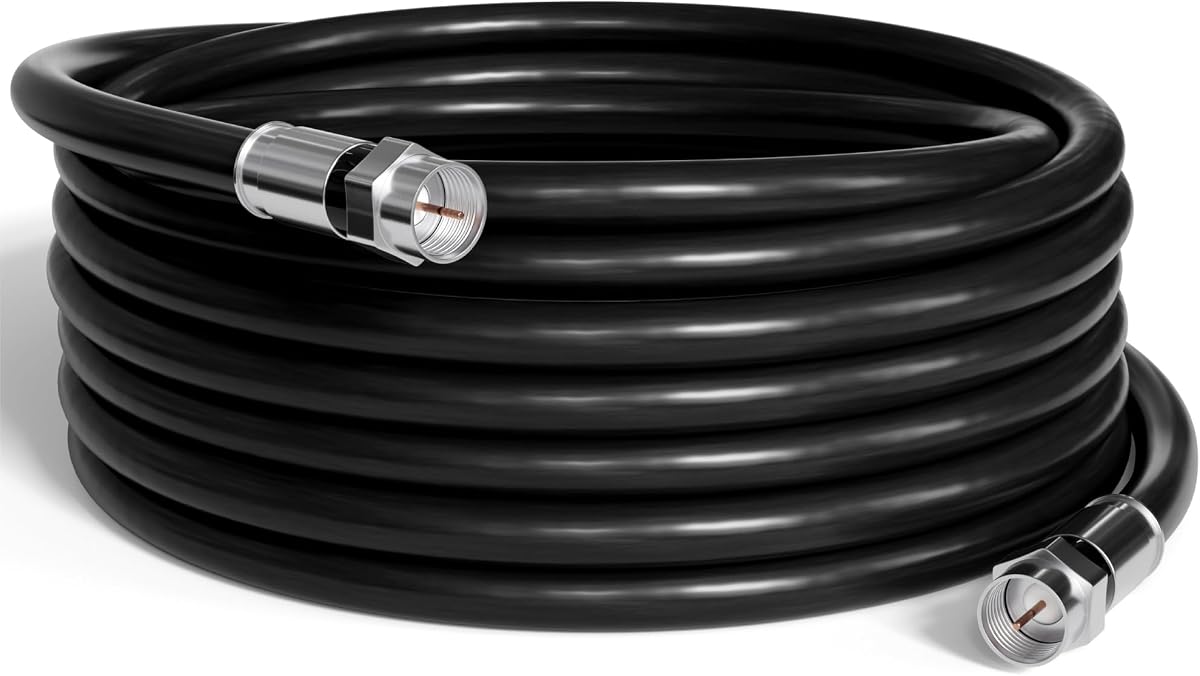
10FT RG6 Coaxial Cable with Connector
4.7Editor score
Dual-layer shielding
2.3MHz to 3.0GHz range
Weather-resistant outdoor jacket
Discover the best Coaxial Cable for Antenna options, comparing length, shielding, connectors, weather resistance, bandwidth, and antenna compatibility.
A reliable antenna connection depends on more than the antenna itself. Cable construction, connector quality, shielding, conductor gauge, and installation conditions all influence how effectively over-the-air television, satellite, radio, and other high-frequency signals reach your equipment.
This guide compares ten coaxial cable options using the specifications and product details available for each model. We examine length, impedance, shielding, connector design, supported frequency ranges, outdoor durability, included accessories, and compatibility with common antenna equipment.
Each review identifies the cable's strongest use case, along with practical trade-offs to consider before installation. Ratings and product details reflect the supplied listing information, while prices and configurations can change, so confirm the current listing before making a purchase.
4.7Editor score

4.7Editor score

4.7Editor score
The comparison below highlights each cable's practical strengths, including run length, shielding, connector style, weather protection, bandwidth, and primary antenna applications.



The G-PLUG 50FT RG6 Coaxial Cable Extender combines a 4.7 rating with features well suited to television and outdoor antenna installations. Its 75-ohm RG6 construction, triple shielding, and rubber-sealed F-type connectors target stable signal delivery while reducing exposure to moisture and electromagnetic interference.
We may earn a commission when you buy through this link, at no additional cost to you.
The cable is designed for HDTV, satellite, cable, and high-speed internet connections, making it adaptable to televisions, modems, routers, receivers, and coax splitters. Pre-installed corrosion-resistant compression connectors create a secure connection without requiring a separate connector-attachment step, while the included F81 female-to-female coupler makes longer or segmented runs easier to assemble.
Weather resistance is another meaningful strength. The durable PVC jacket and sealed connector joints are intended to withstand rain, humidity, and temperature changes, making the cable suitable for an outdoor antenna run or for passing through exposed areas. As with any long coaxial run, the included coupler can introduce an additional connection point, so maintaining a direct run may offer the simplest signal path.
This is a strong all-around recommendation for anyone replacing an antenna cable, extending an existing installation, or connecting a roof-mounted television antenna. It balances shielding, environmental protection, useful accessories, and broad device compatibility without relying on a specialized connector format. The G-PLUG is the most versatile choice in this roundup for common residential antenna needs.
Triple shielding is particularly useful near household electronics, Wi-Fi equipment, or other potential interference sources. The added shielding layers help preserve the intended signal while the 75-ohm design matches common RG6 antenna connections.
Rubber-sealed connectors and a durable PVC jacket support outdoor use, reducing the likelihood that rain and humidity will compromise a connection. Keeping outdoor joints properly seated is still essential.
We may earn a commission when you buy through this link, at no additional cost to you.
The energeaster 50FT RG6 Coaxial Cable earns a 4.7 rating and emphasizes interference protection through triple-layer shielding. The shielding stack combines foil, braided shielding, and another foil layer, helping reduce radio-frequency and electromagnetic interference that can degrade television, satellite, or broadband signals.
We may earn a commission when you buy through this link, at no additional cost to you.
Its 75-ohm impedance is appropriate for standard RG6 antenna systems, and the listing states support for 4K HDR video, Dolby Digital audio, and high-speed internet. Compression-style F-type connectors provide a snug fit, while rubber O-rings help block moisture, dust, and corrosion at the joints. That attention to environmental sealing makes the cable suitable for indoor or outdoor routing.
A 50-foot length gives installers enough distance to reach many rooftop, attic, exterior-wall, or media-console locations. The pre-attached female-to-female coaxial coupler can be useful when a longer run is necessary, although buyers should account for the extra connection in their signal path. Users who need a single uninterrupted run may prefer another option without the coupler.
Overall, energeaster is a compelling pick for households seeking robust shielding and sealed connections in a conventional 50-foot RG6 format. It is especially relevant for antenna installations near electronics or outdoor equipment exposed to moisture. The result is a practical cable with modern signal support and a straightforward connection system.
The combination of braided and foil shielding offers defense against interference across a cable run. This construction is useful in homes where the antenna cable must pass near routers, televisions, motors, or other electrical equipment.
The stated support for high-definition television, 4K HDR, Dolby Digital audio, and high-speed data makes this cable appropriate for current entertainment and broadband equipment. Equipment-specific requirements should still be checked before installation.
We may earn a commission when you buy through this link, at no additional cost to you.
The Nixsto RG6 Coaxial Cable has a 4.7 rating and stands out for its wide selection of lengths. Depending on the selected configuration, buyers can find short runs for nearby equipment or longer cables suited to outdoor antennas, basement connections, satellite dishes, and larger homes.
We may earn a commission when you buy through this link, at no additional cost to you.
The cable uses a 75-ohm copper-plated conductor, gold-plated F-connectors, and built-in O-ring seals. Its water-resistant black PVC jacket is designed for indoor and outdoor use, including humid basements and coastal areas where moisture could quickly damage an inadequately protected connection. The connector treatment is especially important at the two points where the cable meets equipment.
Nixsto describes compatibility with smart televisions, HDTV, CATV, cable boxes, Wi-Fi modems, satellite receivers, AM/FM radios, digital antennas, set-top boxes, splitters, and streaming devices. The supplied brass female-to-female extender can help create a longer segmented installation. Tangle-resistant construction also supports neater routing around furniture and entertainment equipment.
The principal trade-off is that the product appears in numerous length variants, so shoppers must verify the selected size carefully. Detailed shielding construction is not stated as clearly as it is for several competing cables. Even so, Nixsto offers a useful combination of flexible sizing, environmental protection, and broad compatibility for many antenna projects.
Cable length should minimize unnecessary slack while still reaching the antenna and equipment. Nixsto's broad size range gives buyers a better chance of matching short indoor connections or longer exterior runs without excess cable.
The water-resistant jacket and O-ring-equipped connectors add useful protection for basements, exterior walls, and humid installations. Properly seated fittings and weatherproof connection points remain important at exposed joints.
We may earn a commission when you buy through this link, at no additional cost to you.
The 50ft RG6 Coaxial Cable combines a 4.7 rating with an unusually complete accessory package. It is built for television antennas, CATV, satellite, cable modems, broadband routers, and conventional cable boxes, making it a versatile choice for mixed home-entertainment installations.
We may earn a commission when you buy through this link, at no additional cost to you.
Its triple-shielded 18AWG RG6 construction uses foil and braided shielding to reduce EMI and RFI interference. The cable supports transmission up to 3GHz, which aligns with contemporary television, satellite, and broadband applications. Pre-installed waterproof boots and internal waterproofing protect the connector areas from moisture and corrosion.
The included F81 female coupler, right-angle F adapter, cable clips, and cable ties help users build and organize the installation. These accessories are particularly useful for creating a clean route along a wall, near a television stand, or around an outdoor antenna. The UV-resistant, wall-rated PVC jacket also supports installations in locations where sunlight and general wear may be concerns.
This cable is an excellent choice for installers who value both signal-oriented construction and the small hardware needed to finish a run. The right-angle adapter can simplify connections in confined spaces, while clips and ties help avoid unsupported cable sections. Buyers who only need a simple indoor lead may find the accessory bundle unnecessary, but the included parts add flexibility for more involved antenna setups.
A coupler, right-angle adapter, clips, and ties cover several common installation needs. They can make it easier to route the cable neatly and avoid awkward bends or unsupported sections near the antenna and television.
Support up to 3GHz makes the cable appropriate for a broad range of television, satellite, and broadband signals. The combination of 75-ohm impedance and layered shielding supports dependable performance in typical home networks.
We may earn a commission when you buy through this link, at no additional cost to you.
The 10FT RG6 Coaxial Cable with Connector is a 4.7-rated option for short antenna connections. Its compact length works well when an antenna or set-top device sits near the television, inside an entertainment cabinet, or close to a wall-mounted receiver.
We may earn a commission when you buy through this link, at no additional cost to you.
The cable uses an 18AWG conductor and 75-ohm impedance, with shielding that consists of 60% braided aluminum and 100% aluminum foil. This combination helps minimize EMI and RFI interference. Its listed frequency range extends from 2.3MHz to 3.0GHz, allowing use with televisions, modems, air antennas, satellite dishes, and various data transmission services.
A moisture-resistant outer jacket makes the cable suitable for indoor walls and outdoor antenna extensions where the full ten-foot lead is exposed. The product description states that it is crafted with U.S.-sourced materials and supported by U.S.-based customer service, offering additional reassurance for buyers who value domestic sourcing and support.
The central limitation is length. Ten feet is not enough for many rooftop or elevated antenna installations, and no extension coupler is included in the supplied details. Within its intended role as a short, economical connection, however, it provides clear shielding, a broad frequency range, and a jacket designed for more than purely indoor use.
A short lead reduces excess cable behind televisions and entertainment centers. It is also useful for connecting an indoor antenna module or a nearby amplifier without introducing a long, unnecessarily lossy run.
The stated foil and braided aluminum shielding provides a clear standard to compare against other RG6 options. It should perform favorably in locations where nearby electronics could otherwise introduce noise into the signal path.
We may earn a commission when you buy through this link, at no additional cost to you.
The GE 33600 RG6 Coaxial Cable has a 4.6 rating and focuses on convenient setup. Its 50-foot black cable arrives ready to use with screw-on F-type connectors, allowing users to connect a television antenna or other compatible equipment without a crimping tool or soldering process.
We may earn a commission when you buy through this link, at no additional cost to you.
Simplicity is the main appeal. A screw-on connector can be attached by hand, making the cable approachable for first-time installers and convenient for replacing a damaged lead. The 50-foot length is long enough for many common arrangements involving indoor antennas, attic antennas, wall-mounted receivers, and moderately distant television equipment.
Compared with the more technically detailed listings in this roundup, the supplied product information does not specify shielding layers, frequency range, or connector weather sealing. That makes it harder to compare its potential noise rejection with premium triple- and quad-shielded models. Buyers who require a particular bandwidth or outdoor environmental rating should verify those details for the exact listing.
GE 33600 is best viewed as a convenient, general-purpose 50-foot RG6 cable. It is a sensible choice when ease of installation matters more than a detailed specification list, particularly for straightforward indoor antenna hookups. For exposed exterior runs or high-interference environments, a model with explicitly documented shielding and weatherproofing may be a more confident fit.
Hand-tightened screw-on connectors reduce setup time and make troubleshooting replacements easier. The ready-to-use format is attractive for homeowners who do not want to prepare or terminate cable themselves.
The 50-foot length is versatile for common household antenna layouts while remaining easier to manage than a very long coil. It works particularly well for indoor antennas and receivers within the same general area.
We may earn a commission when you buy through this link, at no additional cost to you.
The GE RG6 Coaxial Cable is a 4.7-rated premium choice built around quad shielding, gold-plated compression connectors, and a 50-foot length. It can connect coaxial-equipped televisions, antennas, cable modems, and satellite devices in both indoor and outdoor applications.
We may earn a commission when you buy through this link, at no additional cost to you.
Its solid-core conductor and multiple shielding layers are designed to protect against interference and support transfer speeds up to 3GHz. Quad shielding makes this model especially appropriate for installations in electrically busy environments or for users who want a substantial margin of protection around their signal path.
The gold-plated compression connectors offer a reliable, tool-free screw-on connection and are described as corrosion resistant. Unlike many ordinary coax leads, the cable is also flame-retardant, making it suitable for long-term in-wall installations such as home security, internet, or home theater systems. That characteristic can be valuable when planning a concealed structured wiring project.
GE backs the product with a limited-lifetime replacement pledge and free U.S.-based technical support, which adds confidence for buyers undertaking a permanent installation. Quad shielding and a larger connector profile may make the cable less convenient in very tight spaces than a basic RG6 lead, but its installation qualities justify choosing it for demanding antenna runs.
Quad shielding provides several barriers against interference, making this cable a strong candidate for installations near electrical equipment, in commercial spaces, or along longer permanent cable routes.
The flame-retardant jacket gives this cable an advantage over standard leads when it will be routed through a wall or incorporated into a home theater or security system. Local building requirements should always guide in-wall work.
We may earn a commission when you buy through this link, at no additional cost to you.
The RG8X Coaxial Cable is a 4.6-rated option for radio users rather than ordinary television antenna installations. Its 50-ohm impedance, 17AWG pure copper center conductor, and double shielding make it suited to CB radio, ham radio, antenna analyzers, tuners, dummy loads, SWR meters, transceivers, and other 50-ohm RF systems.
We may earn a commission when you buy through this link, at no additional cost to you.
The cable uses molded nickel-plated brass PL259 connectors with gold-plated center pins. Those connectors are designed for frequencies up to 300MHz and differ from the F-type fittings used by most RG6 television antennas. This is an important distinction: the RG8X should not be selected simply because it offers a substantial 50-foot length or robust construction.
Compared with RG58, RG8X uses a thicker conductor, which the product information recommends for higher-powered applications or users seeking low-loss performance. A strong, flexible PVC jacket supports both indoor and outdoor use, making the cable practical for mobile radio installations, rooftop antennas, and other exposed RF arrangements.
This is the right choice when your antenna is a 50-ohm CB or amateur-radio antenna with PL259 connections. It is not the correct cable for most HDTV antennas, satellite dishes, or cable modems because those devices normally use F-type connectors and 75-ohm RG6. Confirm both the antenna impedance and connector before purchasing.
The 17AWG pure copper conductor and double shielding are intended to reduce signal loss and leakage during transmission. These characteristics make the cable more relevant to radio-frequency installations than standard television leads.
A coax cable should match both the antenna's impedance and connector type. This 50-ohm PL259 cable is suited to CB and ham radio equipment, not F-type 75-ohm television antenna connections.
We may earn a commission when you buy through this link, at no additional cost to you.
THE CIMPLE CO 100 FT RG6 is a 4.7-rated long-run cable designed for installations where a standard 50-foot lead is insufficient. Its 100-foot length, equal to 30 meters, gives installers more flexibility when connecting rooftop antennas, remote receivers, or equipment located in a different part of the property.
We may earn a commission when you buy through this link, at no additional cost to you.
The cable uses a solid 18AWG center conductor, 75-ohm impedance, and added aluminum braiding and shielding. It is swept to 3.0GHz and maintains high-speed signals from frequencies down to 2.3MHz. It works with both digital and analog signals and supports televisions, HD antennas, free-to-air and over-the-air antennas, wireless antennas, CATV, satellite receivers, radios, and cable modems.
For outdoor runs, the black PVC jacket and double O-ring compression connectors offer protection against weather damage. Precision-machined weathertight fittings are intended to create a secure connection, although all exposed joints should be seated carefully and kept free of standing water.
Length is both the primary benefit and the main trade-off. A longer cable provides installation reach but can introduce more total signal loss than a shorter run, especially with additional couplers. It can also be harder to manage behind furniture or through walls. For an extended outdoor or outbuilding installation, however, the 100-foot option offers useful reach and broad compatibility.
A 100-foot lead can connect an antenna mounted on a distant roof section, an outbuilding, or a more distant exterior wall. It reduces the need to join multiple shorter cables and therefore avoids additional connector interfaces.
The solid 18AWG conductor and shielding help the cable carry signals across a substantial run. Keeping the route direct, free from sharp bends, and separated from severe interference sources remains important.
We may earn a commission when you buy through this link, at no additional cost to you.
THE CIMPLE CO 50 FT Outdoor RG6 is a 4.7-rated cable created specifically for indoor and outdoor television antenna connections. Its 50-foot length offers a practical balance between installation reach and cable manageability, making it suitable for roof antennas, exterior walls, attics, and nearby receivers.
We may earn a commission when you buy through this link, at no additional cost to you.
The cable has a solid 18AWG center conductor, 75-ohm impedance, and added aluminum braiding and shielding. It is swept to 3.0GHz, supports frequencies down to 2.3MHz, and is compatible with digital and analog signals. That broad range supports connections to HD antennas, free-to-air antennas, over-the-air antennas, wireless antennas, televisions, satellite receivers, radios, CATV equipment, and cable modems.
Weather protection is a defining feature. The cable includes a PVC outer jacket along with weather-stabilized, UV-coated connectors, weather-booted ends, and double O-ring compression fittings. These measures help protect exposed connections from moisture and environmental wear, although careful installation remains necessary.
Compared with premium quad-shielded RG6, this dual-shielded model offers fewer shielding layers. Nevertheless, its detailed frequency, conductor, and sealing specifications make it a strong option for outdoor television and satellite antenna setups. It is especially attractive for users who need a proven 50-foot run without moving to a 100-foot cable or a specialized RG8X radio lead.
UV-coated connectors, rubber boots, and double O-ring compression fittings help guard the most vulnerable points in an exterior installation. The cable is designed for use in both indoor and outdoor environments.
From over-the-air television antennas to satellite receivers and wireless antennas, the stated compatibility covers many common coax systems. Its 3.0GHz sweep also positions it well for modern high-frequency television signals.
We may earn a commission when you buy through this link, at no additional cost to you.
The right antenna cable depends on equipment compatibility, signal frequency, run length, shielding, connector type, and exposure to weather. These factors should be evaluated together rather than treating one specification as decisive on its own.
Choose F-type RG6 for common over-the-air television antennas. For CB or amateur-radio systems, verify the required 50-ohm PL259 fittings before choosing a cable.
Choose a length that reaches the equipment with only modest excess. Longer runs and added couplers can increase signal loss.
More shielding is useful in noisy locations, though durable connectors and clean routing remain equally important.
Match both impedance and frequency to the antenna system. Never substitute 50-ohm radio cable for a 75-ohm television lead.
For exposed runs, prioritize sealed connectors and a UV-resistant jacket. Seat every fitting fully and keep joints dry.
Prioritize a solid conductor, secure fittings, and strain relief. Avoid unnecessary adapters when direct compatible connectors are available.
Plan distribution before buying cable. Fewer long runs and unnecessary connections can preserve signal quality.
Choose accessories that solve a real routing problem. Avoid extra couplers when one continuous run is sufficient.
Begin by confirming that the cable's connector type, impedance, and frequency range match the antenna and receiving equipment. Route the cable along the shortest practical path, keeping it away from sharp bends, moving parts, hot surfaces, and sources of strong electrical interference. If the cable passes through a wall, use an appropriate wall-rated pathway and avoid creating a pinch point.
Connect the cable to the antenna or amplifier first, then to the splitter or receiver, and finally to the television or network device. Hand-tighten threaded F-type fittings until secure. If a coupler is required, inspect both connector ends, make sure the center contacts remain straight, and avoid over-tightening. For weatherproof compression connectors, confirm that the ferrule and O-ring are seated evenly without visible gaps.
After installation, scan or tune the receiving equipment and check all available channels or services. If performance is poor, inspect connections before replacing the cable, then try shortening the route or moving it away from interference. Keep outdoor connectors dry, periodically check the weather boots, and avoid sharply kinking the cable. Replace the run if connectors become corroded, the jacket is cracked, or repeated reconnections cause an unreliable fit.
A 75-ohm RG6 cable is the standard choice for most HDTV antennas, amplifiers, splitters, and televisions. Look for solid or copper-plated conductors, effective shielding, secure F-type connectors, and a frequency range that covers the channels and services you receive. Outdoor runs should also use weatherproof connectors and a UV-resistant jacket.
Quad-shielded RG6 provides additional shielding layers compared with triple-shielded cable and may be preferable in electrically noisy environments or permanent high-quality installations. In many ordinary homes, either construction can work well when the connectors are secure and the cable is routed away from interference. Shielding cannot compensate for a poorly positioned antenna or damaged connection.
Measure the full route from the antenna to the amplifier or receiver and then to the television or network equipment. Include cable required around corners, through wall openings, and for a modest amount of service slack. A slightly longer cable is generally more practical than a very short one that must be joined with several couplers.
RG6 is generally intended for 75-ohm television and broadband systems, while CB and many amateur-radio installations use 50-ohm cable such as RG8X. The connector and impedance must both match the antenna and radio equipment. Using a mismatched cable can cause reflected power, poor transfer efficiency, and possible damage to sensitive radio equipment.
Outdoor cable should use weather-resistant F-type or UHF connectors with sealed or booted ends. Compression connectors with O-rings are common, while screw-on fittings can also be used if they are tightened securely. Check that the connectors are seated, dry, and protected from direct standing water even when the cable itself is weatherproof.
No. A longer cable can add signal loss, particularly at higher frequencies, and every coupler creates another connection point. A shorter, direct route with secure connectors may perform better than a long or convoluted run. Antenna placement, amplifier quality, local broadcast conditions, and the number of connected devices also have a major effect on results.
A properly rated female-to-female F-type coupler can join compatible RG6 cables, but each additional connection may introduce some loss or a potential failure point. It is best to use one continuous cable whenever practical. If extension is unavoidable, match the cable impedance and connector standard, tighten both fittings securely, and test the completed route.
Check for damaged jackets, loose fittings, corroded connectors, water intrusion, and sharply bent cable before replacing the entire run. A short known-good cable can help isolate whether the issue follows the cable or the antenna and receiver. If the signal improves with a shorter or better-shielded lead, the original cable or its connectors may be faulty.
The G-PLUG 50FT RG6 is the strongest all-around recommendation because it combines triple shielding, 75-ohm RG6 construction, sealed connectors, broad equipment compatibility, and a useful F81 coupler. The 10FT RG6 is a practical budget choice for short connections, while the GE quad-shielded RG6 stands out as the premium option for demanding or concealed installations.
Prioritize correct impedance, connector compatibility, appropriate length, and the level of shielding needed in the actual installation environment. Outdoor cable should have verified weather protection, and specialized radio installations should use a matching 50-ohm cable rather than standard RG6. Regardless of the model, secure fittings, careful routing, and a suitable antenna position are essential to the final result.
Ratings, product configurations, availability, and prices can change over time. Review the current listing details before buying, particularly the selected cable length, included accessories, connector type, and environmental specifications. That final check helps ensure the chosen coaxial cable matches both your antenna system and the route it must cover.