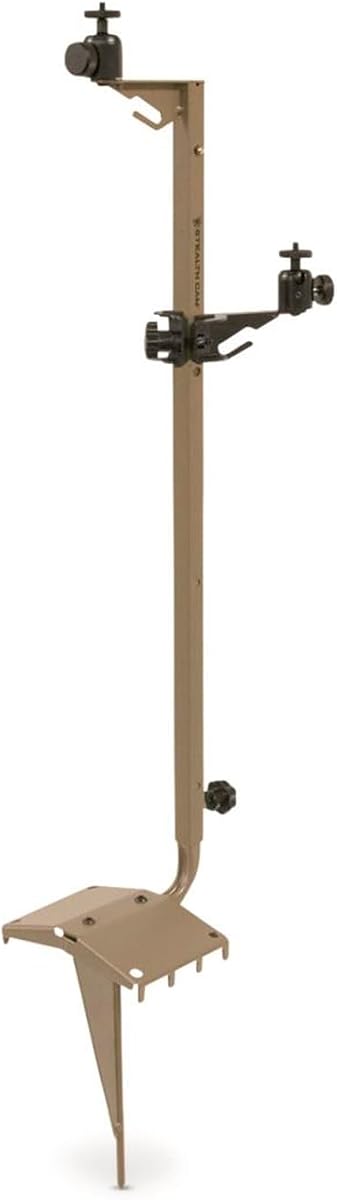
Stealth 29-Inch-49-Inch Steel Mount
4.6Editor score
Adjustable 29-inch to 49-inch height
Dual modular camera mounting points
Weather-resistant powder-coated steel
A trail camera mount pole should keep equipment stable, protected, and correctly aimed after it is placed in brush, soil, grass, or uneven ground. The most useful supports combine a secure stake, durable materials, adjustable height, smooth rotation, and a compatible threaded connection without making setup unnecessarily complicated.
We compared all 10 options by examining their ground-anchor design, material, height range, adjustment features, mounting interface, portability, and support for cameras, solar panels, and related equipment. The list covers single-device and dual-device systems, compact folding stands, tall rigid poles, and multipacks for scattered monitoring locations.
Each review identifies the design that makes the product useful and the compromises worth considering. Ratings reflect the supplied customer feedback, while practical selection depends on terrain, camera weight, power configuration, and movement between sites. Product availability and prices can change, so confirm current details before purchasing.
4.6Editor score

4.1Editor score

4.1Editor score
As an Amazon Associate we earn from qualifying purchases.
The table below compares the ten mounts across construction, anchoring, height, adjustment, and device support, making it easier to identify the right configuration for your terrain and monitoring plan.


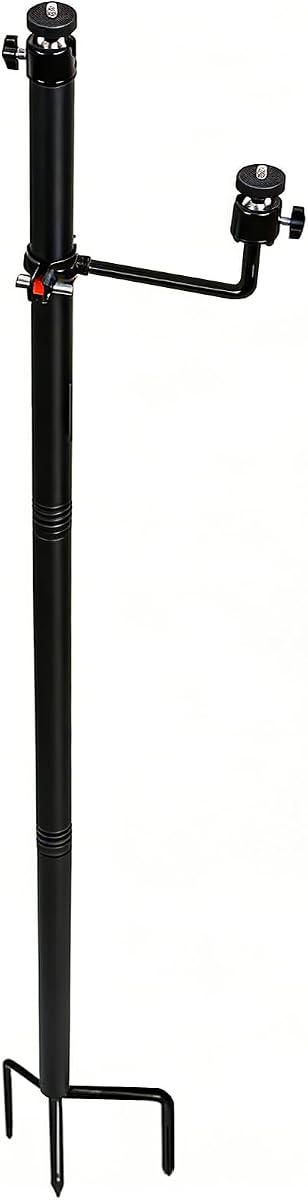
This 57-inch steel pole is a flexible all-purpose option for trail cameras, paired cameras, and camera-and-solar-panel arrangements. Its 4.1 rating reflects generally favorable feedback, while the design stands out for combining a rigid vertical support with two independently adjustable 1/4-20 ball heads. The side-mounted device can also slide vertically, which makes it possible to separate the camera and panel without building two separate stakes.
We may earn a commission when you buy through this link, at no additional cost to you.
The triangular ground stake is the defining feature. Rather than relying on one narrow insertion point, it anchors in a tripod-like arrangement to reduce the rocking commonly associated with basic single-stake supports. Both ball heads provide 360-degree swivel movement and tilting, so the camera can be aimed across a trail or elevated toward a feeding area without relocating the entire pole. The steel body and corrosion-resistant finish are intended to withstand rain, ultraviolet exposure, and outdoor impacts.
The tradeoff is weight and complexity. Compared with the folding aluminum models, a rigid steel construction and broad triangular base are less convenient for long-distance carrying. Installing two devices also requires more careful positioning because the camera and second attachment can affect one another's coverage if their directions are poorly chosen. Nevertheless, these are reasonable compromises for users who value stability and want one pole to support a complete remote monitoring setup.
This is the strongest choice for hunters or property observers who need two devices, useful height, and dependable anchoring without buying separate mounts. It works particularly well for medium-height placements where a camera and solar panel must remain above nearby vegetation. Those wanting the lightest backpacking option should consider an aluminum folding stand instead.
The independently sliding side mount lets a camera face one direction while a solar panel or second camera occupies another position. That flexibility makes the pole useful for expanding coverage or creating a more complete off-grid monitoring station.
The triangular anchor spreads its contact across the soil and resists the side-to-side movement that can blur images or disturb a camera's aim. It is a better match for uneven ground than a narrow single stake.
We may earn a commission when you buy through this link, at no additional cost to you.
This adjustable steel hunting-camera mount combines a 4.6 customer rating with a useful two-device design. Its pole extends from 29 to 49 inches, giving users enough range to raise a trail camera above grass, brush, and low shrubs. The mounting system offers full 360-degree multi-pivot movement and 180-degree tilt, allowing the camera or solar panel to be angled after the stake is in place.
We may earn a commission when you buy through this link, at no additional cost to you.
A particularly useful feature is the second modular attachment point. It can hold two cameras for broader coverage or support a camera alongside a compatible Solar Pak device. The heavy-duty steel construction is protected by a weather-resistant powder-coated finish, and the supplied ground stake is designed with a robust kick plate for stability. These details make it a practical choice for hunters who want one support to serve several functions.
Its main limitation is maximum reach. At 49 inches, it cannot provide the elevated perspective of a six-foot pole, which may matter where wildlife is traveling behind a substantial berm, dense vegetation, or a downed log. The product information does not describe a folding section system, so it may also be less convenient to carry than the compact three-piece alternatives. Even so, the 4.6 rating and flexible dual arrangement offer a compelling balance for ordinary scouting locations.
Choose this mount when you want an adjustable height, a strong steel body, and the ability to connect more than one device at an accessible cost. It is especially suitable for hunters placing equipment relatively close to game trails. For elevated views over deeper brush or repeated treks across long distances, a taller or folding model may be more convenient.
Extending the pole to 49 inches helps place a camera above much of the grass and low brush encountered along ground trails. That can improve sightlines while keeping the device within easy reach for adjustments.
The second mounting position expands the system beyond a single-camera stand. Users can compare two views, monitor wider ground, or keep a compatible solar component beside the camera.
We may earn a commission when you buy through this link, at no additional cost to you.
This folding aluminum mount is built for users who need to carry a trail-camera stand between compact or frequently changing locations. It has a 4.2 rating and separates into three pieces, reducing the space it occupies during transport. The pole can extend from 40 to 80 centimeters, with both length and lift adjustment available for a closer fit to the monitoring area.
We may earn a commission when you buy through this link, at no additional cost to you.
Its 360-degree rotation and adjustable tilt make it straightforward to aim a camera after the stake has been inserted. The thick aluminum construction is described as stable and durable, while the folding design permits the stand to be collapsed if the ground is too hard for the normal ground stake. It also supports compatible solar panels and a suitable flashlight, broadening its use beyond hunting cameras.
The compact dimensions are the central compromise. An 80-centimeter maximum height may not clear tall vegetation or provide the perspective available from a taller steel pole. It is also less suited to permanent installations where corrosion-resistant steel and a broad base would be preferable. The product information notes that the mounting connection is 1/4-20, or 6 millimeters, which should be checked against the selected equipment.
This is a sensible option for backyard monitoring, garden observation, compact hunting locations, and anglers carrying a compatible light. Its quick disassembly and low weight make setup changes easier than with a rigid pole. Users who need a taller installation, broader environmental resistance, or multiple units across a large property should look toward the steel or multipack alternatives.
Separating the stand into three sections makes it easier to fit into a vehicle, pack, or gear bag. This is particularly useful for users who rotate among several fishing, garden, or wildlife locations.
Adjustable length, lift, rotation, and tilt provide several ways to adapt the mounting position. When the normal stake cannot penetrate hard ground, the folding design offers another way to reconfigure the stand.
We may earn a commission when you buy through this link, at no additional cost to you.
This adjustable ground stake stands out because it can be installed in ordinary soil or on hard surfaces where driving a stake vertically is impractical. Its 5.0 rating is the highest among the listed products, making it a strong option for buyers seeking a well-received, flexible mount. The support pole separates into two detachable sections, while the mounting head offers 360-degree rotation and adjustable tilt.
We may earn a commission when you buy through this link, at no additional cost to you.
Installation adapts to the site. For soil or grass, the anchor inserts vertically. For concrete or another hard surface, it attaches horizontally to the bottom of the pole, and the instructions recommend placing a heavy object such as a rock over the anchor to help keep the assembly in place. This dual-method approach is unusual among the products in the guide and useful for patios, foundations, compacted areas, or other surfaces where traditional staking fails.
The product title identifies stainless steel, while the supplied feature details describe the support as lightweight aluminum. That distinction may matter if material expectations influence the purchase, so buyers should examine the package contents and photographs. The horizontal hard-ground arrangement also requires an additional weight and can look less finished than a fully planted stake. Neither issue eliminates the value of having a portable pole that works in multiple installation environments.
Choose this model for locations that include hard surfaces, for users who want a simple standard 1/4-20 connection, or for anyone who prefers a two-section design that separates for carrying. It is especially versatile for backyard observation, wildlife monitoring, and compatible solar-panel placement. Users requiring a specified tall height or a factory-provided heavy base may prefer one of the taller dual-device systems.
The horizontal anchor configuration changes where the mount can be used. While it still needs added weight on hard surfaces, it creates an option where a conventional ground stake cannot be driven into the surface.
Detachable pole sections make the unit easier to carry between sites. The system remains useful for compatible cameras, solar panels, and other 1/4-20 equipment without requiring a bulky permanent base.
We may earn a commission when you buy through this link, at no additional cost to you.
This six-foot dual-device mount offers the tallest principal pole among the featured products. Its 4.1 rating pairs with a feature set focused on elevated placement, rigid support, and independent positioning. A camera can occupy the upper ball head while a second camera or solar panel attaches to the sliding side arm, giving users a complete monitoring station on one base.
We may earn a commission when you buy through this link, at no additional cost to you.
The triangular stake uses three ground points to resist movement across grass, dirt, and uneven terrain. The rigid steel pole minimizes flex, while the corrosion-resistant finish is intended to withstand outdoor seasons. Both 1/4-20 ball heads swivel through 360 degrees and tilt, so each attached device can be aimed independently. The sliding side mount can be locked at the appropriate height, allowing a camera and panel to face different directions or capture different vertical levels.
The six-foot scale creates the main practical trade-off. A longer pole improves sightlines over tall grass and uneven terrain, but it also adds weight and may be awkward to carry through dense woods. The broad, heavy base can resist wind and shifting soil, yet that same stability-oriented construction is less convenient for mobile users than a folding aluminum model. Users must also ensure that the assembled height fits the selected equipment and surrounding site.
This mount is a strong premium choice for established hunting properties, wildlife corridors, and remote monitoring locations where elevation and rigidity justify the extra bulk. It is particularly attractive for users running dual cameras or pairing a camera with a solar panel. Those who carry equipment over long distances should favor a compact folding design, while users needing a high permanent view can get more from this rigid system.
The six-foot pole helps the camera see over deeper grass, low brush, and minor ground changes. That elevation can be valuable where animals approach from a slight rise or pass behind foreground vegetation.
Keeping a camera and solar panel on one elevated structure simplifies the installation of an off-grid setup. Independent swivel heads make it possible to orient each component according to its function and the surrounding terrain.
We may earn a commission when you buy through this link, at no additional cost to you.
The four-pack version of the folding aluminum mount is designed for users who need several monitoring points rather than one isolated camera. It carries the same 4.2 rating as the one- and two-pack versions and shares a three-piece, collapsible design. Each stand can extend from 40 to 80 centimeters and provides adjustable length, lift, 360-degree rotation, and tilt.
We may earn a commission when you buy through this link, at no additional cost to you.
Multiple compact stands make it possible to cover different corners of a property, establish a trail network, or keep equipment at several hunting and observation points. The aluminum construction offers a practical balance of portability and strength. Each unit uses a standard 1/4-20 connection, allowing it to support compatible hunting cameras, solar panels, or a suitable flashlight. Because the legs collapse, the set can be separated when only one location needs attention.
The compromise is that four stands create more gear to organize, and carrying the entire set may still be substantial. The 80-centimeter maximum height also places limits on elevated use. It is not as effective as the six-foot or 57-inch steel systems when cameras must look over deep brush. Its smaller scale is better suited to garden edges, low fences, backyard activity, and compact game trails.
Choose this multipack when one property or hunting area requires repeated placements and you value a folding design. It is particularly appropriate for users establishing multiple solar-compatible observation points without assembling a full-size steel pole for each site. Those needing one elevated mount can select the single version, while broad coverage and organized transport make this four-pack configuration the stronger fit.
Four independent stands let a user monitor multiple locations without repeatedly transporting a single mount. The approach is useful for tracing animal movement or watching separate areas around a property.
Every stand breaks into three components for compact storage. Users can transport only the units needed for a trip, then reposition them as monitoring priorities change.
We may earn a commission when you buy through this link, at no additional cost to you.
This two-pack stands apart for its ability to work as a ground stake, tree mount, or wall-mounted support. Its 3.5 rating is the lowest among the ten products, so buyers should consider the available feedback carefully. The structure uses high-strength alloy steel, and its dual swivel joints provide 360-degree rotation with 180-degree tilt for directing a camera toward a trail, clearing, or entry point.
We may earn a commission when you buy through this link, at no additional cost to you.
Installation versatility is the central benefit. Heavy-duty straps and screws allow the mounts to attach to trees, wooden posts, walls, fences, and poles, while three ground spikes provide an alternative for direct soil installation. The standard 1/4-20 interface is compatible with trail cameras, hunting cameras, security cameras, solar panels, and action cameras that use the same connection. A black oxide finish is intended to resist rust and wear.
There are some inconsistencies in the supplied listing information. Although the title refers to an aluminum tripod stand, the description identifies high-strength alloy steel and emphasizes the absence of plastic parts. Buyers should therefore rely on the package photographs and component details rather than assuming a specific material from the shortened title. The lower rating also warrants checking recent customer feedback for durability and installation concerns before committing to multiple units.
This two-pack is best for users who need more than a simple ground stake and want the freedom to alternate between tree, pole, fence, or wall placement. It works well for wildlife monitoring, farm observation, outdoor security, and camping equipment. Those prioritizing a straightforward in-ground pole or a specified maximum height should choose a dedicated steel stake model instead.
Included straps and screws extend the system into trees, fences, walls, and wooden posts. This makes it useful when a planted stake is impractical or when a higher existing structure offers a better view.
Dual swivel joints and broad tilt adjustment allow a camera to be aimed after the support has been secured. Locking knobs help preserve the selected position during wind and accidental contact.
We may earn a commission when you buy through this link, at no additional cost to you.
This two-pack offers a balanced middle ground between a single compact stand and a larger multipack. It has a 4.2 rating and consists of two folding aluminum mounts, each adjustable from 40 to 80 centimeters. Both poles and lifts can be changed, while 360-degree rotation and tilt help users position the attached camera after the stake has been placed.
We may earn a commission when you buy through this link, at no additional cost to you.
The three-part folding construction is a major practical advantage. Each stand occupies less space when collapsed, making it easier to carry to different hunting areas, backyards, gardens, or fishing spots. Thick aluminum provides a practical combination of durability and manageable weight. The standard 1/4-20 connection allows the stands to carry compatible hunting cameras, solar panels, or suitable flashlights, adding flexibility beyond a single use case.
Unlike several of the larger systems in this guide, this set does not offer two mounting heads or an adjustable side arm. Its purpose is focused on one device per pole, which simplifies setup but limits whole-station flexibility. The maximum height of 80 centimeters may also be insufficient where cameras must be raised above tall grass or a fence. For those conditions, a taller steel pole is a better match.
Choose this product for users who want two portable stands without carrying a larger set. It works especially well for comparing locations, monitoring separate backyard zones, or placing cameras on two nearby game routes. The pair balances coverage and portability, while a single-unit shopper or someone requiring elevated dual-device support may prefer another option.
The pair provides enough equipment to establish coverage in two places or retain a spare for changing locations. Both units share the same compact folding design, making deployment consistent across a property.
Rotational and tilt adjustments allow the camera to be aligned after installation. Adjustable pole length and lift provide additional control when the ground level is uneven.
We may earn a commission when you buy through this link, at no additional cost to you.
This six-foot stand is built around a practical two-in-one layout for a trail camera and a solar panel. Its 3.8 rating is moderate, but the supplied design details show a thoughtful approach to off-grid installations. Two swivel mounts use 1/4-20 screw connections, and the side arm moves vertically so the camera and panel can be positioned independently.
We may earn a commission when you buy through this link, at no additional cost to you.
A triangular base with three steel spikes provides support across uneven ground, grass, and dirt. The pole uses several threaded sections to extend from 40 to 72 inches, giving users a clearly defined height range. Heavy-duty steel receives a baked-enamel finish intended to resist rust and endure outdoor seasons. Assembly requires a simple screw-together process, and the included wrench is meant to handle that task without additional tools.
The assembly is less convenient than a tool-free folding design, and the steel sections can be cumbersome when moving between distant sites. The side arm and two swivel mounts also create more joints that users must inspect periodically, particularly in demanding weather. Its 3.8 rating suggests that some customers may have encountered fit, assembly, or durability concerns, so checking recent feedback is advisable.
This product makes the most sense for users building a dedicated camera-and-solar installation where maintaining one elevated structure is the priority. The specified 72-inch maximum height is useful for viewing over moderate brush, and the triangular base offers a stable foundation. People who carry equipment frequently or want a simpler folding solution should consider a compact aluminum stand instead.
Two independent swivel mounts keep the monitoring camera and power component on the same pole. This reduces the number of separate supports needed for an off-grid installation.
Threaded pole sections provide a documented 40-to-72-inch range, while three ground spikes distribute the load. The result is a stable structure with more elevation than compact folding stands.
We may earn a commission when you buy through this link, at no additional cost to you.
This two-pack provides two complete 57-inch dual-device mounting systems, making it suited to properties that need more than one elevated camera station. The 4.1 rating is consistent with the other steel dual-device models in the guide. Each unit combines a rigid steel pole, a triangular tripod-style stake, and two ball heads with a vertically adjustable side mount.
We may earn a commission when you buy through this link, at no additional cost to you.
A camera can use one head while a second camera or compatible solar panel occupies the side position. The side arm slides along the pole and locks at the desired height, while both 360-degree swivel ball heads allow independent pan and tilt. The triangular ground stake anchors in three directions to reduce wobble, and the steel construction carries a corrosion-resistant protective finish for outdoor exposure.
Carrying two complete systems is the principal disadvantage. The heavy-duty build is appropriate for fixed or semi-fixed placements but not ideal for users covering many distant locations in one trip. There are also more connection points and adjustments to manage than on a simple single-camera stake. Nevertheless, once installed, the ability to run dual devices from each pole offers a convenient way to expand coverage or combine monitoring with power equipment.
Choose this pack when two locations need elevated, dual-capable supports and the equipment can remain close to a vehicle or base camp. It works well for parallel game trails, two corners of a property, or a camera paired with a solar panel at each site. Travelers who need minimal bulk should select fewer rigid poles or a folding aluminum multipack instead.
Each pole can host two devices through its main ball head and sliding side mount. That makes it possible to compare views or combine a camera with a compatible solar panel without adding another stake.
The matched pair simplifies setup across multiple locations. Users can establish two monitoring points with the same adjustment system, height range, and anchoring approach.
We may earn a commission when you buy through this link, at no additional cost to you.
The right trail camera mount pole depends on ground conditions, equipment weight, required height, portability, and whether the installation needs one camera or a complete camera-and-power system.
A stable pole reduces movement, keeps the camera pointed in its intended direction, and protects the equipment from repeated vibration. Triangular or three-spike anchors generally distribute contact across a wider area than a single narrow stake, making them useful in loose soil, grass, and uneven ground. A broader base is especially helpful for tall poles, dual-device arrangements, and exposed locations where wind can place more force on the mounted camera.
Height should match both the terrain and the behavior you need to observe. Compact folding models generally extend only to about 80 centimeters, while taller systems reach approximately 49, 57, 72, or 144 inches depending on the pole and assembly method. Consider foreground grass, nearby shrubs, fences, berms, and the expected animal approach. A taller pole can improve sightlines, but it also increases wind load, transport bulk, and the need for a stable base.
Steel offers rigidity and strong resistance to bending, while aluminum reduces weight and makes folding systems easier to carry. Coatings, powder finishes, and stainless steel can improve resistance to rain, ultraviolet exposure, and corrosion. Compare the listing images and specifications carefully because some titles and descriptions use material terms inconsistently. The finish matters as much as the core material for a pole that remains outdoors through changing seasons.
Most compatible trail cameras use a standard 1/4-20 threaded connection, but the device's mounting hardware should be verified before purchase. The mount also needs to support the intended combination of a camera, solar panel, or other equipment without exceeding the system's practical load. A dual-head arrangement is useful when a camera and power device need independent orientation, while a single standard connection is simpler for one camera per pole.
Swivel ball heads, rotation, and tilt control determine how easily the camera can be aimed after installation. Full 360-degree movement is useful for changing directional coverage, while adjustable tilt helps frame ground-level trails or elevated paths. A side arm adds another layer of positioning by allowing the camera and solar panel to face different directions or sit at different heights. Look for controls that can be tightened securely without requiring complex tools.
Folding aluminum systems break into compact sections, making them easier to transport between properties, hunting areas, and fishing locations. Rigid steel poles are better suited to semi-permanent installations because their stability and height come with more bulk. Consider how many stands must be carried, whether a vehicle is nearby, and how often the equipment will move. A multipack is useful for established coverage but requires storage and transport space for every included unit.
Most trail camera stakes assume they can be driven into soil, grass, or relatively soft dirt. On concrete, stone, compacted ground, or another hard surface, a conventional stake may not penetrate. Some products include a horizontal anchor arrangement for hard surfaces, but that method generally requires a heavy object to keep the base in position. Users should identify the installation surface before ordering and avoid forcing a stake into ground where it could bend or damage the base.
Single-device poles are lighter, simpler, and usually less expensive, making them appropriate for one camera at each location. Dual-device systems can support two cameras or a camera beside a solar panel, reducing the number of separate stakes needed. Their additional height, weight, and adjustment complexity may be unnecessary for basic monitoring. Choose based on the planned layout rather than on unused attachment capacity alone.
Begin by inspecting the ground, nearby vegetation, and the direction you want the camera to cover. Mark the pole location and ensure that the chosen height will place the camera above obstructing growth without exceeding the assembled support's intended range. Thread the camera onto the 1/4-20 connection while the pole is still horizontal or otherwise stable, then tighten the device and any swivel joints before driving the stake into the ground.
Insert the ground stake at a deliberate angle rather than forcing it into a rock or compacted layer. Tighten threaded sections evenly and confirm that the side arm and ball heads lock securely. After positioning the camera, walk the intended viewing area and confirm that grass, branches, or nearby objects do not obstruct the lens. For a camera-and-panel arrangement, angle the panel toward open sunlight while directing the camera toward the target area.
Check the mount periodically, especially after storms, heavy rain, freeze-thaw conditions, or contact with animals. Tighten loose screws and joints, inspect the finish for damage, and clear soil or vegetation that may have accumulated around the base. Clean the threads and moving ball heads before changing equipment. When transporting a folding model, collapse and separate the sections; when handling a rigid pole, retract or disassemble it according to its instructions and protect the stake from impacts during transport.
Most of the featured poles use a standard 1/4-20 threaded connection, which is common on trail cameras and compatible outdoor equipment. The supplied listings also describe some connections as 1/4-20, or 6 millimeters. Always check the camera's mounting interface and confirm that the included fastener fits before installation, especially when attaching a solar panel or a different camera brand.
No. A taller pole can improve views over brush, grass, or small changes in elevation, but it also adds weight and wind load. Compact stands are easier to carry and often sufficient for low garden, fence, or trailside placement. Choose height based on the surrounding vegetation and viewing angle rather than maximum reach alone.
Many mounts can hold a compatible solar panel, either as a second attachment or as the primary device. Dual-ball-head and side-arm designs are especially convenient because the camera and panel can be angled independently. You must confirm both the 1/4-20 connection and the expected combined weight of the equipment before installation.
A standard ground stake may not work on concrete, stone, or compacted surfaces. One featured model can use its anchor horizontally and recommends placing a heavy object over it to hold the assembly in place. Other options include attaching the system to a suitable tree, wall, fence, or post with the proper straps and fasteners. Avoid driving a stake into rock or forcing it beyond its design.
Steel is well suited to rigid, permanent-style installations because it resists bending and can carry protective coatings that slow corrosion. Aluminum is preferable when portability and low weight matter more. Stainless components can also improve weather resistance, but the overall stand, finish, and thread quality still determine long-term durability. Inspect all joints and coatings regularly.
A folding aluminum pole is usually better for people who move frequently because it separates into smaller sections and consumes less storage space. A fixed steel pole generally provides greater rigidity, a broader anchor, and a higher maximum reach for established installations. The best choice depends on whether portability or a tall, stable monitoring point is the greater priority.
Start with a stable ground anchor, tighten every threaded section, and secure the camera connection and swivel joint. A triangular or multi-spike base can reduce movement in soft soil compared with a narrow single stake. Avoid placing the pole where animals, branches, or water may repeatedly strike it, and recheck the tension of the hardware after severe weather.
Several dual-device models can support two cameras or a camera and a solar panel through separate ball heads and a side mount. A standard single-head folding stand is intended for one device per pole. For two cameras, make sure both can be aimed without blocking one another and that the base can remain stable with the combined load.
The 57-inch dual-device steel mount is the most versatile overall choice because it combines an elevated rigid pole, a broad triangular anchor, and two independently adjustable attachment points. The Stealth adjustable steel mount offers an excellent value and strong 4.6 rating for hunters seeking dual mounting capability in a more compact format, while the six-foot dual-device system is the premium option for users who prioritize maximum height.
Prioritize the ground condition, required height, device configuration, and transport burden rather than choosing on appearance alone. Compact folding aluminum stands work well for mobile monitoring, whereas tall steel systems are better for elevated, semi-permanent setups. Confirm the 1/4-20 connection, assess the finish, and ensure the mounting points can be aimed without interference.
Ratings and product availability can change, and current prices may vary by listing and time. Review the latest customer feedback, package contents, dimensions, and included hardware before buying so the selected trail camera mount pole fits both the equipment and the intended terrain.