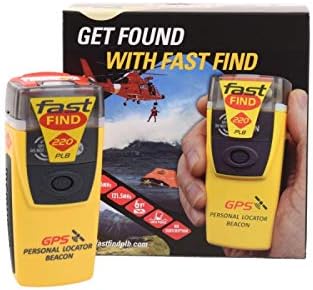
McMurdo FastFind 220
4.5Editor score
Simple three-step activation
Global satellite coverage
Compact and easy to carry
US country-code programming
Compare ten Personal Locator GPS Beacon models by emergency coverage, activation, visibility, registration, battery life, and portability for outdoor trips.
A Personal Locator GPS Beacon is a satellite-based emergency device designed to alert search-and-rescue authorities when a hiker, boater, climber, traveler, or outdoor worker cannot reach conventional cellular networks. A worthwhile model combines reliable positioning, simple activation, visible signaling, broad satellite compatibility, and enough battery life to remain ready throughout the trip.
This guide compares ten products across the essential factors that separate a dependable beacon from one that is merely convenient. It examines Return Link Service, satellite compatibility, GNSS reception, strobes, waterproofing, buoyancy, mounting options, operational life, battery longevity, registration requirements, and the practical differences between pure emergency beacons and subscription-based communicators.
Each pick highlights the qualities that matter most for its particular use, while the side-by-side table makes the main differences easier to assess. Ratings reflect the supplied customer feedback, and no claims here imply that the devices were personally tested. Product features and availability can change, so readers should confirm current specifications and prices with the seller before purchasing.
4.5Editor score

4.8Editor score

4.6Editor score
The following comparison highlights the principal differences among ten emergency beacons and satellite communicators. It focuses on the features most likely to affect a user in the field: positioning systems, satellite compatibility, confirmation of receipt, strobes, physical protection, mounting, power endurance, and messaging capability.



The ACR ResQLink View RLS PLB is the strongest all-around choice in this guide, combining a 4.8 rating with a broad set of emergency features. Its most distinctive benefit is Return Link Service, which confirms that Search and Rescue has received the distress signal. That feedback reduces the uncertainty users may experience after activating the beacon and waiting for a response.
We may earn a commission when you buy through this link, at no additional cost to you.
The device supports GPS, Galileo GNSS, and MEOSAR compatibility, giving it a modern positioning and satellite-communications foundation. A digital display provides useful information while the beacon is in use, and both an infrared strobe and a visible light improve the chance of detection after rescuers reach the general area. Its five-year battery life and stated 28-plus-hour operational life support long periods between use without creating a need for regular charging.
This model is not the smallest option in the comparison. Its display, multiple signaling systems, and multifunction clip system make it larger and more involved than the Ocean Signal rescueME PLB1. Some users may prefer a minimalist device with no screen. Even so, the benefits are substantial enough for this beacon to suit hikers, boaters, climbers, and travelers who want confirmation that an alert reached the appropriate rescue network.
The ACR ResQLink View RLS PLB is a particularly sensible choice for anyone who values both emergency performance and useful feedback. It is well suited to multi-day trips where remaining reachable, visible, and prepared matters more than minimizing every gram. It is our overall recommendation because Return Link Service adds practical confidence while the rest of the feature set remains appropriately focused on rescue.
Return Link Service alerts the owner after the distress signal has been received by Search and Rescue. This is particularly helpful in remote areas where the user may have no way to determine whether the satellite message was successfully transmitted.
GPS and Galileo GNSS support position acquisition, while the digital display, visible strobe, and infrared strobe help users access information and help rescuers identify the beacon after arrival. These features make the device useful across both daytime and nighttime search conditions.
We may earn a commission when you buy through this link, at no additional cost to you.
The McMurdo FastFind 220 is the value-focused selection, earning a 4.5 rating while delivering a straightforward personal locator beacon format. It is designed for travelers who want satellite distress signaling without the added complexity of a color screen, extensive communications menu, or monthly service. Its core purpose is direct emergency alerting rather than everyday communication.
We may earn a commission when you buy through this link, at no additional cost to you.
Activation is refreshingly uncomplicated: deploy the antenna, pull the anti-tamper seal, and press the ON button. That sequence is valuable when someone is injured, cold, exhausted, or otherwise unable to manage a complex interface. The beacon can operate internationally, although this specific listing is preprogrammed with the US country code. Users whose registration country differs should confirm the appropriate programming option before making a purchase.
The principal limitation is administrative rather than functional. Registering a PLB is required by law in many countries, and the relevant registration gives rescue teams essential information about the owner and travel plans. This listing is not the right choice for someone who needs registration programmed for another country. It also does not provide the same signal-receipt reassurance as a model with Return Link Service.
The McMurdo FastFind 220 is best for US travelers, hikers, boaters, and drivers who want a uncomplicated and economical satellite beacon. Its limited feature set is a strength for anyone who prefers a dedicated emergency tool over a subscription communicator. Just verify that the programming matches the country in which the beacon will be registered.
The deploy-antenna, remove-seal, press-on sequence minimizes operational complexity. A short, unambiguous process is valuable during an emergency, particularly for users who may be wearing gloves, injured, or unfamiliar with technical controls.
The included model uses US country-code programming even though it can function around the world. Travelers registering elsewhere should order the appropriate regional version and confirm the registration details before relying on the beacon in remote terrain.
We may earn a commission when you buy through this link, at no additional cost to you.
The ACR ResQLink View PLB425 carries a 4.6 rating and offers a balanced combination of visual information, physical signaling, and direct satellite distress alerts. Once activated, it sends an SOS message with a GPS position to Search and Rescue forces worldwide using the 406 MHz Emergency Distress Signal and a 121.5 MHz homing signal. No subscription is required for that core emergency function.
We may earn a commission when you buy through this link, at no additional cost to you.
Its buoyant housing and included belt clip, oral inflation tube clip, straps, and lanyards make it particularly versatile. Hikers, campers, climbers, RV travelers, and boaters can select an attachment method suited to the activity. The bright LED and infrared strobes provide both ordinary and night-vision visibility, while the COSPAS-SARSAT compatibility supports worldwide rescue coverage.
The PLB425 can also send self-test and GPS test messages to multiple contacts through the optional 406Link testing subscription. That service is not needed for the primary rescue process, but buyers who want remote diagnostic messages must account for it separately. The range of included clips can also feel more elaborate than necessary for someone who wants the smallest possible device.
This is a strong general-purpose beacon for users who expect water exposure or want several mounting choices. It combines a readable display with direct distress signaling and robust visual detection. For people who prioritize buoyancy, international satellite support, and flexible wearing options, the PLB425 is easier to justify than a minimalist unit.
Built-in buoyancy is especially valuable for paddlers, sailors, and anyone who might enter the water unexpectedly. A beacon that remains accessible after a capsize or fall can continue transmitting from a more visible location.
Belt, lanyard, strap, and oral inflation tube clips allow the user to keep the beacon accessible during different activities. The best mounting method is the one that prevents loss while allowing the device to remain reachable in an emergency.
We may earn a commission when you buy through this link, at no additional cost to you.
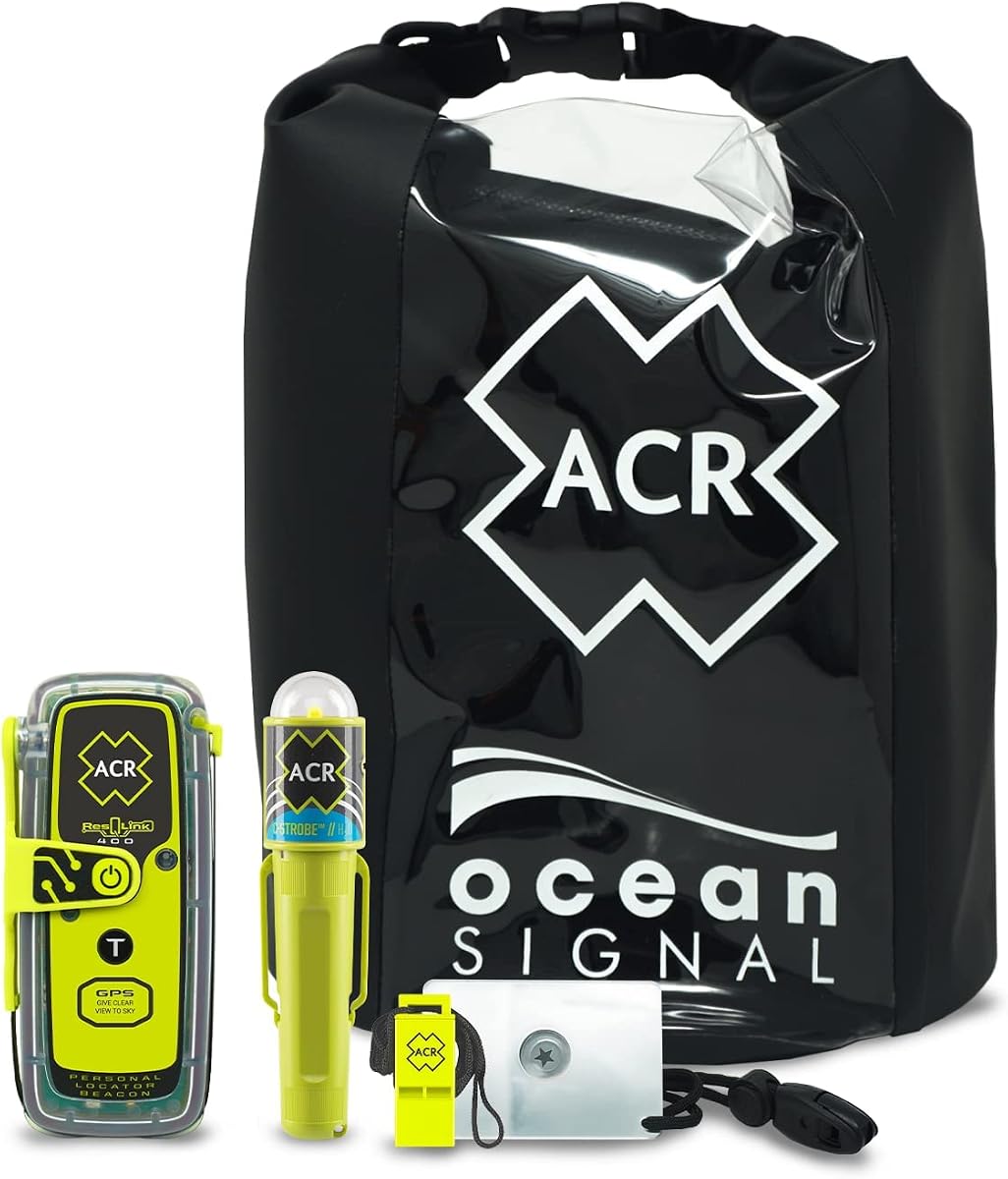
The ACR ResQLink 400 Survival Kit combines a GPS personal locator beacon with four additional emergency tools, giving it a 4.7 rating and a distinct place in this list. It is aimed at users who want more than satellite distress signaling. The package includes the beacon, a C-Strobe H2O rescue light, a Res-Q whistle, a RapidDitch drybag, and a signal mirror.
We may earn a commission when you buy through this link, at no additional cost to you.
Each accessory serves a different practical purpose. The rescue light supplies bright waterproof signaling for day or night visibility. The whistle provides an audible way to attract attention nearby, and the signal mirror can reflect sunlight over a long distance. The drybag protects essential gear from water and keeps it accessible. Together, these items offer layers of communication when the beacon is transmitting but rescuers have not yet arrived.
The tradeoff is obvious: the full kit takes more space than a standalone beacon and includes tools that may never be needed. A user who already owns a waterproof light and whistle may prefer to spend the budget on the locator alone. However, for a new emergency kit, consolidating several useful items with the beacon can simplify preparation.
This bundle is best for campers, hikers, paddlers, and families building a vehicle or day-trip safety kit. It is particularly attractive when a single organized package is more convenient than sourcing several accessories independently. The ACR ResQLink 400 handles the critical satellite-alerting role, while the other components improve signaling and gear protection in the final stage of an emergency.
The rescue light and signal mirror can help communicate with rescuers after they arrive in the area. They complement the beacon rather than replace it, giving the user more than one way to become visible.
The waterproof drybag creates a place for small essentials and protects them from wet conditions. Combining the beacon with familiar survival tools can make emergency preparation easier for recreational travelers.
We may earn a commission when you buy through this link, at no additional cost to you.
The Ocean Signal rescueME PLB1 is the most compact and travel-friendly option here, earning a 4.6 rating. At four ounces, it takes up very little room and can attach to a lifejacket with the supplied mounting clip. That makes it a compelling choice for paddlers, hikers, runners, and travelers who refuse to let emergency equipment dictate how much gear they carry.
We may earn a commission when you buy through this link, at no additional cost to you.
Its one-handed operation is another major strength. In a crisis, a user may have only one functioning hand, limited dexterity, or insufficient strength for a complicated procedure. The PLB1 emphasizes intuitive activation, while its 66-channel GPS receiver supports positioning and its one-candela high-intensity strobe improves visibility. The stated operational life exceeds 24 hours, and the battery is rated for seven years.
Waterproofing to 49 feet makes the device especially credible around water. Its subscription-free operation relies on international government rescue satellites, avoiding ongoing fees for the core emergency service. The tradeoff is that it is designed as a locator beacon rather than a two-way satellite communicator. It does not offer the routine messaging and tracking interface found in the Garmin model, nor does it provide Return Link Service confirmation.
The rescueME PLB1 is the compact choice for people who want a capable emergency beacon without the bulk of a full communicator. It is especially well suited to marine activities and lightweight travel kits. Choose it when portability, simple activation, and water resistance are more important than screen-based features or regular satellite messaging.
One-handed operation reduces the chance that injury or poor conditions will prevent activation. A straightforward control can be decisive when the user is cold, tired, wet, or working with limited mobility.
The four-ounce weight and lifejacket mounting clip make the beacon easy to integrate into a personal flotation device. Waterproofing to 49 feet adds confidence for boating and waterside activities.
We may earn a commission when you buy through this link, at no additional cost to you.
The ACR ResQLink 400 PLB earns a 4.7 rating and offers a focused, subscription-free emergency beacon with modern positioning and satellite support. It sends a 406 MHz distress signal and includes a homing signal to guide rescuers toward the registered location. COSPAS-SARSAT and MEOSAR compatibility provide broad access to international rescue infrastructure.
We may earn a commission when you buy through this link, at no additional cost to you.
GPS and Galileo GNSS give the device two satellite positioning systems, while the LED and infrared strobes improve detection in different visibility conditions. These features make it a capable standalone PLB without the complexity of a two-way communicator. The absence of a subscription also means there is no recurring service cost for its primary rescue function.
Compared with the View RLS, the standard ResQLink 400 does not confirm receipt through Return Link Service and does not provide the same visual display. Someone who wants more information or reassurance during activation may prefer a higher-feature model. On the other hand, avoiding a screen and unnecessary functions can make the device easier to operate under pressure.
This ACR model is well suited to travelers who want proven satellite alerting, GNSS positioning, and visual signaling without a messaging subscription. It is a balanced option for hiking, camping, driving, and boating. Those who prioritize minimalism should compare it with the FastFind 220, while users seeking confirmation should look toward the RLS models.
Compatibility with COSPAS-SARSAT and MEOSAR allows the beacon to work within widely used international rescue-satellite systems. This broad compatibility is valuable for travel beyond the United States.
The LED strobe is readily visible in many conditions, while the infrared strobe can assist nighttime searches using appropriate detection equipment. Having both broadens the ways rescuers may identify the beacon.
We may earn a commission when you buy through this link, at no additional cost to you.
The ACR ResQLink View Survival Kit combines a GPS personal locator beacon with visual, audible, and protective emergency equipment, earning a 4.7 rating. The beacon differentiates itself from minimalist PLBs through its visual display, bright strobe, and focus on rapid rescue communication. It is a practical centerpiece for a prepared outdoor kit.
We may earn a commission when you buy through this link, at no additional cost to you.
The included C-Strobe H2O rescue light is waterproof and provides reliable high-visibility signaling. A Res-Q whistle adds an audible means of attracting nearby attention, the RapidDitch drybag protects important items, and the signal mirror offers another way to catch a rescuer's eye. Each item addresses a different phase or need during an emergency.
As with any bundle, some components may already be in the user's equipment. A household that owns a good whistle and waterproof light can create unnecessary redundancy. The additional volume may also be inconvenient for a minimalist backpacking setup. Buyers should consider the package as an integrated convenience rather than as four additional features that make the beacon itself faster.
This kit is best for campers, families, road travelers, and hikers who want a single purchase containing both a capable locator beacon and familiar emergency signaling tools. The View beacon gives users more visual information than a screenless model, while the accessories improve the chances of being noticed before professional rescuers arrive. It is a versatile all-in-one preparation choice.
The visual display gives the device an information advantage over a screenless PLB. It can be particularly useful for confirming device status and location-related information during operation.
A bright waterproof strobe, whistle, and signal mirror cover visual and audible signaling. Although they cannot replace satellite distress alerts, they provide useful options when rescuers are nearby.
We may earn a commission when you buy through this link, at no additional cost to you.
The ACR ResQLink 410 RLS provides Return Link Service, global positioning support, and a buoyant, lightweight form. Its 4.5 rating makes it a strong option for travelers who want confirmation that a distress alert has reached Search and Rescue but do not necessarily need the View model's display.
We may earn a commission when you buy through this link, at no additional cost to you.
The core platform supports GPS, Galileo GNSS, and MEOSAR compatibility, providing broad international coverage. Return Link Service sends confirmation after the emergency distress signal is received. The beacon also has no subscription requirement, a five-year battery life, and a stated operational life exceeding 24 hours.
Built-in buoyancy and a relatively small, lightweight design make the 410 easy to carry in aquatic and mixed outdoor environments. Its multifunction clip system offers several attachment options. Both a strobe and infrared strobe improve visibility, although the supplied specifications do not mention a digital display, making it less information-oriented than the View RLS.
The ACR ResQLink 410 RLS is a good fit for travelers who place signal confirmation high on their list but value a simpler physical design. It is well suited to boating, hiking, and international trips. Buyers comparing it with the View RLS should decide whether the added display and longer stated operational life justify choosing the larger model.
Return Link Service adds confirmation that Search and Rescue has received the distress signal while retaining subscription-free emergency operation. This offers useful reassurance without tying the core rescue function to an ongoing service.
Built-in buoyancy improves the chance that the beacon remains accessible if it enters the water. Its compact body and multifunction clips make it practical for paddling and other activities with a risk of immersion.
We may earn a commission when you buy through this link, at no additional cost to you.
The ACR ResQLink 400 No Display is a minimalist GPS personal locator beacon with a strong 4.8 rating. By removing the display, it focuses on the essential emergency workflow: carrying a satellite distress device that does not introduce unnecessary interface elements. That simplicity can be useful for dedicated outdoor users.
We may earn a commission when you buy through this link, at no additional cost to you.
The listing identifies the device as the ResQLink 400 Personal Locator Beacon without a display, manufacturer part number 2921. It is sold as an authorized dealer product, and the listing also notes the availability of expert advice and return shipping coverage for damaged or defective items. Those are meaningful buying considerations, although the supplied description contains fewer technical details than the other ACR listings.
The lack of a display means there is no visual status information, which may be an advantage for someone who wants a simple physical device but a disadvantage for users who value confirmation or position readouts. The supplied information also does not mention Return Link Service, so buyers should not assume it has the confirmation feature found in RLS models.
This screenless ResQLink 400 is best for hikers, campers, and paddlers who prefer uncomplicated equipment and already know how the beacon operates. Its high rating suggests strong customer reception, while the authorized-dealer status adds confidence to the transaction. Prospective buyers should verify the full current specifications with the seller before finalizing their decision.
A display-free design reduces the number of controls and status features a user must understand. This can make the beacon straightforward to carry and use, particularly for people who prefer dedicated emergency tools.
The listing specifies model 2921 and identifies the seller as an authorized dealer. Because the supplied product details are concise, buyers should confirm the current package contents, included accessories, and activation requirements.
We may earn a commission when you buy through this link, at no additional cost to you.
The Garmin inReach Mini 3 Plus Bundle is the most capable communications device in the comparison, earning a 4.7 rating. Unlike a dedicated distress beacon, it uses the Iridium satellite network to send texts, voice messages, group messages, and, when paired with a compatible smartphone, photos through the Garmin Messenger app.
We may earn a commission when you buy through this link, at no additional cost to you.
Its interactive SOS feature contacts Garmin Response, a 24/7 staffed emergency coordination center that receives the user's location and supports two-way communication during a crisis. That ongoing conversation is the key difference from a conventional PLB. It can provide regular check-ins, group communication, location sharing, and detailed support beyond simply transmitting a distress alert.
The internal rechargeable battery can last up to 350 hours with ten-minute tracking or up to 95 hours in performance messaging mode. A scratch-resistant color touchscreen and IP67 rating support demanding outdoor use. Garmin Explore, Garmin Messenger, LiveTrack, weather, trip planning, voice commands, and preset messages round out the feature set. The bundle includes a cleaning cloth, USB Type-A to USB Type-C cable, and USB wall charger.
This model is best for expedition travelers, field professionals, and groups who want communication with home as well as emergency response. The tradeoff is complexity and an ongoing service plan, making it less suitable for someone who wants a simple, subscription-free beacon. Its expanded functionality justifies inclusion, but its design goal differs from that of the dedicated PLBs.
The Iridium network supports messages, voice notes, group exchanges, and smartphone-assisted photo sharing outside cellular coverage. This makes the device useful for routine updates as well as emergencies.
Garmin Response receives location information and maintains two-way communication during an interactive SOS. This offers more ongoing guidance than a beacon designed only to transmit a distress alert.
The color touchscreen, IP67 protection, and extended battery modes balance everyday usability with outdoor durability. Preset messages and voice commands can reduce the effort required to send frequent updates.
We may earn a commission when you buy through this link, at no additional cost to you.
The right Personal Locator GPS Beacon depends on the activities, environments, and communication needs of the person carrying it. Compare registration rules, satellite systems, activation methods, visibility, physical protection, battery endurance, and whether routine messaging is worth the added complexity and service requirements.
A dedicated personal locator beacon is built around distress alerting. It generally sends an SOS message and position to Search and Rescue, often adds a homing signal, and uses a strobe to help rescuers find the device after arrival. A two-way satellite communicator can also handle routine text, voice, group, and photo messages while offering interactive emergency coordination. That expanded communication is valuable for long expeditions, work teams, and travelers who want to check in without cellular coverage, but it generally requires an ongoing service plan.
Choose a dedicated PLB when simplicity, emergency-only use, and subscription-free operation are the priorities. Choose a communicator when regular contact and two-way crisis support justify the additional complexity.
Registration is required by law in many countries and is essential for efficient rescue operations. It associates the beacon with the owner and can provide contacts or travel information that helps teams begin a search. The country code programmed into the device also determines which Search and Rescue authority initially handles the emergency. The McMurdo FastFind 220 listing is specifically programmed for the US, while rest-of-world users need the appropriate alternative version.
Confirm that the programming, registration, and personal emergency details match the country and intended owner before relying on any model in the field.
PLBs commonly use the international 406 MHz distress network, while a 121.5 MHz homing signal helps rescuers refine the direction of transmission. MEOSAR and COSPAS-SARSAT compatibility broaden access to global rescue-satellite infrastructure. For location, GPS is standard on the models listed, and some ACR devices also support Galileo GNSS. Multiple positioning constellations can improve location acquisition in challenging terrain, although actual performance depends on the satellite signal available at the incident site.
Look for broad rescue-network compatibility and at least one modern GNSS system. International travelers should consider models explicitly described as providing global coverage.
In an emergency, a complicated interface can cost time. One-handed operation and a simple activation sequence are therefore valuable safety features. The McMurdo FastFind 220 uses a clear process of deploying the antenna, removing the anti-tamper seal, and pressing the ON button, while the rescueME PLB1 emphasizes one-handed control. Return Link Service offers a different benefit: it confirms that Search and Rescue received the distress alert, helping users understand that the emergency message was not lost.
Prioritize controls that remain obvious under stress, and consider Return Link Service if reassurance after activation is important.
A satellite message helps responders locate a region, but rescuers still need to identify the exact device. Bright LED strobes provide visible signaling, while infrared strobes can assist nighttime searches with compatible optical equipment. Audible tools such as whistles help when people are nearby, and signal mirrors can attract attention in daylight. The survival kits in this list bundle these devices with a locator beacon for layered signaling.
Match the signaling tools to the environment. A strobe is essential for nighttime search, while a whistle or mirror can be useful when rescuers are already within visual or hearing range.
Boaters, paddlers, anglers, and anyone traveling near water should pay close attention to the stated water-resistance rating. The Ocean Signal rescueME PLB1 is waterproof to 49 feet, and both the ResQLink View PLB425 and ResQLink 410 RLS have built-in buoyancy. Buoyancy helps keep a floating beacon accessible after an immersion, while a deeper water-resistance rating increases confidence during repeated exposure.
For aquatic activities, prioritize a documented waterproof rating and buoyancy over features that may matter less in a marine environment.
Battery specifications cover two different needs. Battery life describes how long the device can remain in storage before replacement, while operational life indicates how long it can transmit after activation. The ACR ResQLink View RLS PLB has a five-year battery and a stated 28-plus hours of operation. The rescueME PLB1 combines a seven-year battery with more than 24 hours of operational life. The Garmin communicator uses a rechargeable battery with mode-specific endurance of up to 350 or 95 hours.
Compare both figures. Long shelf life matters for occasional travelers, while extended operating time becomes more important for cold conditions, injury, or rescue delays.
The best beacon is one that remains accessible rather than one that is simply left at the bottom of a pack. The rescueME PLB1 weighs four ounces and includes a lifejacket mounting clip. The PLB425 includes belt, lanyard, strap, and inflation tube options, while the ResQLink 410 and View RLS use multifunction clip systems. Travelers should also consider size, accidental activation protection, glove-friendly controls, and whether the device can remain on a lifejacket without interfering with other safety equipment.
Test the chosen clip with the intended clothing or gear. An attachment that shifts, snags, or is easy to forget can reduce the usefulness of an otherwise capable beacon.
Register the beacon before the trip and enter accurate, current contact information. Review the activation instructions in a safe setting, locate the antenna, antenna release, activation control, and strobe. Confirm how the model must be carried or worn in the intended environment. For devices with optional testing services, use the prescribed test function rather than activating a real distress alert.
Carry the beacon where it is easy to reach but protected from accidental activation. A lifejacket clip is appropriate for many marine trips, while a belt or lanyard may work better for hiking. Before every outing, check the battery indicator or stated status, inspect the housing and seals, and verify that the attachment remains secure. Keep the beacon away from heat, direct prolonged sun when avoidable, and damaged equipment.
If the beacon is activated in a genuine emergency, follow the device instructions, preserve battery life where possible, and move to a safer, more visible location if doing so does not endanger the user. Do not delay activation while searching for cellular coverage. Once help is involved, remain with the beacon, follow rescue instructions, and make the device visible with its strobe. After the incident, follow the manufacturer's battery, testing, and service guidance.
No. Personal locator beacons transmit distress signals through satellite networks rather than relying on cellular towers. This makes them useful in mountains, forests, remote waters, and other locations without mobile coverage. The beacon must still be properly registered, and the user must activate it according to the manufacturer's instructions.
Registration is required by law in many countries and is strongly recommended everywhere. It links the beacon to an owner and supplies information that can help Search and Rescue respond efficiently. Registration details should be kept current, particularly if the user changes contact numbers, travel plans, or residence.
A PLB is primarily an emergency distress beacon, while a satellite communicator can handle routine messages, location sharing, and two-way emergency support. The Garmin inReach Mini 3 Plus is the communicator in this guide because it offers interactive SOS, Iridium messaging, and app-based tracking. Dedicated PLBs emphasize simpler emergency operation and generally avoid ongoing fees.
Return Link Service confirms that Search and Rescue has received the emergency distress signal. It does not mean rescuers have already reached the user or that the situation is resolved. It simply provides feedback that the alert entered the rescue network, reducing uncertainty during the wait for assistance.
The McMurdo FastFind 220 can function around the world, but its initial emergency contact is the US Search and Rescue authority because that is its programmed country code. Travelers registered elsewhere should obtain the appropriate regional version and confirm the programming. Local registration rules still apply.
Carry it where it is protected from accidental activation but remains quickly accessible. Lifejacket mounting is useful for marine activities, while belt, strap, or lanyard clips may suit land travel. Test the attachment before leaving and ensure the beacon does not interfere with other safety gear or become trapped in clothing.
Water resistance is important, but buoyancy provides an additional safety benefit if the device falls into the water. The rescueME PLB1 is waterproof to 49 feet, while the ResQLink View PLB425 and ResQLink 410 RLS have built-in buoyancy. For watersports, select a model designed for immersion and attach it securely to a lifejacket or other flotation device.
Use the manufacturer's self-test or GPS test function exactly as directed. Some models, including the PLB425, can send non-emergency test messages through an optional 406Link testing subscription. Never activate the distress function merely to check the device, because false alerts can endanger lives and disrupt Search and Rescue operations.
The ACR ResQLink View RLS PLB is the strongest overall choice because it combines Return Link Service, GPS and Galileo positioning, visible and infrared strobes, a digital display, five-year battery life, and no subscription requirement. The McMurdo FastFind 220 stands out as the value choice for its simple activation and portable design, while the Ocean Signal rescueME PLB1 is ideal for users who prioritize compact size, one-handed operation, and deep waterproof protection.
The right choice depends on the environment and expected use. Choose a dedicated PLB for a simple, subscription-free emergency tool; consider an RLS model when confirmation is reassuring; pick a buoyant model for water exposure; and choose a communicator such as the Garmin inReach Mini 3 Plus when regular satellite messaging and interactive emergency coordination justify an ongoing service plan.
Before buying, verify registration requirements, country programming, satellite compatibility, waterproof ratings, activation procedures, battery life, and what is included with the particular listing. Features and prices can change, so check the current seller information and confirm that the beacon is registered and ready before every trip.